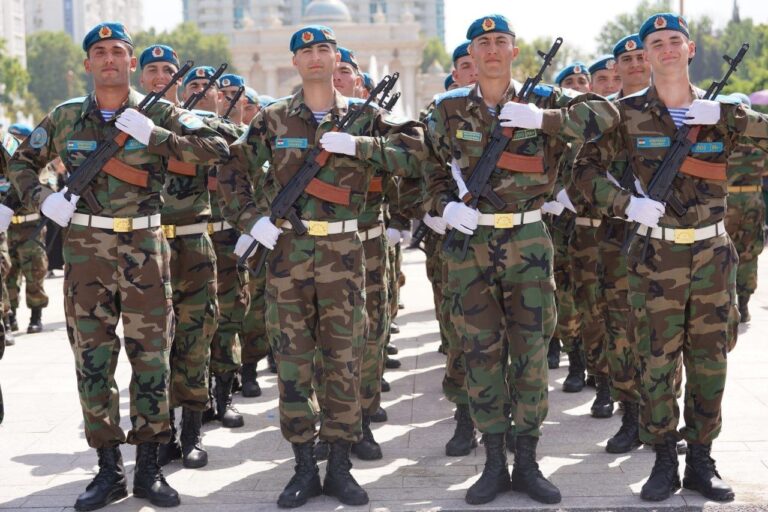
DUSHANBE, December 6, 2011, Asia-Plus — On November 21-30, 2011, the Danish Refugee Council (DRC) conducted an intensive training course for Tajik border guard officers on the rights of refugees and asylum seekers as well as reception practices and referral mechanisms at border entry points.
The training was supported by the OSCE and is part of DRC’s ongoing efforts to support refugees and asylum seekers by building the capacity of key governmental stakeholders in Tajikistan.
Training activities focused on enhancing the capacity of teaching staff of the Tajik border services by providing them with a week-long training-of-trainers course. Topics ranged from the refugee definition in international and domestic law to the non-refoulment or non-expulsion principle to group facilitation techniques and referral mechanisms. During the workshop, border guard participants created their own training modules on refugee and asylum issues and put their newly-acquired skills to use by training cadet officers while being supported and coached by DRC experts.
“Border guards are typically the first government officials that asylum seekers meet in their host country, and it is key that border guards understand the commitments their government has made to protect refugees,” says Rexane Rasmussen, DRC Regional Representative in Central Asia.
The training was hosted by the Border Troops Academy in Dushanbe and the Border Guard Training Center in Roudaki district south of Dushanbe. It contributes to the implementation of objectives outlined in the National Border Management Strategy of the Government of Tajikistan of 2010, which represents a framework for a coordinated development and enhancement of Tajik border security and management.
Border guard officers from across Tajikistan participated in the training of trainers, including officers posted on the Tajik-Afghan border. The land border between Tajikistan and Afghanistan stretches for over 1200 kilometers across rugged and inhospitable terrain. Over 95% of refugees and asylum seekers in Tajikistan come from Afghanistan. “The joint DRC-OSCE training will help to make sure that asylum seekers are treated fairly when they come to Tajikistan to escape persecution at home”, says Rexane Rasmussen.
Tajikistan was the first Central Asia country to ratify the 1951 Convention relating to the Status of Refugees in December 1993. DRC supports the Government of Tajikistan’s efforts at meeting its commitments to refugees in an unstable region of the world.
The training was conducted with support of the Organization for Security and Cooperation in Europe (OSCE) Office in Tajikistan and funded by the Danish Ministry of Foreign Affairs.