DUSHANBE, August 7, 2012, Asia-Plus – Immigrants from Tajikistan are settling down in the Jewish Autonomous Oblast (JAO) in the Russian Far East.
The EAOmedia news agency reports they have arrived in the region under the Russian national program to support voluntary resettlement of fellow-countrymen living abroad to the Russian Federation.
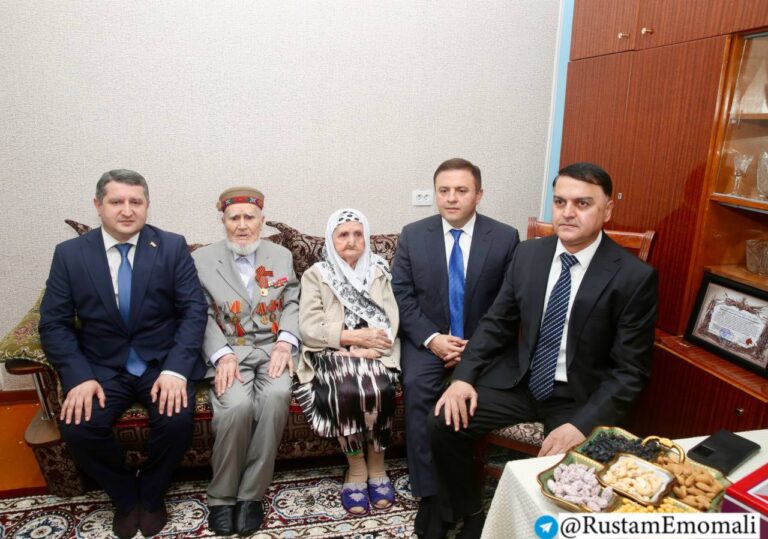
On August 6, officers from the Birobidzan Migration Service visited the families that settled in JAO’s Leninskiy district.
The Rahmatilloyev family consists of five persons. The head of the family is the English language teacher and his wife is a children’s doctor. She will have to take refresher training course and get certificate in order to get down to work, the news agency reported.
Another physician from Tajikistan, Shamsiddin Kholnazarov, has already confirmed his diploma after successfully taking the refresher training course in Moscow.
According to EAOmedia, the JAO needs immigrants having medical and pedagogical education.
The Jewish Autonomous Oblast (JAO) is a federal subject of Russia (an autonomous oblast) situated in the Russian Far East, bordering with Khabarovsk Krai and Amur Oblast of Russia and Heilongjiang province of China. Population: 176,558 (2010 Census).
Soviet authorities established the autonomous oblast in 1934. It was the result of Joseph Stalin”s nationality policy, which allowed for the Jews of the Soviet Union to receive a territory in which to pursue Yiddish cultural heritage within a socialist framework. According to the 1939 population census, 17,695 Jews lived in the region (16% of the total population). The Jewish population peaked in 1948 at around 30,000, about one-quarter of the region”s population. The census of 1959, taken six years after Stalin”s death, revealed that the Jewish population of the JAO declined to 14,269 persons. As of 2002, 2,327 Jews were living in the JAO (1.2% of the total population), while ethnic Russians made up 90% of the JAO population.
The JAO administrative center is the town of Birobidzan. It is located on the Trans-Siberian railway, close to the border with China. Population: 75,419 (2010 Census preliminary results); 77,250 (2002 Census);
[
83,667 (1989 Census).
It was planned by the Swiss architect Hannes Meyer and was granted urban-type settlement status in 1928 and town status in 1937. The town is named after the two largest rivers in the autonomous oblast: the Bira and Bidzan, although only the Bira flows through the town, which lies to the east of the Bidzhan Valley. Both rivers are tributaries of the Amur River. The chief economic activity is light industry.