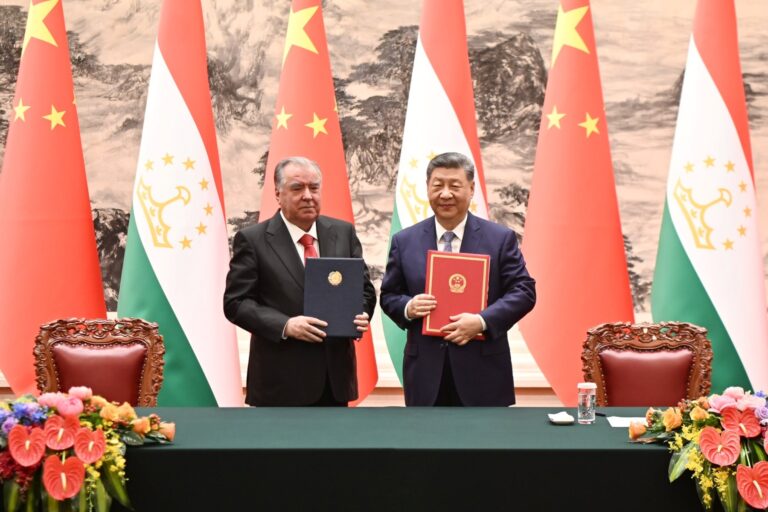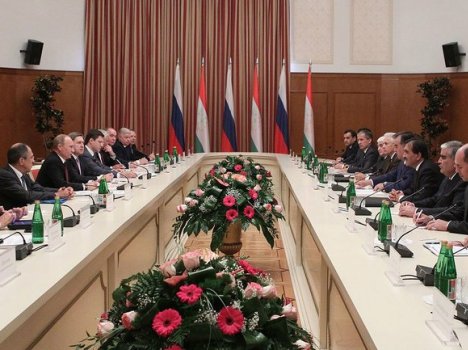
DUSHANBE, October 6, 2012, Asia-Plus – Tajikistan-Russia negotiations at the highest level that took place in Dushanbe on October 5 resulted in signing of six cooperation documents, including an agreement on the conditions of Russian military base’s stay in Tajikistan and a memorandum on the conditions of cooperation between ministries of defense of Tajikistan and the Russian Federation.
The second agreement signed in Dushanbe last Friday is on providing assistance to the Drug Control Agency (DCA) under the President of Tajikistan with countering drug trafficking. The document was signed by DCA director Rustam Nazarov and Russia’s Federal Drug Control Service (FSKN) head Viktor Ivanov.
President Putin noted that Tajik counternarcotics agency would receive more than 5 million U.S. dollars worth of technical assistance. “We will help Tajikistan train anti-drug personnel at Russian educational facilities,” Putin said at a joint press conference with his Tajikistan counterpart following the negotiations.
The sides also signed a memorandum between the Ministry of Energy and Industries of Tajikistan and the Ministry of Energy of the Russian Federation on the conditions of Russian oil product deliveries to Tajikistan.
Commenting on this document, Tajik President Emomali Rahmon noted that the sides had come to an agreement on tax-free delivery of Russian oil products to Tajikistan in the volume of domestic consumption.
We will recall that Tajikistan was exempted from paying Russian tariffs on oil and gas exports from 1995-2010 and Russia cancelled Tajikistan’s tax exemption on May 1, 2010.
Tajik Minister of Energy and Industries Gul Sherali and Russian Minister of Energy Aleksndr Novak also signed a memorandum on cooperation in the field of energy. The document provides for participation of Russia in construction of medium-sized hydroelectric power plants on internal rivers in Tajikistan.
On Friday, the two countries also signed a document on easing some of the registration restrictions for Tajik migrant workers coming to Russia.
Memorandum of intent on further cooperation in the field of labor migration was signed by Safiallo Devonayev, Head of the Migration Service under the Government of Tajikistan, and Konstantin Romodanovsky, Director of Russia’s Federal Migration Service (FMS).
Under this document, the period for registration for Tajik nationals on their arrival in Russia is extended from seven to fifteen days.
Besides, the term of work permit for Tajik nationals is extended up to three years, Russian President Vladimir Putin noted.