DUSHANBE, January 22, 2015 Asia-Plus — Developing and transition economies of Europe and Central Asia show disturbingly high poverty levels, even in some upper middle-income countries, according to research released this week by the UNDP’s new Regional Hub in Istanbul.
The analysis in
Poverty, Inequality and Vulnerability in the Transition and Developing Economies of Europe and Central Asia
uses the World Bank’s POVCALNET global poverty database to assess poverty and inequality trends in the region.
The data suggest that those countries that are today facing difficulties in poverty eradication also tend to be experiencing high or growing income inequalities. Life expectancy for men and women is declining relative to global averages in most countries, among other disparities.
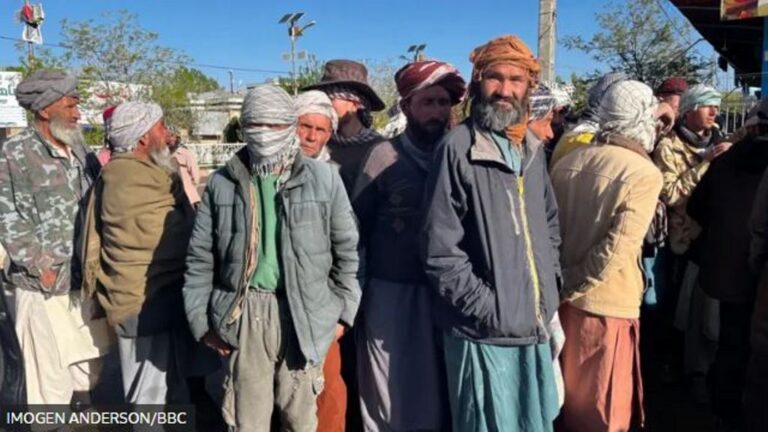
It notes that income poverty remains a serious problem in the less wealthy former Soviet republics. The most recent data available indicates that more than a third of the population in Georgia was living in extreme poverty — less than $2.15 a day — in 2010. In Tajikistan, Kyrgyzstan and Armenia, between one–quarter and one-third of the population, or roughly 6.7 million people live in extreme poverty.
Risks of poverty in the region are particularly high for those who live in rural areas, according to the paper. They are also high for the “new poor” in transition economies, who include the working poor like public servants who work in education, health, science and the arts, along with farm workers.
The paper points to some worrisome inequalities in regional education enrolment trends. Countries like Albania, Montenegro, and Turkey have seen significant increases in pre-school enrolment rates for the past 10 years. On the other hand, less than one-third of young children in Azerbaijan, Bosnia and Herzegovina, Kyrgyzstan, the former Yugoslav Republic of Macedonia, Tajikistan, Turkey and Uzbekistan are enrolled in pre-schools. These countries score well below the average for middle income countries.
The gender gap in terms of incomes earned by women relative to men in most of the region is below global averages, according to the research. While the rate of women in the labor force are below those of men, the ratios of female to male labor force participation and unemployment rates in the region compare favorably with global averages, especially in the former Soviet republics.
In life expectancy, both men and women are losing ground in the region. Men living in the Western CIS countries in 1960 lived 12 years longer than global averages. By 2012, their lifespan was on average two years less than the global age. A decline for women in Western CIS countries is also apparent. In the early 1960 women lived more than 14 years longer than women in other countries. By 2012, this differential dropped by two years. Similar trends exist in Central Asia, where in 1960 women lived six years longer than women in other countries. By 2012 they were living some six months less.
The paper notes that the region is also vulnerable to seismic, climatic, and meteorological risks. Many cities face risk of earthquakes, including Almaty, Ashgabat, Bishkek, Istanbul, Skopje, Tashkent, and Yerevan. The flooding that hit the Western Balkans last year had a disproportionate impact on vulnerable communities.
Moreover, inadequate energy infrastructures are not keeping up with demand, leaving millions of people in Kyrgyzstan, Tajikistan and Uzbekistan without reliable year-round heat.
This research was presented at a Dialogue on Inequalities, held in Istanbul, Turkey on January 21-22. Leading experts on inequalities in the region presented their views.