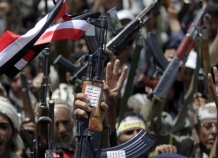
DUSHANBE, March 26, 2015, Asia-Plus — Saudi Arabian forces, joined by nine other countries, have launched a military operation in Yemen against Shiite Houthi rebels, international media outlets report.
The Saudi ambassador to the US Adel bin Ahmed Al-Jubeir was cited as saying that the offensive, which started with airstrikes, will also involve “other military assets.”
US President Obama has reportedly authorized the provision of logistical and intelligence support to the Gulf Cooperation Council (GCC)-led military operations in Yemen, the White House said in a statement, confirming that Washington had close communication with Hadi, the Saudis and other GCC states prior to the launch of the military operation.
“While US forces are not taking direct military action in Yemen in support of this effort, we are establishing a Joint Planning Cell with Saudi Arabia to coordinate US military and intelligence support,” the statement said.
Moreover, the White House urged the Houthis to immediately halt “destabilizing military actions” and to return to political dialogue with the deposed Yemeni government.
Al Arabiya reported that warplanes of the Royal Saudi Air Force bombed positions of Yemen’s Houthi militia, targeting their air defenses.
The Saudi-led coalition has declared Yemeni airspace a “restricted zone.” Ships in the region have also been urged not to approach Yemen’s ports due to the ongoing military operation.
More than 20 people have reportedly died and over 30 others were injured following Saudi Arabia-led airstrikes in Yemen, Sputnik news agency cited local security and medical sources as saying.
The majority of the strikes around Sanaa hit residential areas located near the capital’s international airport. Government buildings and the airport were also hit during the offensive.
Reports from the ground indicate that Saudi forces have bombed an office belonging to Houthi rebels in Sanaa’s Jiraf area. A Houthi-run TV channel reported dozens of civilian casualties following airstrikes north of Sanaa.
Residents said that warplanes targeted the capital’s airport, according to Reuters.
Houthis used heavy anti-aircraft fire to respond to the bombing.
The Houthi insurgency in Yemen, also known as the Houthi rebellion, Sa”dah War, or Sa”dah conflict, is a civil war in northern Yemen. It began in June 2004 when dissident cleric Hussein Badreddin al-Houthi, head of the Zaidi Shia sect, launched an uprising against the Yemeni government. Most of the fighting has taken place in Sa”dah Governorate in northwestern Yemen although some of the fighting spread to neighboring governorates Hajjah, ‘Amran, al-Jawf and the Saudi province of Jizan.
The Yemeni government alleged that the Houthis were seeking to overthrow it and to implement Shī‘a religious law. The rebels counter that they are “defending their community against discrimination” and government aggression. The Yemeni government has accused Iran of directing and financing the insurgency.
A Houthi power grab in Sana”a escalated on January 20, 2015, the rebels attacked the president”s residence. President Abed Rabbo Mansour Hadi could safely evacuate. The U.N. Security Council called an emergency meeting about the unfolding events. United Nations Secretary-General Ban Ki Moon expressed concern over the “deteriorating situation” in Yemen and urged all sides to cease hostilities. On January 22, President Abed Rabbo Mansour Hadi and Prime Minister Khaled Bahah tendered their resignations to parliament, which reportedly refused to accept them.
Zaydi Shi”a reportedly make up about 35-40% of Muslims in Yemen. They are predominantly in the north and northwest of the country. The Sunnis, who make up 60%–65% of the Muslim population in Yemen, are predominantly in the south and southeast.