

DUSHANBE, July 4, 2015, Asia-Plus – Press release issued by the OSCE says the third module classroom activity of the one-year Border Security and Management for Senior Leadership course (BSMSL), a course which is organized by the OSCE Border Management Staff College, concluded in Imatra, Finland on July 3.
The study sessions were launched on 21 June for 21 participants from 11 countries – Afghanistan, Algeria, Bosnia and Herzegovina, Georgia, Kazakhstan, the Former Yugoslav Republic of Macedonia, Poland, Romania, Tajikistan, Tunisia, and Ukraine. The sessions were organized in a close co-operation with the Border Security and Management Unit of the OSCE Transnational Threats Department, the Geneva Centre for the Democratic Control of Armed Forces (DCAF), and the Academy of Coast and Border Guard of Finland.
The classroom study sessions were delivered by experts from Great Britain, Estonia, Hungary, and Finland with the aim of further developing participants’ skills and knowledge on risk assessment, analysis and management principles, as well as border security and management models. The sessions were delivered through a large variety of teaching methods including scenario-based practical exercises.
Participants had an opportunity to observe modern education delivery methods and technologies applied in the Academy of Coast and Border Guard of Finland, which hosted the event.
In addition to the classroom sessions, there were study trips to the Imatra Finnish border crossing point, the Svetogorsk Russian border crossing point, the Pelkola Finnish Border Surveillance Station and the South East Finland Border Guard District Command Control Centre. Participants learnt about the border control systems and the relevant modern techniques and technologies of border guarding and the surveillance involved.
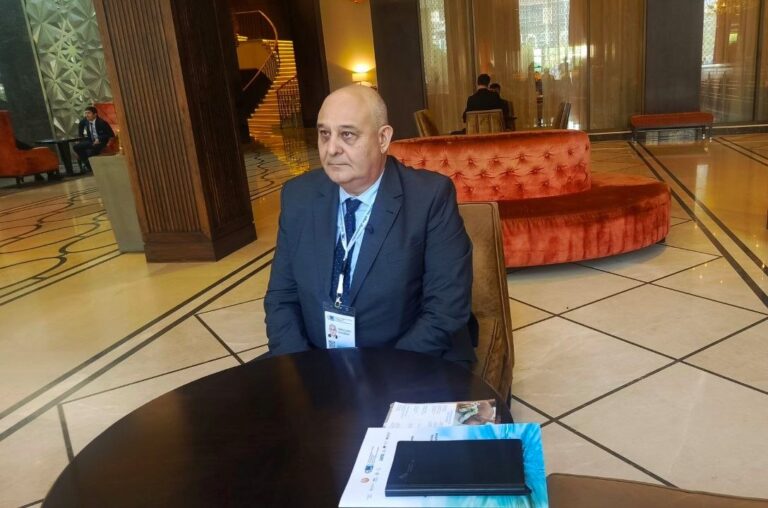
While talking about the course, Lieutenant-Colonel Vasi Ghulomaliyev, Deputy Head of Information and Analytical Department at the Border Troops Headquarters of Tajikistan stressed: “This is the most colorful period of my life as our course was most comprehensive and useful. Thanks to the effective learning methods we have significantly improved our professional skills. Besides the massive knowledge, each and every lesson brought us lots of positive emotions. Now all of us participants of the course intend to further develop our border control systems based on what we learnt during our course.”
Upon completion of the third module, the one-year course reaches its final stage involving participants in designing and producing their Coursework. The pilot blended learning course began in September 2014 will conclude in September 2015.