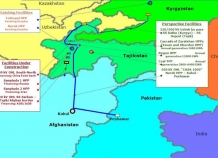
DUSHANBE, August 3, 2015, Asia-Plus — The landmark regional electricity transmission project, known as CASA 1000 (1000 Electricity Transmission and Trade Project for Central Asia and South Asia), is expected to be finished in 2019, according the Ministry of Finance (MoF) Secretariat.
The Secretariat says that according to feasibility study and financial model provided by the World Bank, 314 million U.S. dollars are needed for construction of the Tajiks section of this regional power transmission line.
To-date, a grant agreement for 45 million U.S. dollars has been signed with the World Bank and a loan agreement for 70 million Euros has been signed with the European Investment Bank, the Secretariat said, noting that Tajik government’s contribution to the project amounts to 15 million U.S. dollars.
Besides, a loan agreement and a guarantee agreement for 110 million U.S. dollars were signed with the European Bank for Reconstruction and Development (EBRD) for the financing of construction of the Tajik section of the CASA 1000 Project at the end of last week.
In all, about 300 million U.S. dollars are reportedly needed for construction of the Tajik section of the regional power transmission line which will bring electricity from Tajikistan and Kyrgyzstan to Afghanistan and Pakistan.
A total cost of the CASA 1000 Project is more than 1 billion U.S. dollars.
CASA-1000 Project demonstrates landmark cooperation among Kyrgyzstan, Tajikistan, Pakistan, and Afghanistan. The modern and efficient CASA-1000 electricity transmission system will help transform the region and signify an important step toward realizing the planned Central Asia-South Asia Regional Electricity Market (CASAREM). The CASAREM initiative will help not only these four countries, but also improve the electricity systems and develop inter-regional cooperation between Central Asia and South Asia.
The CASA-1000 Project is ambitious but achievable. When compared with the 340,000-kilometer North American grid or the 230,000-kilometer European power system, the 1,222-kilometer CASA-1000 transmission project seems quite achievable but it will take time, long-term planning, and cooperation.