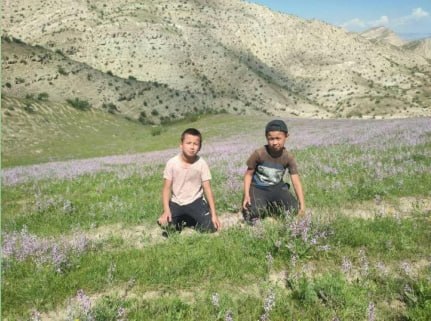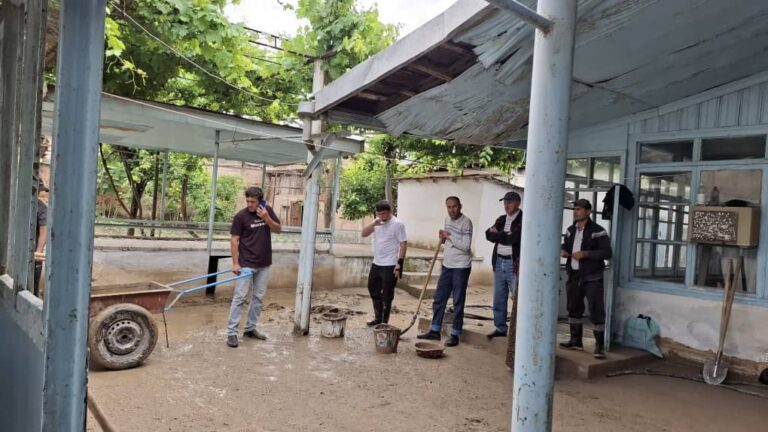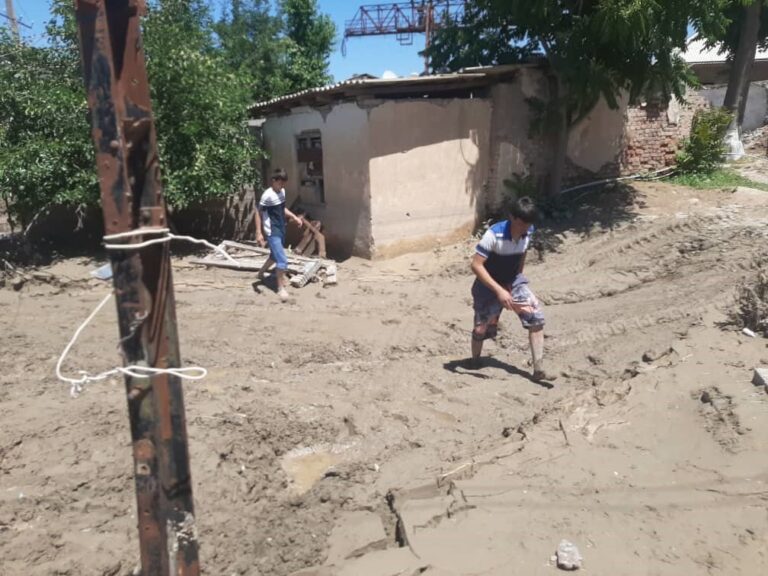
DUSHANBE, December 10, 2015, Asia-Plus – The Bartang Valley still remains cut off from the Rushan district as rockfalls caused by a December 7 strong earthquake blocked the road connecting the valley and the administrative center of the district.
Moreover, the area remains inaccessible for air transport. “Two transport helicopters of the Ministry Defense (MoD) that were sent to provide assistance to the quake-affected people could not fly from Rushan to Bartang yesterday because of bad weather conditions,” Faridoun Mahmadaliyev, a spokesman for a MoD, told Asia-Plus today.
Meanwhile, Ms. Niloufar Aslamshoyeva, a spokesman for the regional administration of the Gorno Badakhshan Autonomous Region (GBAO), says the quake-affected residents of Bartang have been placed in houses that survived the earthquake and 60 tents of the Committee on Emergency Situations and Civil Defense (CES) that have been kept in the area in reserve.
According to her, the quake-affected residents of Bartang are provided with food products that were shipped to the valley by the Material Reserve Agency last summer.
GBAO Governor Shodikhon Jamshed has reportedly got Bartang on foot during two days and he is currently there.
Niloufar Aslamshoyeva says aftershocks are continuing in the Rushan district.
We will recall that speaking at the government session, Prime Minister Rasoul Qohirzoda noted yesterday 237 residential buildings have been destroyed completely and 588 residential buildings have been damaged partially in Gorno Badakhshan.
In the Rushan district alone, 214 residential buildings have been destroyed completely and 205 other houses have been damaged partially.
Besides, many social facilities such as schools, libraries and others have been destroyed completely or damaged partially by the earthquake.
The earthquake measuring 7.2 on Richter scale hit a sparsely populated area in the Gorno Badakhshan on December 7 at 12:50.
The Geophysics Service of Tajikistan’s Academy of Sciences says the epicenter was 93 kilometers west of the settlement of Murgab, the administrative center of GBAO’s Murgab district, 138 kilometers northeast of Khorog, the capital of Gorno Badakhshan Autonomous Region and 357 kilometers southeast of Dushanbe.
The location of the earthquake was reportedly close (only 22 kilometers) to Lake Sarez, which was formed in February 1911 when a nearby M 7.3 earthquake dammed the Murgab River.
A tremor measuring 3.0-4.0 on the 12-point scale could be felt in Dushanbe as well, according to the Geophysics Service.
The Committee on Emergency Situation and Civil Defense (CES) says two people were killed and at least 13 others were injured by the December 7 earthquake.
The U.S. Geological Survey said the December 7 earthquake epicenter was 345 kilometers east of Dushanbe and it was felt as far away as the Indian capital, New Delhi, as well as in Afghanistan and in Pakistan.