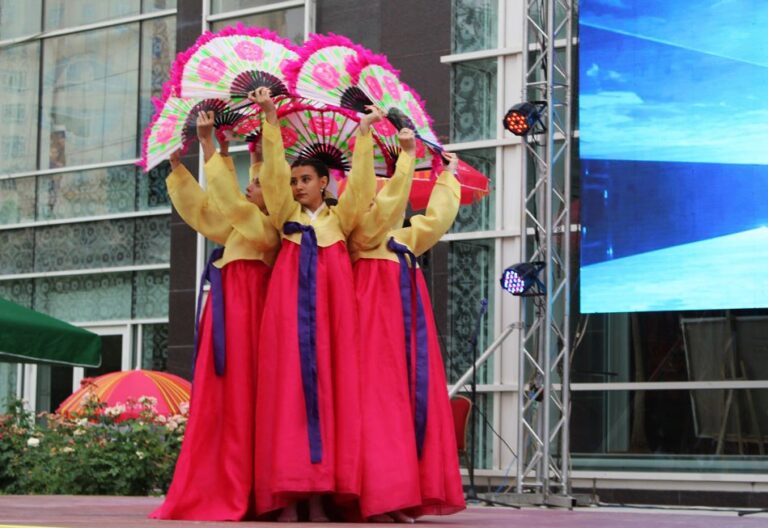


Playing Together: Celebrating U.S.-Central Asian Collaboration marks the 25th anniversary of the creation of the independent Central Asian states with a series of concerts and workshops by U.S. and Central Asian musicians.
U.S. Embassy in Dushanbe says three leading contemporary U.S. musicians traveled to Almaty, Kazakhstan for one week to conduct workshops and collaborate with 24 young musicians from across Central Asia, including four musicians from Tajikistan.
During this cross-border peer-to-peer exchange, the participants have reportedly created new compositions that reflect the diversity and richness of American and Central Asian traditional, classical, and contemporary music while building friendships and professional networks. This music has been premiered in a concert at the Almaty Conservatory, followed by a tour to Astana, Ashgabat, Bishkek, Dushanbe, and Tashkent to perform concerts and share information about this unique collaboration between U.S. and Central Asian musicians.
The project builds on two years of bilateral exchange between musicians in Central Asia, the U.S., and India, which introduced participants to new music practices and theories and encouraged collaboration across borders. Celebrating the diversity and talent of Central Asian and U.S. musicians, Playing Together in 2016 will provide both professional development opportunities for young musicians to become trainers and leaders in their countries and engage local audiences throughout Central Asian with the rich and diverse music of both the new Silk Road and the United States.
The project began with a week of intensive workshops in Almaty led by U.S. and Omnibus musicians. During the workshops, the participants learned new skills and collaboratively composed new compositions in small groups. The workshop in Almaty will be followed by a 10-day concert tour to each of the five Central Asian countries. The concerts will highlight the diversity of these countries as well as commonalities in their traditions and cultures, demonstrating how music and cross-cultural exchange can unite people and help build a more stable, prosperous and integrated region.
In Dushanbe, the concert is being held at the Theatre of Opera and Ballet today at 18:30. Admission is free.
The events were organized by CEC ArtsLink in collaboration with Omnibus, Bactria Cultural Center and other Central Asian music institutions with the support of the U.S. Embassy in Kazakhstan, Kyrgyzstan, Tajikistan, Turkmenistan, and Uzbekistan.
The project is entirely supported by the State Department’s Bureau of Central and South Asian Affairs.