Currently, Tajik population’s incomes mainly go to satisfying immediate needs and the authorities consider the time has come for households to invest a portion of their means in the country’s economy.
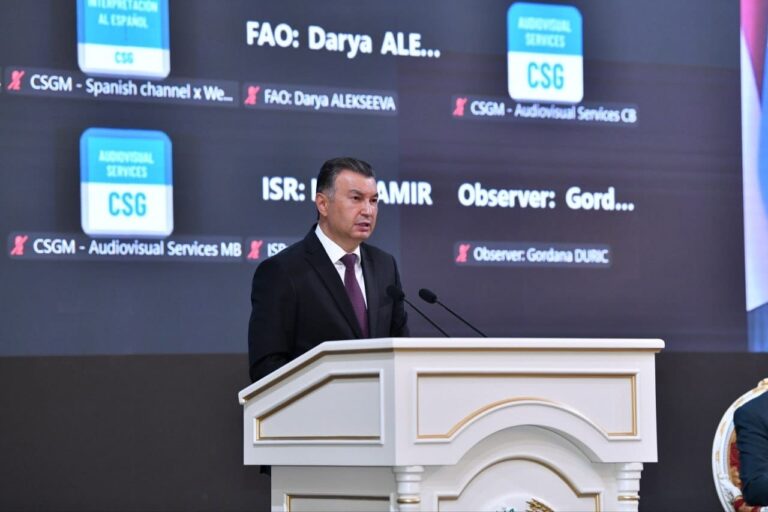
“The medium-term development designed for 2016-2020, which is currently under consideration by the parliament, in particular, provides for changing people’s approach to their incomes,” Deputy Minister of Economic Development and Trade, Umed Davlatzod, noted today at the scientific symposium titled “Investment Policy of Tajikistan: State and Prospects.”
“Today, middle class makes up about 25 percent of the country’s population and the poverty rate has dropped to 31 percent. We must now refrain from spending our incomes only for consumption. It is necessary to spend a portion of these means on further development of the economy and well-being of households,” Davlatzod said, noting that the government must interest people economically.
“The government should create conditions in order to rouse people’s interest in investing their incomes in the country’s economy,” the deputy minister added.
The country’s medium-term development program provides for reducing the poverty rate in the country from 31 percent in 2015 to 20 percent in 2020.
The medium-term development program designed for 2016-2020 is the first phase of the government’s National Development Strategy 2016–2030
The strategic directions of this program include developing an institutional support system, improving the business environment for private sector development, and increasing human capital productivity.
The second phase (2021–2025) of the National Development Strategy 2016–2030 is planned for rapid growth of investments; while the third phase (2026–2030) is projected to mark the transition from industrialized growth strategies to diversified production and knowledge-based innovation.
The priorities of the National Development Strategy 2016–2030 are energy security and efficient use of energy, improved communications and reposition as a transit country, food security, nutrition and improve public access to quality food, and creation of jobs through increased private investment, economic diversification, and competitiveness.