Two mild tremors have shaken Tajik-Kyrgyz border.
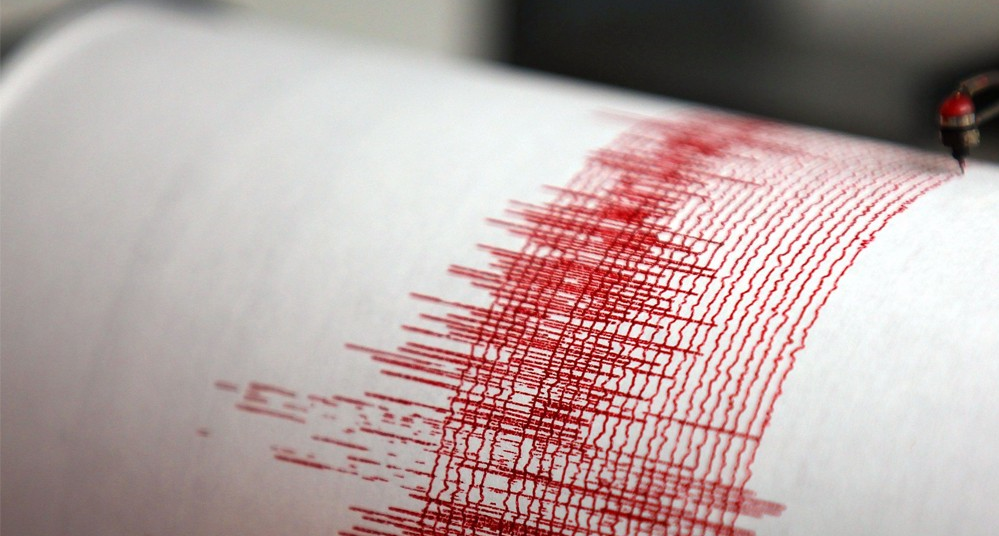
According to the Institute of Seismology of Tajikistan’s National Academy of Sciences, the first quake measuring 4.0-5.0 on a 12-point scale (the Medvedev–Sponheuer–Karnik scale, also known as MSK-64) struck in the area on the Tajik-Kyrgyz-border, 180 kilometers northeast of Dushanbe and 50 kilometers northeast of the Rasht district, late at night of May 27.
The 2.0-magnitude earthquake could felt in Dushanbe.
The second tremor measuring 3.5 on the 12-point scale struck in the same area on May 28 at around 7:00 am.
No damage or injured was reported, according to the Committee on Emergency Situations and Civil Defense (CES) under the Government of Tajikistan.
Recall, several tremors were reported in Rasht Valley (eastern Tajikistan) in early May.
Two tremors measuring 4.6 and 6.0 respectively struck in the Lyakhsh (formerly Jirgatol) district, 265 kilometers northeast of Dushanbe, during one minute on May 3 at 9:47 am.
The 3.0-magnitude earthquake could felt in Dushanbe.
According to CES, two houses were partially damaged in the village of Sargoy, Lyakhsh district. No injured was reported.
The 5.0-magnitude earthquake struck in the Lyakhsh district, 263 kilometers northeast of Dushanbe, on May 4 at 1:30 am. No damage or injured was reported.
The 2.0 magnitude tremor could be felt in Dushanbe.
The 5.0-6.0 magnitude earthquake struck in the Lyakhsh district, 265 kilometers northeast of Dushanbe not far from Kyrgyzstan’s border, on May 5 at 10:09 am.
The tremor measuring 3.0-4.0 could be felt in Dushanbe and the tremor measuring 2.0 could be felt in Khatlon province.
No damage or injured was reported.
The mountainous Tajikistan is prone to regular natural disasters, including landslides and earthquakes.
The Medvedev–Sponheuer–Karnik scale, also known as MSK-64, is a macroseismic intensity scale used to evaluate the severity of ground shaking on the basis of observed effects in an area of the earthquake occurrence.
The scale was first proposed by Sergei Medvedev (USSR), Wilhelm Sponheuer (East Germany), and Vít Karník (Czechoslovakia) in 1964. It was based on the experiences being available in the early 1960s from the application of the Modified Mercalli intensity scale and the 1953 version of the Medvedev scale, known also as the GEOFIAN scale.
With minor modifications in the mid-1970s and early 1980s, the MSK scale became widely used in Europe and the USSR. In early 1990s, the European Seismological Commission (ESC) used many of the principles formulated in the MSK in the development of the European Macroseismic Scale, which is now a de facto standard for evaluation of seismic intensity in European countries. MSK-64 is still being used in India, Israel, Russia, and throughout the Commonwealth of Independent States.
The Medvedev–Sponheuer–Karnik scale is somewhat similar to the Modified Mercalli (MM) scale used in the United States. The MSK scale has 12 intensity degrees expressed in Roman numerals.