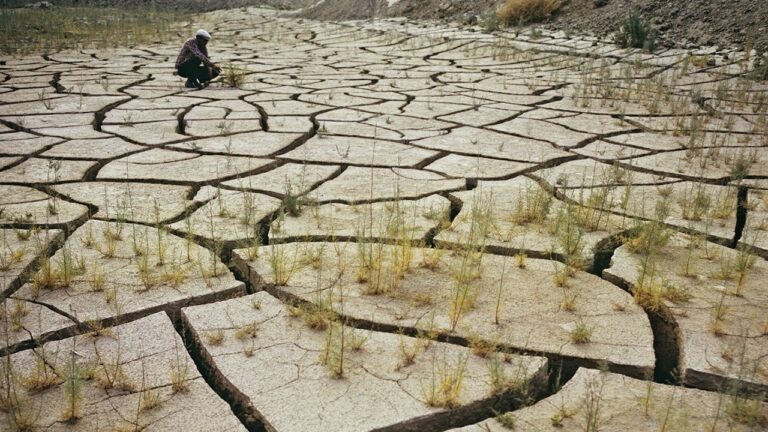
Tajikistan, a heavily mountainous region with a population of 8.5 million, is highly vulnerable to climate-induced shocks like droughts, flooding, landslides, and more.
By 2050, up to one third of the glaciers across Central Asia are predicted to disappear entirely, dramatically raising the risk of sudden floods from glacier lake outburst. For the country’s agricultural sector, which employs nearly 60 percent of the population, disasters like this are especially devastating, as vital transport networks are washed away, often taking months or years to restore, according to the World Bank.
Rising disaster and climate risk, in addition to high vulnerability to seismic events, is reportedly threatening to undo much of Tajikistan’s impressive development progress over the last few decades.
Since 1999, Tajikistan has managed to cut its poverty rates in half, and reduce extreme poverty by nearly two-thirds. However, the last 25 years have also seen a string of major disasters across the country, collectively causing economic losses in excess of $1.8 billion and affecting more than 80 percent of the population, with the most vulnerable bearing the brunt of these impacts.
In order to protect Tajikistan’s socioeconomic gains and make development efforts in the country sustainable, efforts to build climate and disaster resilience are essential.
With the aforementioned challenges in mind, the World Bank has been partnering with the government of Tajikistan to strengthen critical infrastructure in some of the most vulnerable regions.
A new $50 million project (Strengthening Critical Infrastructure against Natural Hazards) aims to:
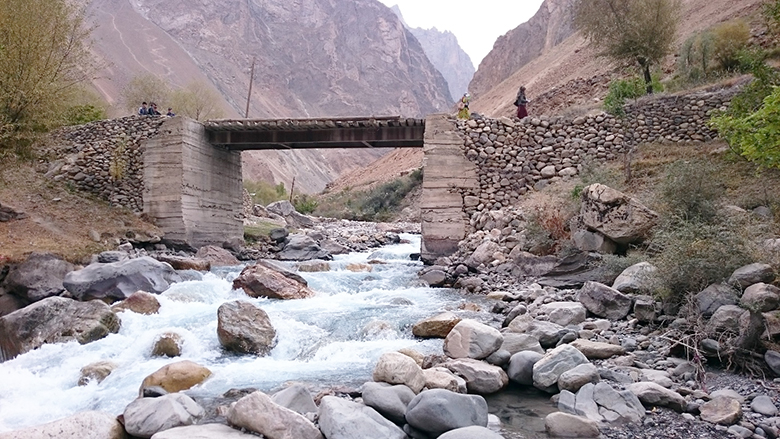
– Reconstruct and upgrade critical bridges in the Gorno-Badakhshan Autonomous Region (GBAO) to improve their resistance to impact from flooding and mudflows. In addition to securing important emergency transportation networks, the upgrades will also allow for more fluid traffic and help unlock local economic potential;
– Reconstruct and reinforce selected river embankments to improve river flow in the Khatlon province, increasing household safety, preventing erosion, and decreasing disruptions to farming activities;
– Modernize the national crisis management center and emergency communication systems to enable first responders to rapidly access hazard information, generate timely warnings for at-risk communities, and dispatch emergency services more effectively;
– Develop a disaster risk financing strategy for Tajikistan to prepare for efficient financing mechanisms for post-disaster response, recovery and reconstruction.
The comprehensive project, which is expected to benefit more than 650,000 people, builds on years of important partnerships between the government and key development partners to identify priority risks, align with international best practices, and execute strategic investments in resilience.
In 2016, for example, Tajikistan sent experts to Japan to meet with government agencies, disaster risk management and infrastructure specialists as part of an important knowledge-sharing exercise. Insights from this exchange helped inform Tajikistan’s own strategy for strengthening key transport areas throughout the country. The government also worked closely with ARUP, a leading independent infrastructure firm, to ensure that the country’s investments are climate-resilient.
Other important partners, such as UNDP, Aga Khan Development Network, the Asian Development Bank, and others also provided key financing and technical assistance that both expanded the scale and shortened the implementation of these important interventions, highlighting the shared commitment to quality infrastructure across leading development actors.