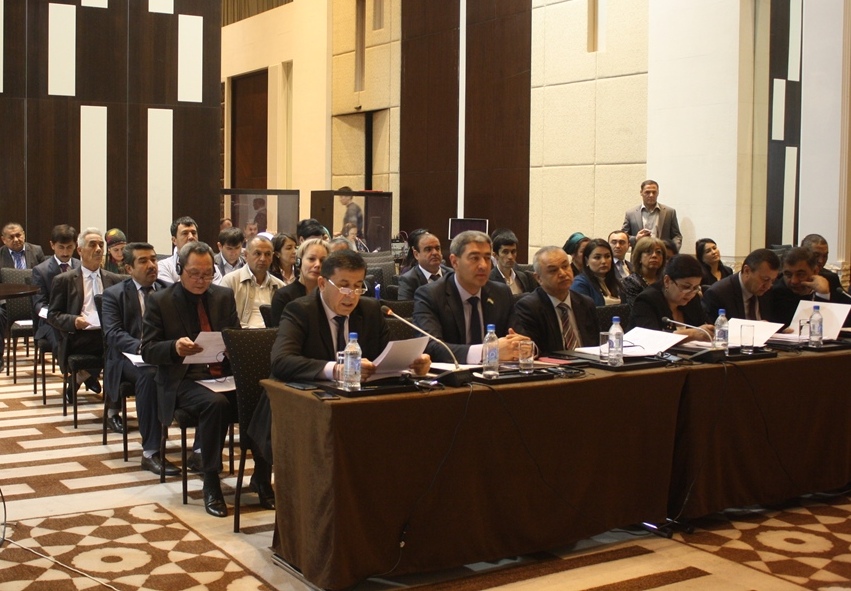
A conference to discuss development of use of land rights in Tajikistan was held in Dushanbe yesterday.
The conference participants, in particular, discussed a range of issues related to creation of land market in the country.
They noted that it was necessary to improve land legislation on creation of a civilized land market in Tajikistan.
Shuhrat Shorahmonov, a specialist in legal issues, noted that it meant implementation of market principles of land tenure and support for development of land tenure market.
He also pointed to the necessity simplifying the process of registration of land tenure rights and providing gender equality in right to land.
MP Jamshed Murtazoqulov reported on collaboration between the Inter-Ministerial Working Group on Land Reform Management (WG) and Land Reform and Farm Restructuring Project (LRFRP).
Valery Kim, the head of the Legal Department at the Association of Banks of Tajikistan, reported on problems of Tajikistan’s legislation on the agricultural land mortgage, noting that there was no regulation on providing land tenure right with the right of alienation.
Throughout Tajikistan, land, and access to it, is paramount to continued resilience and improved livelihoods of rural citizens. Agricultural output, especially from small to medium sized farms, constitutes a disproportionately high percentage of Tajikistan’s overall Gross Domestic Product (GDP) and represents an opportunity for continued economic growth for both the farmers and the country.
USAID launched the Feed the Future-funded Land Reform and Farm Restructuring Project (LRFRP) In October 2013. This three-year project supported the continuing process of dehkan farm restructuring and recognition of property rights leading to a market in land-use rights through four key tasks: 1) legislative reform; 2) building the capacity of Tajik officials, farmers, rural stakeholders, and civil society; 3) increased public information and awareness; and 4) provision of legal advice and assistance to rural farmers.
LRFRP’s broad range of activities covered 12 districts in the Khatlon province, which comprises 67 jamoats. To achieve its results, LRFRP worked through the four mutually reinforcing project tasks, generating significant reforms and improved awareness among Tajik citizens that will have lasting effects for generations to come.