Tajikistan and Uzbekistan plan to establish regular air communication between the Tajik capital and Uzbek cities of Bukhara and Samarqand.
The issues of extending carriage of passengers between Tajikistan and Uzbekistan were discussed at the session of the Tajik-Uzbek commission for trade and economic cooperation that took place here in January this year,” the Minister of Transport, Khudoyor Khudoyorzoda, told reporters at a news conference in Dushanbe on February 15.
He noted that Uzbekistan Airways has operated regular flights from Tashkent to Dushanbe since April last year.
Minister Khudoyorzoda also said that the Uzbek side had proposed to launch regular flights between Dushanbe and the Uzbek cities of Bukhara and Samarqand.
According to him, an appropriate agreement on this subject is expected to be signed during Uzbek president’s visit to Dushanbe.
“Besides, works on resumption of traffic along the rail link connecting Uzbekistan and southern Tajikistan is under way,” said Minister Khudoyorzoda. “We together with top managers of Tajik Railways (Tajik national railway company) have inspected our section of this railway. Repair works are under way and our Uzbek colleagues have also begun repair works.”
The minister added that resumption of traffic along that railway was of significant importance for Tajikistan, Uzbekistan and Afghanistan. “This railway could be used for transporting Tajik goods, particularly cement, to Afghanistan through the Uzbek city of Termez.
Recall, the Tajik side proposed to resume traffic along the Termez to Qurghon Teppa railway at the session of the Tajik Tajik-Uzbek commission for trade and economic cooperation in July 2015.
Rail traffic stoppages resulting in delays of cargo supplies to Tajikistan began in Uzbekistan in November, 2009. The rail blockade imposed by Tashkent on Tajikistan came as a response to the intensification of construction of the Roghun hydroelectric power plant (HPP). The conflict between the two countries saw escalation in November, 2011 following a blast at the Galaba-Amu Zang stretch of the Termez to Qurghon Teppa railroad in southern Uzbekistan, not far from the Tajik and Afghan borders. The incident was promptly described as a terrorist attack by the Uzbek media and Uzbekistan suspended the Galaba-Amu Zang traffic in its wake, effectively subjecting Tajikistan's southern Khatlon province to a transit blockade. In the process, Tajik experts actually contested the version by which the blast had been a terrorist act and expressed a view that, citing the incident, Tashkent seized the opportunity to put Dushanbe under pressure. Tajik railroad officials said Uzbekistan's railroad company could easily restore the bridge damaged by the blast within 24 hours and stressed that Uzbekistan brushed off the Tajik offer of help in doing so.
In the spring 2012, Uzbekistan dismantled the Termez to Qurghon Teppa railroad without sending any notification to the Tajik side.
As far as the session of the Tajik-Uzbek commission for trade and economic cooperation that took place in Dushanbe on January 10 this year is concerned, Dushanbe and Tashkent agreed to open several bus links to connect the two nations' towns and cities and on the new border regulation allowing Tajik and Uzbek nationals to visit each others’ countries without visas for up to 30 days.
Following the collapse of the Soviet Union in 1991, ties between Tajikistan and Uzbekistan have often been tense due to disagreements on issues including borders, water, energy resources, and transit routes.
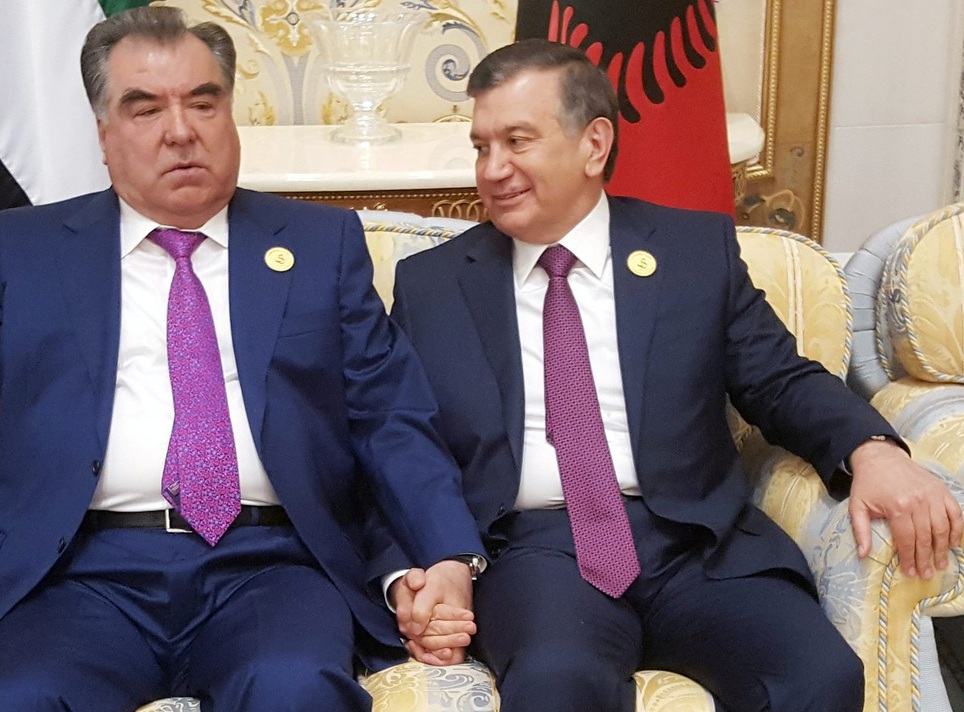
Relations between the countries have become warmer after Shavkat Mirziyoyev came to power in Uzbekistan in 2016. Mirziyoyev has said that improving ties with Central Asian nations is a major priority of Uzbekistan’s foreign policy.
Shavkat Mirziyoyev told lawmakers in the Tashkent region on January 6 that important bilateral agreements would be signed during his visit to Tajikistan. “We will sign many agreements on cooperation in the railway and energy spheres. We will also be considering many other issues,” he said.