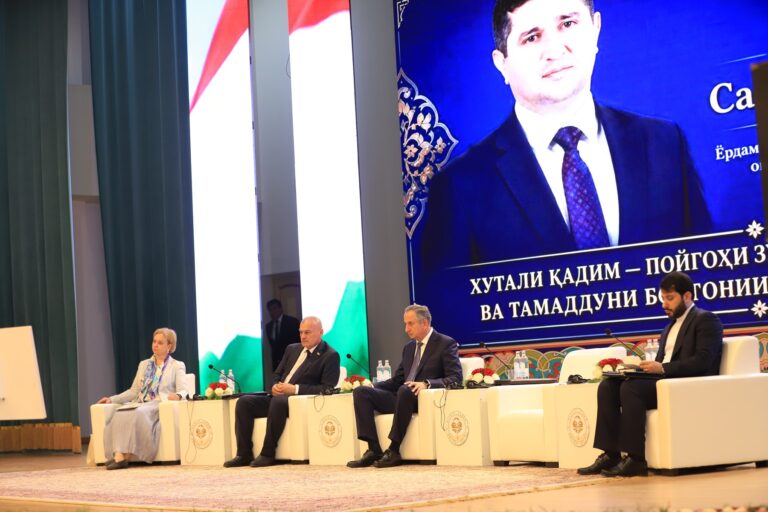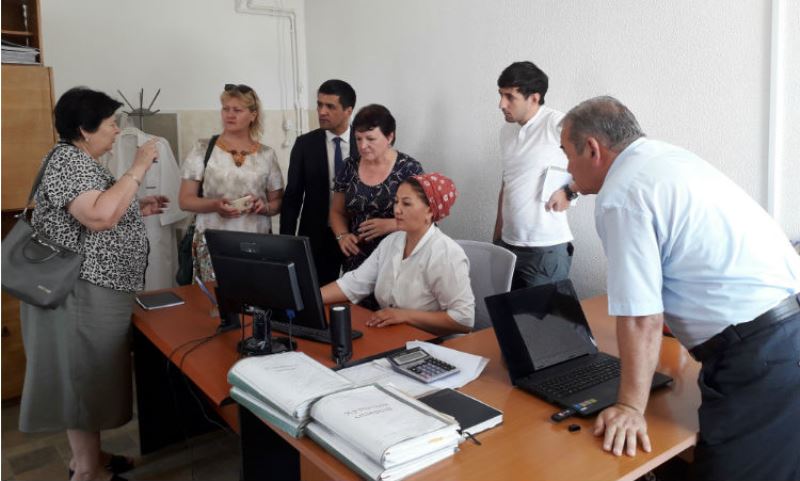
Public health experts from Uzbekistan’s Ministry of Health, Republican Specialized Scientific and Practical Medical Center of Phthisiology and Pulmonology, and the Women’s Committee of Uzbekistan traveled to Tajikistan on July 3 to meet with their colleagues at the Republic of Tajikistan National Tuberculosis (TB) Program, TB care facilities, Center for Promotion of Healthy Lifestyle, Women’s Committee, and non-government organizations.
According to the U.S. Embassy in Dushanbe, the seven-day visit focused on exchanging knowledge and best practices in effectively engaging civil society organizations in TB control. Supported by the United States Agency for International Development (USAID), this is one of many knowledge-sharing activities to help strengthen TB control efforts throughout Central Asia based on international best practices and latest World Health Organization recommendations.
The Uzbekistan delegation visited Dushanbe and the Sughd province and became acquainted with how civil society organizations engage in TB care and how the activities of patient support groups, patient schools, and community health committees established in Tajikistan with support from USAID effectively serve as critical links between the communities and healthcare, especially in Tajikistan’s remote areas. Civil society organizations are reportedly very effective in building awareness of this infectious but curable disease, supporting patients throughout their lengthy and sometimes complex TB treatment, and counteracting stigma and discrimination against those affected by TB.
The Uzbekistan and Tajikistan colleagues also exchanged expertise in TB prevention and treatment approaches among women – a key affected population. In Tajikistan, with USAID’s support, civil society organizations and community health committees contribute to the detection of every third new case of TB among women in the program regions. This knowledge exchange will contribute to further improvements in TB control through effective engagement of civil society for resilient communities in both countries and throughout Central Asia.
USAID supports the Ministry of Health of the Republic of Uzbekistan and the Ministry of Health and Social Protection of the Republic of Tajikistan in implementing their National Tuberculosis Programs by providing more effective and accessible TB prevention, diagnosis, and treatment for all, including vulnerable populations. The main objective of the five-year USAID TB Control Program is to reduce the burden of TB and prevent multidrug-resistant forms of the disease in Tajikistan and Uzbekistan. The USAID TB Control Program covers a wide range of technical areas, including strengthening the health systems’ human and institutional capacity, improving interagency coordination and cooperation, and increasing access to diagnosis and treatment.