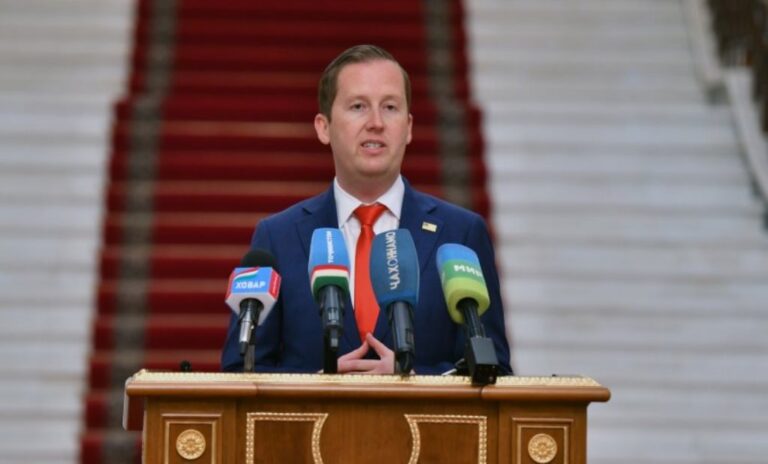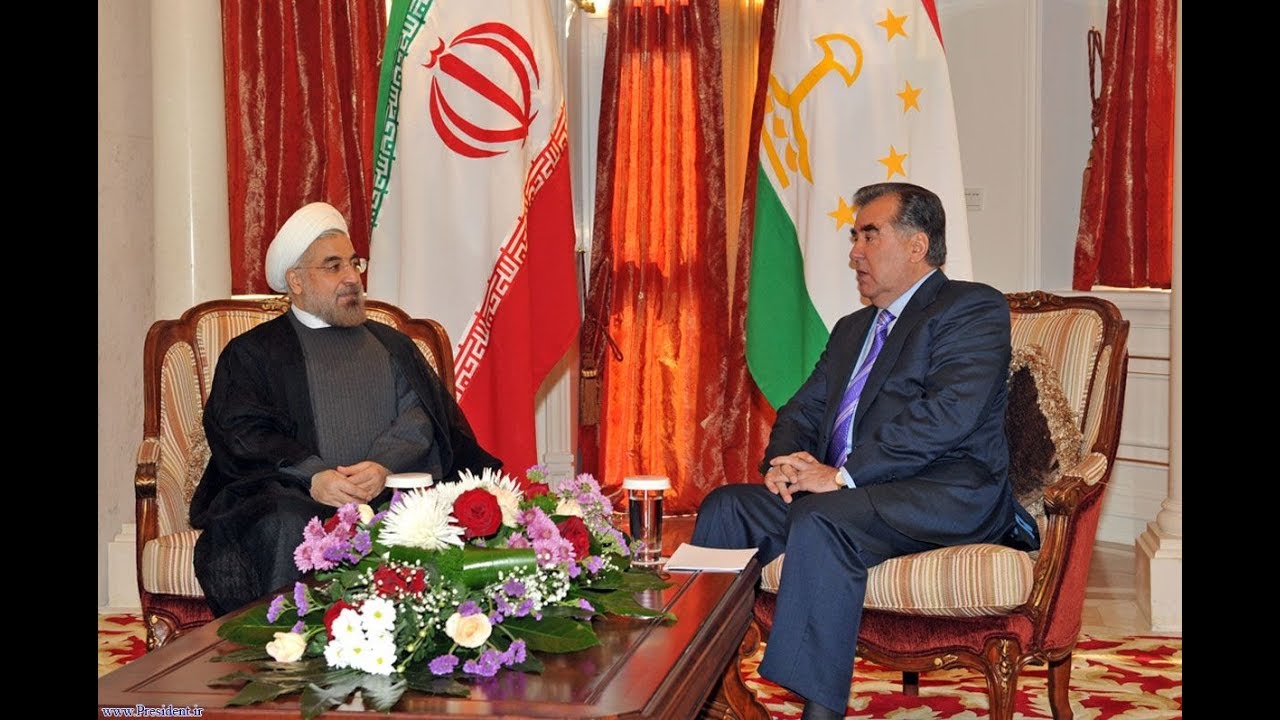
Senior experts from the Center for Strategic Studies under the President of Tajikistan hope for early warming of relations between Tajikistan and the Islamic Republic of Iran.
“I hope the warming of relations between Tajikistan and Iran will come already this year after appointment of new ambassadors,” Parviz Muhammadzoda, the deputy head of the Tajik state think tank, told reporters in Dushanbe on February 8.
Ex-director of the Center for Strategic Studies, Khudoberdi Kholiqnazar, who also attended the news conference, noted that “Tajikistan was always trusted ally of Iran and never opposed this country.”
“The relationship became different after Iran in 2016 invited the leader of the extremist organization, which is banned in Tajikistan, to attend the International Islamic Unity Conference in Tehran. So we lost confidence in them,” Kholiqnazar said.
He stressed that Iranian diplomats are now seeking to improve relations between the two countries, “but they must prove this by actions.”
“For example, investments are one of indicators of a level of relations between the countries. After 2016, we, unfortunately, do not see Iranian investments in our economy,” said Kholiqnazar. “Tajikistan is ready to review bilateral relations with Iran but we still do not see specific steps from that side.”
Tajikistan and Iran have traditionally close relations, sharing many similar cultural, religious and ethnic identifiers and Iran has been a major sponsor of essential hydropower infrastructure in Tajikistan, but Iran has angered Tajikistan by welcoming the Islamic Revival Party (IRPT) leader Muhiddin Kabiri, who is wanted by police in Tajikistan to face various terrorism charges.
Recall, Iran invited IRPT leader Muhiddin Kabiri to attend the International Islamic Unity Conference that took place in Tehran on December 27-29, 2015.
Tajikistan’s MFA said in a statement on December 29, 2015 that it was “greatly concerned” that “the head of the extremist and terrorist former IRPT, Muhiddin Kabiri, who faces charges of attempting to overthrow the government … has been invited to the conference.”
In April 2016, Tajikistan’s customs service introduced restrictions on the import of food products from Iran. Dry leaf tea, poultry and other goods were ruled unacceptable for their allegedly poor quality. In July 2016, the Tajik office of Iran’s Khomeini Imdod Committee, an international development fund, closed. In early July 2017, the Iranian trade and culture center in the Tajik northern city of Khujand, which was particularly appreciated for its library services and fast internet, closed its doors. The shuttering reportedly came at the request of the Tajik authorities.
In August 2017, Tajik authorities have accused Iran of backing high-profile killings in Tajikistan during the Tajik civil war in the 1990s. In a documentary broadcast on Tajik national television on August 8, the Interior Ministry of Tajikistan claimed that Iran was allegedly interested in unleashing civil war in Tajikistan, and it allegedly provided assistance to the Islamic Revival Party of Tajikistan and trained its militants in Iranian territory. The documentary also accused Iran of involvement in the murder of several Tajik social and political figures as well as 20 Russian military officers in the country during the 1990s Tajik civil war. The documentary further claimed that at the time, Iran had organized a plot to “eliminate Tajik scientists and intellectuals.
Iran’s Embassy in Dushanbe on August 9, 2017 released a statement, in which it dismissed “unfounded claims made in the documentary.” The statement posted on the Embassy’s website, in particular, described such claims as 'regrettable' saying there is no doubt that the documentary’s producers will not be able to mar cultural bonds and historic friendship between the two nations of Iran and Tajikistan.
It added that the noble nation of Tajikistan will never forget that Iran as one of the main founders and guarantors of Tajikistan’s peace and host of talks between the country's conflicting sides, has played a constructive role in ending Tajikistan's civil wars in 1990.