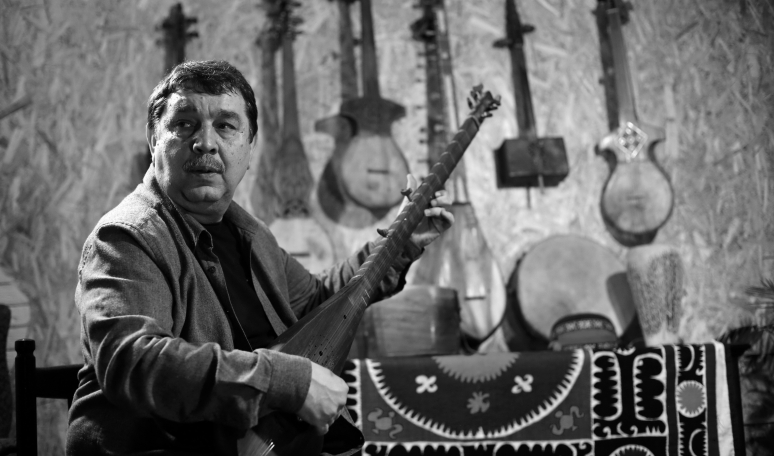
The Master Jury of the Aga Khan Music Awards has announced laureates and finalists for the Awards’ inaugural cycle and the Gurminj Museum is among 2019 Aga Khan Music Awards laureates.
According to the Aga Khan Development Network (AKDN), a three-day celebration of the Awards will be hosted by the Calouste Gulbenkian Foundation in Lisbon, Portugal from March 29-31 March. Finalists for the Award in Performance will perform for a live audience, including the Master Jury, following which the laureate in Performance will be announced at an Award ceremony on the evening of March 31.
In addition to Performance, award domains include music Creation; Education; Preservation, Revitalization and Dissemination; Social Inclusion, and Distinguished and Enduring Contributions to Music. A special Patron’s Award will also be conferred.
The 9 laureates and 14 finalists reportedly come from 13 countries across Asia, Africa, the Middle East, Europe, and North America and represent diverse forms of professional achievement:
The Gurminj Museum and Farhod Halimov, a singer, multi-instrumentalist, and composer from Samarqand, Uzbekistan, have become laureates in the Preservation, Revitalization and Dissemination category.
The Aga Khan Music Awards were created to recognize and support exceptional talent, creativity, promise, and enterprise in music performance, creation, education, preservation, and revitalization in societies across the world in which Muslims have a significant presence.
The Gurminj Museum of Musical Instruments (or Gurminj Museum) is a museum located in the center of Dushanbe.
The museum was founded in 1990 by renowned Tajik actor and musician Gurminj Zavqibekov Gurminj Zavqibekov (1929–2003), who was honored as a National Artist of Tajikistan and a laureate of the most prestigious national prize in arts for significant contributions to the cultural heritage of Tajikistan – the Roudaki State Award. After his death in 2003, his son Iqbol Zavqibekov (also a professional musician) took charge of the Museum.
There are about 100 musical instruments in the Museum collection mostly representing the Pamiri and Badakhshani musical tradition. The collection is dominated by string instruments, such as the tar, rubab, Pamiri rubab, tanbur, dutor, setor, qashqar, and ghizhak. There are also number of drums such as tabl, daf, and doyra.
The collection was gathered by Gurminj Zavqibekov during his trip to his native Gorno-Badakhshan Autonomous Region (GBAO). There are a number of other instruments that do not belong to the Pamiri traditional instruments and some other casual items of antiques are for display at the museum.
Zavqibekov envisioned the museum as a living home for music—a place where his Pamiri lutes, drums, flutes, and other instruments from across Central and West Asia would be played.
The museum also hosts a variety of cultural gatherings and events, many featuring the Tajik musical ensemble Shams and their soloist Nobovar Chanorov. Iqbol Zavqibekov is the arts director of the band.
Today, Zavqibekov’s hospitable spirit and commitment to sustaining traditional music endures through the leadership of his son Iqbol, an award-winning composer and esteemed master of the Pamiri setor. After nearly three decades, the Gurminj Museum stands as one of Tajikistan’s most vibrant and innovative nodes of contemporary musical life.
The Gurminj Museum remains largely volunteer-run, with programs occasionally funded by international donors. With the support of these organizations, the Gurminj Museum has helped to raise the international profile of Tajikistan’s rich musical heritage. The Gurminj Museum is preserving and revitalizing the musical heritage of Central Asian peoples and cultures, and, in particular, the Pamiri musical culture of Tajikistan.