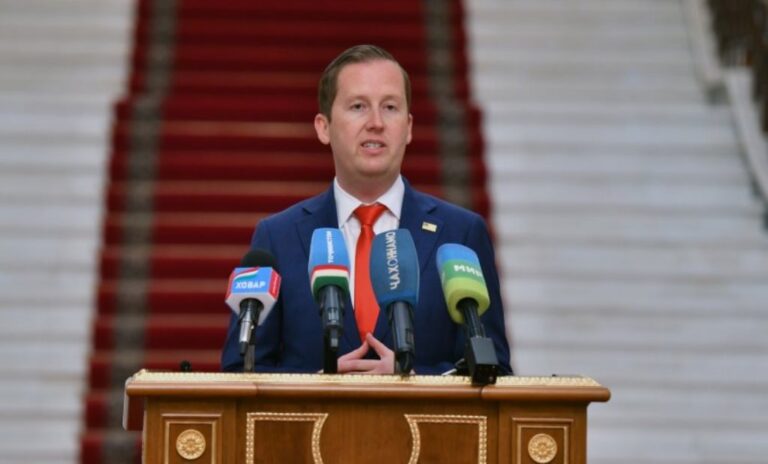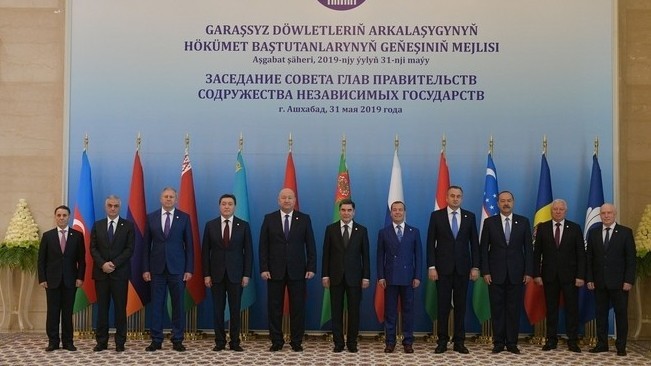
The CIS Council of Heads of Government held a session in Turkmenistan’s capital, Ashgabat, on May 31. Turkmenistan chairs CIS this year. The Tajik delegation was led by First Deputy Prime Minister, Davlatali Said.
The session participants shared opinions on the issues related to economic cooperation in the CIS area and discussed the CIS draft interstate program of innovative cooperation through 2030, according to BelTA. The interstate program through 2020 comes due next year. The document helped create the necessary legal framework, infrastructure for innovative activity, national innovative development structures. The decision was taken to draft a new interstate program to focus on further implementation of goals for efficient building of an interstate innovative space in the CIS.
A number of cooperation documents were signed at the session, including an agreement on cooperation between the customs bodies of the CIS member nations for protection of intellectual property rights, TASS says.
The parties also signed protocols regulating the expansion of cooperation between the CIS states in customs clearance and control of goods, their transit across the territory of the CIS countries.
Besides, the parties signed an agreement to coordinate interstate relations in fundamental research in the CIS. The document will strengthen the common scientific space in the CIS, increase the competitive edge of the CIS scientific sector on the world market, coordinate activities in fundamental research to boost economic potential of the member states.
They also signed an agreement on cooperation in museum affairs.
The session participants decided to appoint Colonel Zhanat Saipoldayev (Kazakhstan) First Deputy Head of the CIS Anti-Terrorism Center.
The CIS Council of Heads of Government was established on December 21, 1991. The council is the second major body in the CIS after the CIS Council of Heads of State, and consists of the prime ministers of all member states. The council coordinates the CIS member states'' cooperation in economic, social and other areas of their common interests, and adopts corresponding decisions through consensus. The A session of the CIS Council of Heads of Government is convened twice a year, normally in winter and autumn. Extraordinary meetings are summoned on the initiative of the government of a member state.
Established on December 8, 1991 after the dissolution of the Soviet Union, the Commonwealth of Independent States (CIS) is a regional organization. It now consists of Azerbaijan, Armenia, Belarus, Kazakhstan, Kyrgyzstan, Moldova, Russia, Tajikistan, Turkmenistan, Uzbekistan and Ukraine. Georgia pulled out of the organization in 2009.
Although Ukraine was one of the founding countries and ratified the Creation Agreement in December 1991, it now takes part in CIS “on selective basis.” On May 19, 2018, President Petro Poroshenko signed a decree formally ending Ukraine's participation in CIS statutory bodies. Since September last year, Ukraine has had no representatives in the CIS Executive Committee building. Ukraine has stated that intends to review its participation in all CIS agreements, and only continue in those that are in its interests.