Russian President Vladimir Putin has signed an agreement with Tajikistan on organized recruitment of labor migrants in Tajikistan for seasonal work in Russia. The document was posted on an official Internet-portal f legal information on December 28.
The agreement that was signed in Moscow on April 17, 2019, in particular, provides for provides for the possibility of comprehensive training of a citizen of Tajikistan in his country of residence for seasonal work in Russia.
Authorized bodies of Tajikistan are charged with informing their nationals about the possibility of employment in the Russian Federation, selecting candidates for employment having the required qualifications and experience of work, as well as training and retraining candidates for employment in accordance with employer’s requirements.
Besides, Tajik authorities should check the candidates for employment their being on the international or interstate wanted list.
Under this agreement, employers must actively participate in an organized recruitment of labor migrants, provide migrants with safe conditions of work and ensure regular payment of wages.
Russia’s lower house (State Duma) of parliament ratified this agreement on December 17.
Russia remains the top destination for Tajik labor migrants and access to Russia’s labor market is a near-existential issue for Tajikistan, where unemployment is rife and most menial jobs are poorly paid.
Outgoing labor migration from Tajikistan has been occurring on a large scale for more than two decades, starting soon after the fall of the Soviet Union. An absolute majority of the Tajik labor migrants live and work in the Russian Federation. Although Tajiks may travel to Russia without a visa, they require additional documentation to work and live there for long periods.
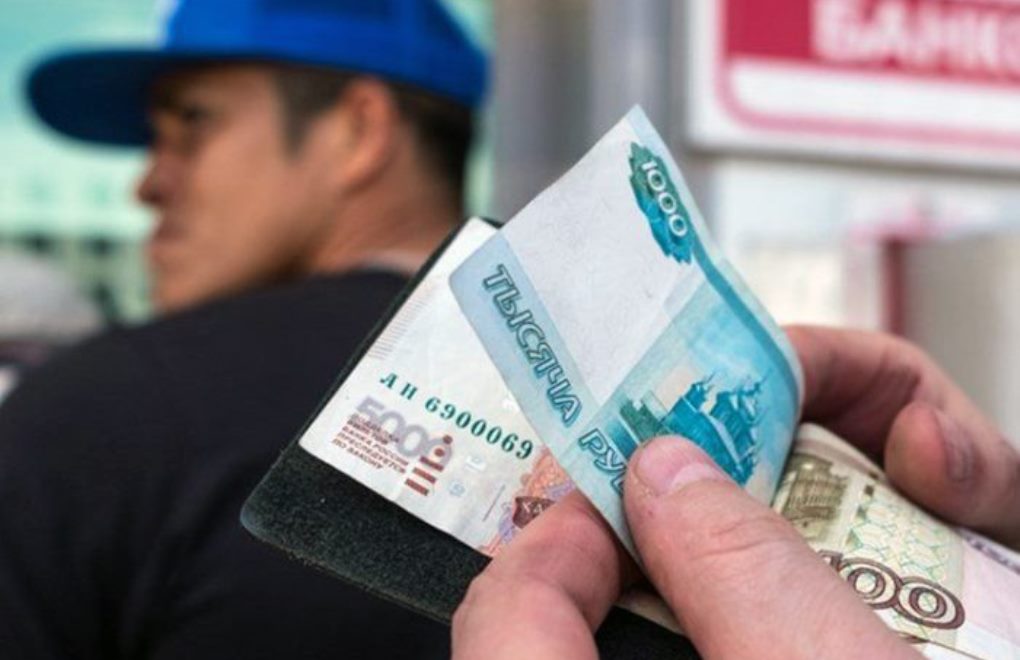
As a social phenomenon this migration has a profound impact not only on the lives of the individual migrants or the families who are being supported by a family member working abroad, but also on the Tajik society as a whole and the country’s economy. Labor migrants are still a critical component in Tajikistan’s economy, keeping many families at home above the poverty line. According to Russia’s Central Bank, around US$2.5 billion worth of remittances were sent from Russia to Tajikistan in 2018, which was equal to 34 percent of country’s gross domestic product.
Meanwhile, Tajik President Emomali Rahmon told joint meeting of both chamber of Tajik parliament on December 26 that compared to 2010 the number of Tajik nationals seeking better employment opportunities abroad has decreased by 60 percent.
“In 2010, 1.1 million Tajik nationals went abroad seeking better employment opportunities. This year, this figure has been only 486,000 people,” Rahmon noted.
According to him, the decrease in the number of labor migrants has resulted from development of the national economy and creation of new job in the country.
However, the president considers that it is not enough and ordered relevant bodies to take adequate measures to ensure creation of 100,000 new jobs per year in order to prevent the outflow of manpower abroad.