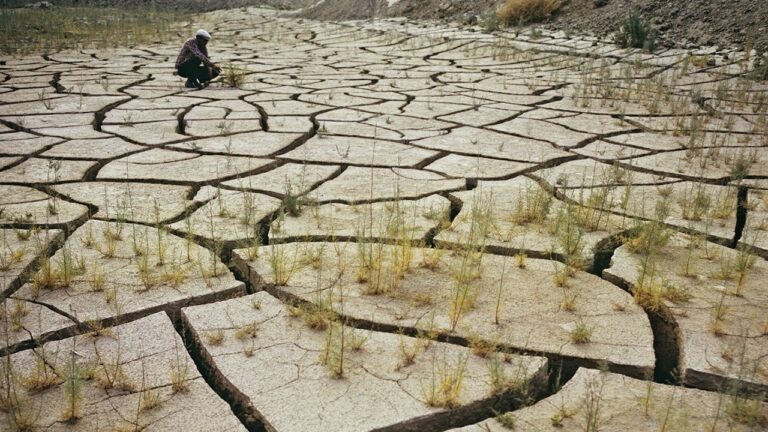
Kyrgyzstan is the third most vulnerable to climate change impacts in Eastern Europe and Central Asia, primarily due to the sensitivity of its agricultural systems to climatic change. Impacts such as climate temperature change could cause altered precipitation patterns and more frequent heat extremes. This leads to an increased incidence of aridity and drought, particularly in the mountain pastures.
Dr. Lira Sagynbekova, Research Fellow at the University of Central Asia’s (UCA) Mountain Societies Research Institute (MSRI) notes that since Kyrgyzstan’s land area is 90% mountainous, it is increasingly important to build resilience to these climate changes, and to enable communities to continue thriving.
Press release issued by UCA says pPastoralism is one of major thematic research areas that UCA’s MSRI has been engaged in since 2011, when it was established as an inter-and transdisciplinary research institute within UCA’s Graduate School of Development.
Several projects have been implemented to produce research and policy outputs that explore pasture resources management, impact of climate change on local community livelihood and resilience assessment.
In collaboration with the London School of Economics and Political Science (LSE), MSRI developed a new approach towards understanding and assessing resilience capacity in rural mountain communities. The project was led by MSRI’s Dr. Sagynbekova. The methodology of using subjective approaches to measure resilience emphasizes the power of local people to understand and communicate their own resilience capacities, without the need for long and complex surveys. The project revealed the importance of social capital and labor migration in enhancing resilience of rural communities to climate related and socioeconomic shocks and stressors.
According to the Department of pastures and breeding livestock production of the Ministry of Agriculture of the Kyrgyz Republic, the area of pastures in Kyrgyzstan is 9 million 147 thousand ha. They occupy more than 85% of the total agricultural land. About 49% of the country’s pastures are reportedly degraded.
A recent study by UCA’s Mountain Societies Research Institute on the “Characteristics and Profitability of Livestock-based Farming Systems in At-Bashy, Naryn Oblast” revealed that the current animal production method in the region is not only unsustainable in terms of pasture use, but also highly risky due to high mortality rates and low market prices for animals. It highlights the importance of understanding the farm agricultural production system in order to make efficient interventions that can contribute to improved crop and animal productivity and sustainable pasture use.
The Naryn region is one of the most important livestock production areas in Kyrgyzstan, with highland pastures covering nearly 90% of the designated agricultural land.
The study aimed to characterize prevailing farming systems in terms of their herding practices and fodder cropping, to determine annual fodder demand and supply for herds, and economic contribution of current livestock raising practices. The research group computed gross margins to assess the farmers’ operational performance in livestock production. Linear programming (linear optimization) was applied to optimize available resources and production system to achieve the maximum gross margins.
In addition to new scientific knowledge, the study offers recommendations and tools that can help to better benefit from market opportunities for livestock and agricultural products in a sustainable basis and enable farmers to adjust and modify their farm management.
MSRI is currently developing follow up activities to effectively transfer these research insights and recommendations to decision-makers at national and local levels. The publication has been translated into the Kyrgyz language and researchers plan to engage relevant state bodies, Department of Pastures of the Ministry of Agriculture, National Pasture Users' Association and Naryn pasture committees in order to apply the research to practice and increase the adaptive capacity of local livestock farmers.