Eurasianet says the last few weeks have seen an unusually intense flurry of diplomacy intended to address long-standing frontier disagreements.
Few developments will prove to have been as consequential as the one kickstarted by Kyrgyz President Sadyr Japarov’s visit to Uzbekistan on March 11-12. Talks on once and for all clearing up territorial differences were top of the agenda during his encounter with his Uzbek counterpart, Shavkat Mirziyoyev.
The leaders signaled, however, that it might be a few months before a deal was definitively thrashed out to delimit the roughly 350 kilometers of disputed sections of the 1,400-kilometer frontier. So it was particularly surprising when an agreement was reached within weeks instead.
In other encouraging and related news, Japarov announced on April 2 that Kazakhstan had agreed to grant Kyrgyz nationals permission to transit the country on their way to Russia. This is an important lifeline for the many people whose families rely on remittances.
This mood of goodwill is reportedly being soured somewhat, however, by a running battle of words between Kyrgyzstan and Tajikistan, which also have long-standing border disagreements.
The stink has by and large been caused by the head of the Kyrgyz security services, Kamchybek Tashiyev – the same man who claimed a triumph over the Uzbek border breakthrough.
In late March, Tashiyev told reporters that he had proposed a land swap, not dissimilar to what had been done with Uzbekistan, but the nature of the exchange was a patent non-starter.
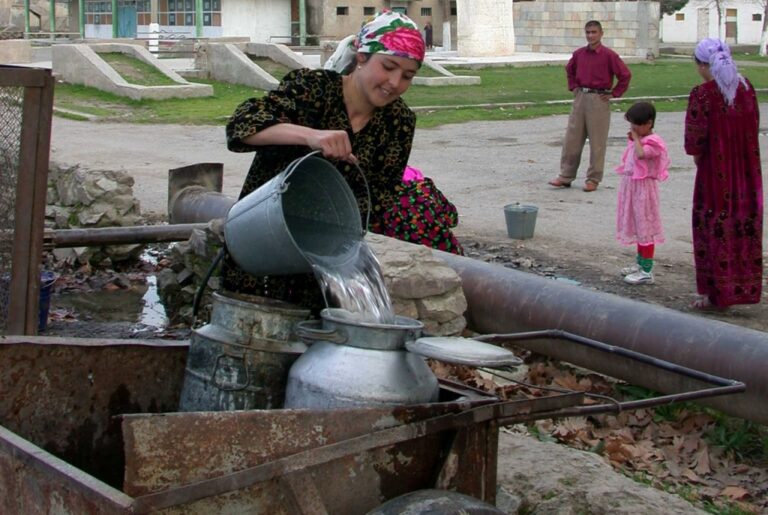
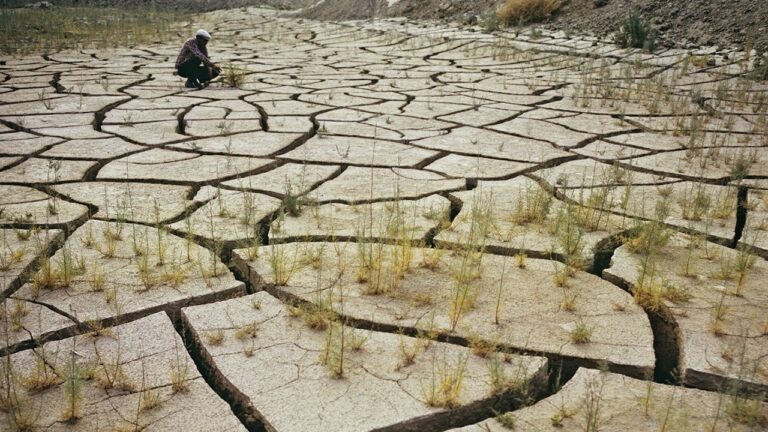
Tajikistan should yield Vorukh, a fertile exclave surrounded by some of the most barren land in Kyrgyzstan, he suggested, and get a parcel of land from the Batken region in return. Disputes in this area, typically centering on access to irrigation water, have flared up with chronometric regularity.
Another idea proposed by Tashiyev was that the Tajiks delimit Vorukh and offer certainties of no future territorial spread of the exclave. People in the exclave would be given unfettered access to a road leading to the Tajik mainland in return, he said.
The ideas have been received coolly.
The Tajik government maintained a stony silence. But former Foreign Minister Hamrokhon Zarifi appeared to ventriloquize Dushanbe’s attitude when he wrote in a testy March 30 Facebook post that Tajikistan would never agree to give up land to Kyrgyzstan. He backed up his cases with references to how the territory was administered in Soviet times. In fact, Zarifi argued, it was Kyrgyzstan’s Batken region that used to be run by the Tajiks.
“There is no need to offer Tajiks their own land in return for other Tajik land,” he wrote.
Days later, in what may or may not have been a related development, Kyrgyzstan held military exercises in its Batken region. Fully 2,000 soldiers, 100 tanks and armored personnel carriers and around 20 units of self-propelled artillery were involved in the drill.
The Tajiks did not take that lying down. On April 9, Tajik President Emomali Rahmon paid a visit to Vorukh to offer direct assurances to residents that talk of surrendering the enclave was off the table.
“I urge you to live with your neighbors in a friendly and good-neighborly manner, remain calm and do not yield to emotions, because all problems must be resolved wholly through negotiations,” Rahmon said in a speech that same in day in the nearby town of Isfahan.
For good measure, though, Rahmon inaugurated new local premises for the security services’ Alfa special forces unit in Vorukh, just in case the call to friendliness was not heard in Kyrgyzstan.