The World Bank says that Europe and Central Asia continue to grapple with containing the coronavirus pandemic, which is clouding the economic outlook for the region.
The Bank said in its latest Global Economic Prospects report, released on June 8, that economic growth for the 23 countries it groups in the region is projected to reach 3.9 percent in 2021, with firming external demand and elevated industrial commodity prices offsetting the negative impact of recent resurgences in new COVID-19 cases.
The World Bank warned, however, that the outlook remains “uncertain,” with uneven vaccine rollouts and the withdrawal of domestic macroeconomic support measures weighing on the regional recovery.
"Several countries in Central Asia, Eastern Europe, and the Western Balkans face bottlenecks related to the production, procurement, or delivery of vaccines secured through the COVAX facility or other agreements," the report said, noting that growth could be weaker than projected if the pandemic takes longer than expected to abate, external financing conditions tighten, or policy uncertainty and geopolitical tensions rise further.
The World Bank also noted that recent currency depreciations have put further upward pressure on prices, a growing concern for some economies that are still trying to shake off the effects of decades of Soviet-era planning.
“As a result of inflationary pressures, policy interest rates have been raised in one-third of the region’s economies thus far in 2021,” the Bank said, pointing to Armenia, Belarus, Georgia, Kyrgyzstan, Russia, Tajikistan, Turkey, and Ukraine.
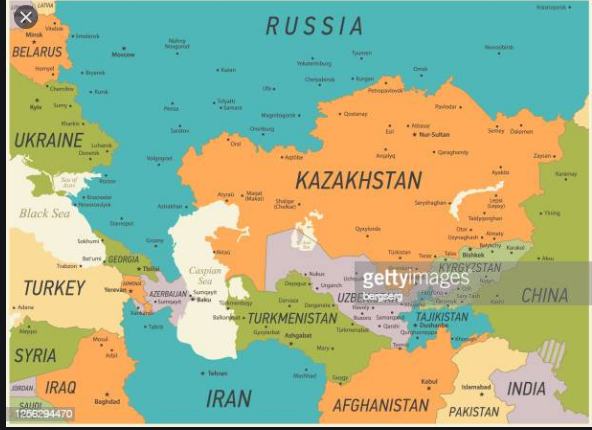
In Central Asia, growth is forecast to recover to 3.7 percent in 2021 and 4.3 percent in 2022—well below historical averages. The economy is reportedly expected to be supported by a modest rise in commodity prices, relaxation of OPEC+ production cuts (Kazakhstan), and firming FDI as the subregion deepens its global and regional integration. In Uzbekistan, growth should continue to benefit from the implementation of an ambitious reform agenda, which progressed last year despite formidable headwinds from the pandemic.
However, the rebound in Central Asia has been dampened by rising policy uncertainty, particularly in the Kyrgyz Republic, following political tensions and social unrest.
Geopolitical tensions have reportedly also increased in Central Asia amid conflict over a border dispute between the Kyrgyz Republic and Tajikistan.
Rising inflationary pressures prompted increases in key policy interest rates in the Kyrgyz Republic and Tajikistan, according to the report.