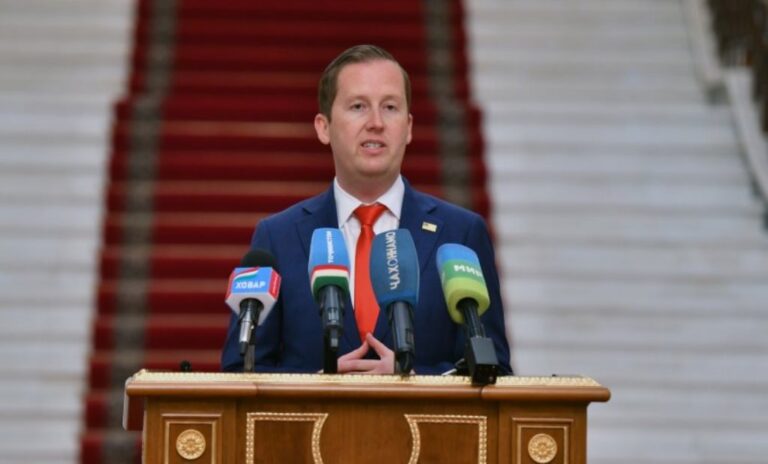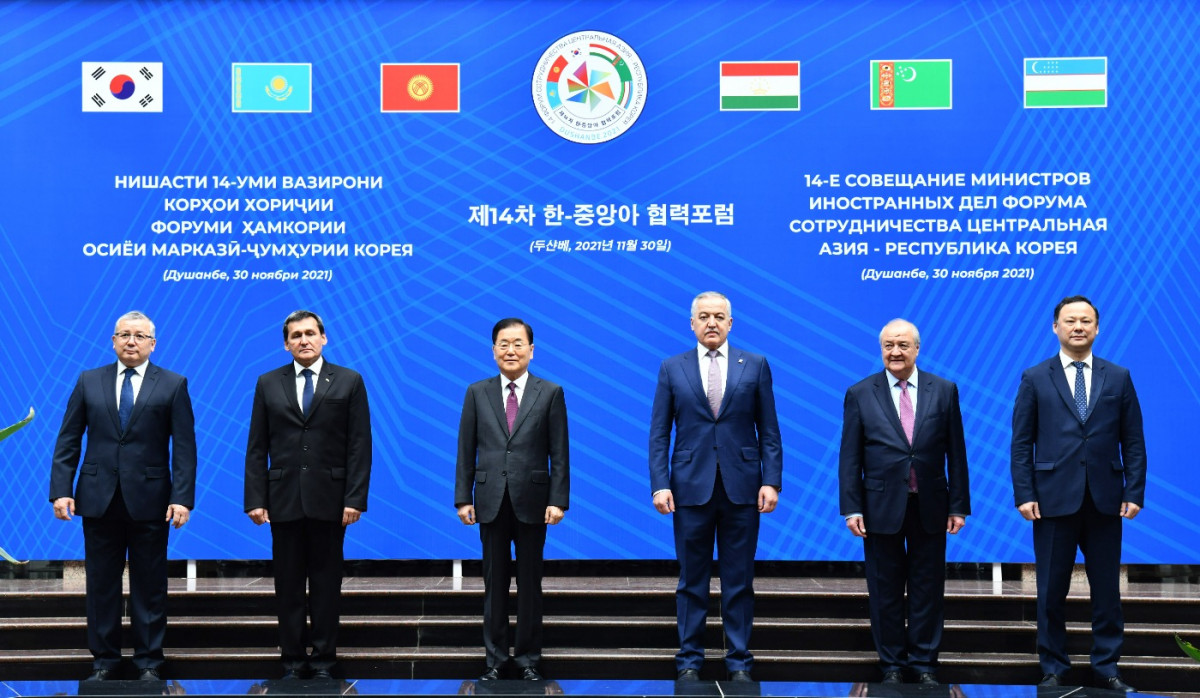
Co-hosted by Tajik Foreign Minister Sirojiddin Muhriddin and Korean Foreign Minister Chung Eui-yong, the 14th Central Asia – the Republic of Korea Cooperation Forum (Central Asia-ROK) took place in Dushanbe on November 30.
The forum participants included foreign minister from the Republic of Korea, Tajikistan, Kyrgyzstan, Turkmenistan and Kazakhstan and deputy foreign minister from Kazakhstan, according to the Tajik MFA information department.
The participants reportedly agreed that the Central Asia-ROK Cooperation Forum is enlarging its capacity, as well as reaching its goals year after year. The parties expressed satisfaction with the exchange of views that took place in the spirit of traditional friendship, openness and pragmatism. The 14th Forum also hosted four plenary expert sessions in the fields of forestry, carbon neutrality, health and digitalization.
The Foreign Ministry of the Republic of Korea says the Forum themed “Korea-Central Asia Cooperation for Post-COVID-19 Economic Recovery” was joined by some 100 experts from Korea and the five Central Asian countries’ institutes in the fields of forestry, energy, digital matters and healthcare, who explored ways to promote Korea-Central Asia cooperation and possible cooperation projects between the two regions.
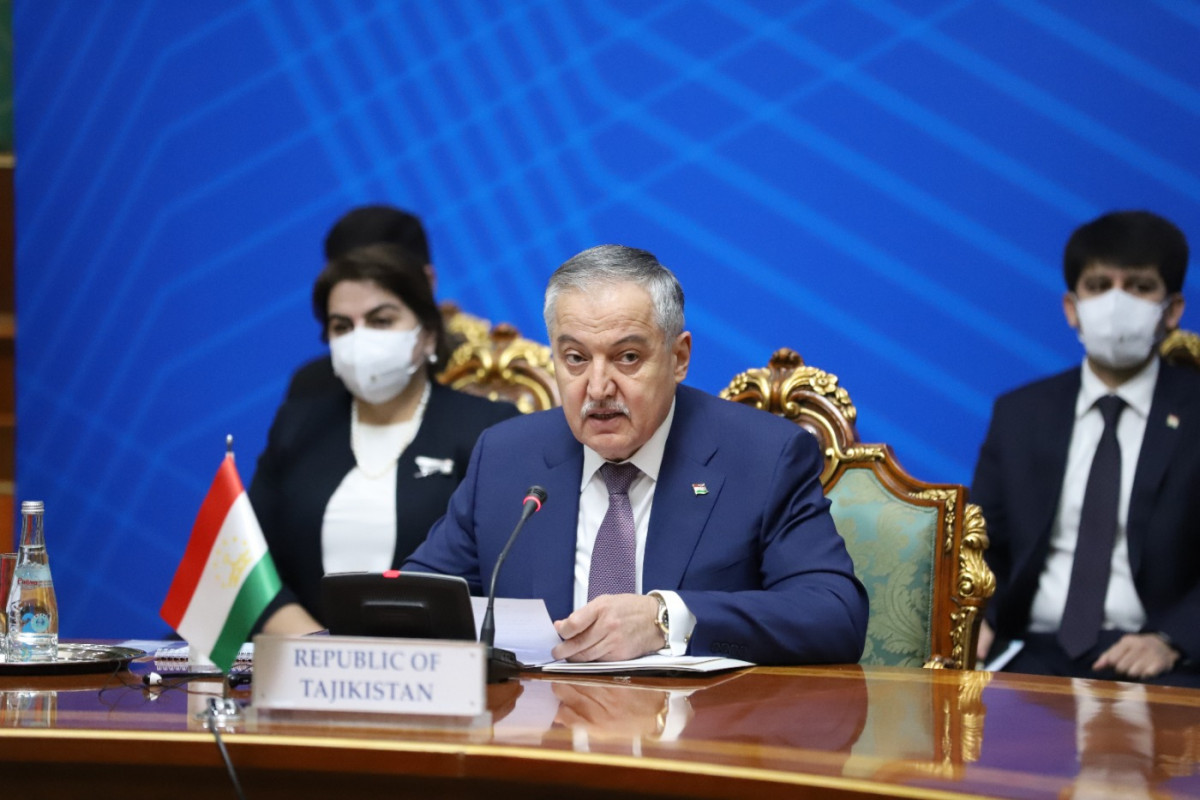
Speaking at the Forum, Tajik Foreign Minister Muhriddin reportedly took note that Korea and the five Central Asian countries had thoroughly prepared for the 14th Forum by holding vice foreign ministerial and working-level meetings, voicing hope that the Forum will help continue cooperation with Korea for a sustainable economic growth and the improvement in the quality of the life in Central Asia.
Mentioning the growing importance of digital-based economic development since the outbreak of COVID-19, Muhriddin voiced hope to draw up and carry out Korea-Central Asia digital cooperation programs.
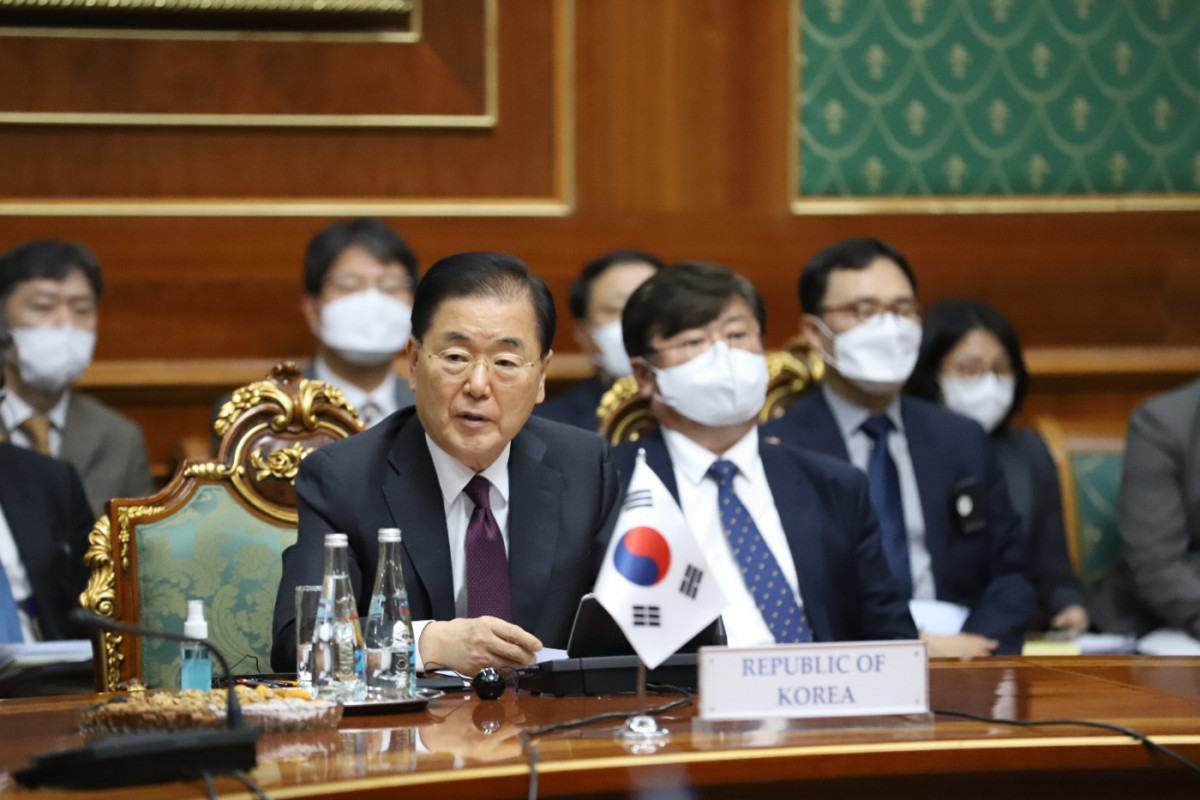
For his part, Korean Foreign Minister Chung stressed that the Central Asian countries are important partners for Korea’s New Northern Policy aimed at peace and shared prosperity on the Korean Peninsula and in Eurasia. He went on to commend the Forum, saying that in the course of the dynamic development of Korea-Central Asia relations since the establishment of diplomatic relations in 1992, the Forum has played a significant role in facilitating continued comprehensive discussions among experts in diverse fields in order to bolster Korea-Central Asia cooperation.
Kyrgyz foreign minister, calling thawing a threat to Central Asia that is destroying forests and the eco-system and causing socio-economic issues, suggested carrying out Korea-Central Asia joint projects to resolve this issue.
Turkmen foreign minister reportedly noted that the relationship built between Korea and Central Asia via the Silk Road long ago is serving as a foundation for the development of Korea-Central Asia relations today, suggesting that the two sides work together in a step-by-step and goal-oriented way.
Uzbek foreign minister expressed hope that the Forum will contribute to responding to climate change in the Aral Sea region and each country drawing up strategies for carbon neutrality.
Kazakh deputy foreign minister, commending Korea’s successful e-government system, conveyed hope that the Korea International Cooperation Agency (KOICA) and the Kazakhstan Agency for International Development (KazAID) will work together to contribute to the development of information and communications technology (ICT) in Central Asia.
At the closing ceremony of the Forum, the head delegates reportedly adopted “a Joint Statement on the Outcome of the 14th Korea-Central Asia Cooperation Forum” and “the 2022 Work Plan of the Korea-Central Asia Cooperation Forum Secretariat.” In addition, they agreed to hold the 15th Forum in Seoul in 2022.
The Forum, the first of its kind held after Korea and the Central Asian countries agreed to upgrade the Forum to the foreign ministerial level last year, is seen to have served as an opportunity to share visions for future cooperation between Korea and the five Central Asian countries and to discuss ways to take relations between the two regions to the next level ahead of the 30th anniversary of the establishment of diplomatic relations in 2022.