The Russian government has announced that it intends to extend its ban on the export of grain and sugar to fellow members of the Eurasian Economic Union (EAEU) until the end of August in a move that has sparked fear of food shortages around the region.
Citing the Russian Economic Development Ministry, TASS said on March 10 that the decision was motivated by the need to “ensure the country’s food security and to help protect the domestic market in the current climate.”
All the other EAEU member nations — Armenia, Belarus, Kazakhstan, and Kyrgyzstan – will be deprived of the opportunity to import wheat, rye, barley, and corn from Russia until that designated date.
Russian officials insist that Russia currently has stocks of grain well in excess of its needs, but that the temporary prohibition has been instituted in part to prevent the re-export of crops to third countries.
A statement released by the Economic Development Ministry says that according to data from the Ministry of Agriculture, grain supplies in Russia exceed 150 percent.
Meanwhile, Eurasianet notes that Kazakhstan last year increased its volume of grain purchases from Russia by 77 percent, or around 2.3 million tons, coming behind only Turkey and Egypt as the main global buyers of Russian grain. Industry insiders say the real volume may be even greater, as official Russian data does not account for transactions made in the gray economy.
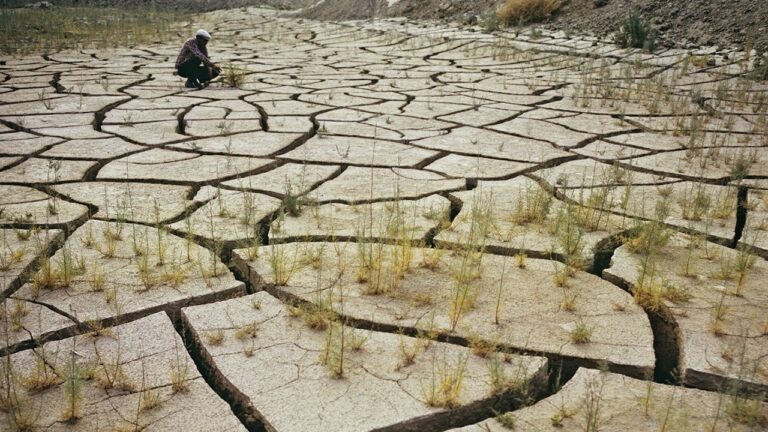
The grain harvest in Kazakhstan was especially bad last year as the result of an extended period of drought.
Meanwhile, Kazakhstan’s Agriculture Ministry reportedly said in a March 11 press release that there were no grounds for concern over food security. Wheat stocks currently stand at around 6.7 million tons, which is sufficient to cover domestic needs until the next fall harvest, the ministry said.
But Yevgeny Karabanov, an expert at the Grain Union of Kazakhstan, an agrarian lobbying group, told Eurasianet that the Russian ban has already sparked panic-buying of flour and that some farmers have taken advantage by hiking their prices.
“Kazakhstan has enough grain, even a lot of surplus that can be exported,” Karabanov said. “What is important is that our authorities do not [also] impose export restrictions that could be harmful to the industry.”
The situation with sugar is reportedly more complicated. Output in Kazakhstan does not fully cover domestic needs. The country imports two-thirds of the sugar it consumes, and half of those imports come from Russia.
A trickle-down effect is bound to be felt in Kyrgyzstan, Eurasianet says. More than 90 percent of the country’s wheat imports are from Kazakhstan and Russia. While Kyrgyzstan produced almost 363,000 tons of its own wheat in 2021, it reportedly imported almost 125,000 tons from Russia.
Bishkek-based news outlet Kaktus reported on March 11 that the price of sugar spiked overnight on the back of the Russian export ban news, from 80 soms (equivalent to US$0.76) per kilogram to 90 soms.
“Over the past few days, all bread and flour products in Kyrgyzstan have risen in price at least 2-3 soms,” said Kaktus. “According to sellers, this is not the limit.”