The U.S. is negotiating with Uzbekistan and Tajikistan to trade nearly 50 military aircraft flown across the border as the Afghan government collapsed last summer for help hunting terrorists in Afghanistan, according to two people with knowledge of the talks.
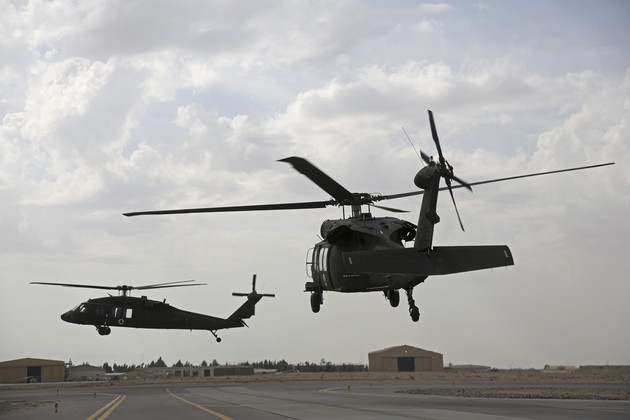
The fate of the U.S.-donated aircraft has been in limbo for more than a year, after Afghan air force pilots flew them to Uzbekistan and Tajikistan last August to escape Taliban capture. The Taliban have insisted the aircraft — a mixture of light attack planes and helicopters — are Afghan property and demanded them back. But Uzbek authorities say they are the property of the United States and will not be returned.
Little has been said publicly about the issue, in part because of the sensitivity of Afghan-Uzbek relations and Russia’s economic and military influence in Central Asia. But behind the scenes, U.S. officials have been quietly working to use the aircraft as leverage to gain a foothold in a region where the U.S. military no longer has a presence on the ground, according to a senior Defense Department official and a congressional aide with direct knowledge of the negotiations, speaking on condition of anonymity to discuss sensitive talks.
The U.S. is planning to conduct an assessment of the aircraft to see if they are flyable, the official said. The goal is to provide a number of aircraft to the Uzbek and Tajik governments in exchange for an informal agreement to “deepen our security relationships” on border security and counterterrorism, the official said.
The deal could include anything from increased intelligence sharing to, in the long-term, basing troops or aircraft in those countries as a regional staging post for keeping an eye on terrorist activity in Afghanistan — something the Biden administration tried and failed to arrange before the withdrawal. Both countries border Afghanistan and are much closer than the American bases hundreds of miles away in the Middle East the U.S. military relies on for access to the country.
But for now, it’s more likely the agreement would involve access to information the Uzbeks and Tajiks have about terrorist networks in Afghanistan.
“If I give you an airplane, then I call you and say, ‘Hey, can you tell that guy who has a cousin in Afghanistan to go look at something’ — that might be the nature of the relationship. That's a hypothetical,” the senior DoD official said. “It might not be that I want to fly from there, but it might be, do I have access to networks of people that have access into Afghanistan?”
The Biden administration touted the U.S. military’s ability to conduct “over-the-horizon” counterterrorism operations after American troops left Afghanistan last August. The U.S. has since conducted only one counterterrorism strike since then, a drone mission that killed al Qaeda leader Ayman al-Zawahiri in July.
As the Taliban overran Kabul last summer, Afghan air force pilots flew about 25 percent of the total usable aircraft — 46 total — to Uzbekistan and Tajikistan, according to a 2022 report assessing the collapse of the Afghan government. The aircraft included C-208 utility aircraft, A-29 Super Tucano light attack aircraft, as well as Mi-17, Mi-25 and UH-60 Black Hawk helicopters, according to satellite images analyzed by the Center for Strategic and International Studies. Most of the planes had been supplied by Washington to build up the capability of the Afghan air force.
Both Central Asian countries are “certainly very interested” in keeping those aircraft, the senior DoD official said.