Tajikistan reportedly stockpiles seed wheat twice as much as needed

Specialists of the Department of Seed Production and Breeding Achievements of the Ministry of Agriculture have determined the stock of seed fund of and leguminous crops for sowing in 2023. According to their data, the stock of seeds of these crops is 86,823 tons, including 77,662 tons of wheat seeds, 8,506 tons of barley seeds, […]

Asia-Plus

Specialists of the Department of Seed Production and Breeding Achievements of the Ministry of Agriculture have determined the stock of seed fund of and leguminous crops for sowing in 2023.

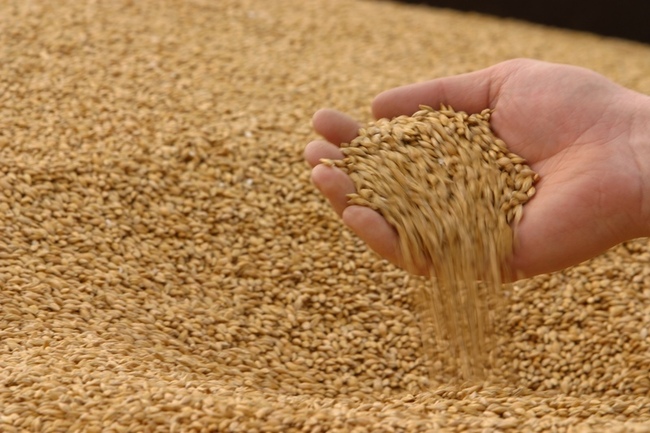
According to their data, the stock of seeds of these crops is 86,823 tons, including 77,662 tons of wheat seeds, 8,506 tons of barley seeds, 44 tons of oats seeds, and 610 tons of legumes seeds.  

The analysis has reportedly shown that the stocks include only 37 tons of elite seeds (0.04 percent), 3,679 tons seeds of the first reproduction — 4.24 percent, 21,205 tons of seeds of the second reproduction – 24.4 percent, 25,586 tons of seeds of the third reproduction – 29.5 percent, and 36,313 tons of ordinary, or so-called conditional seeds – 41.8 percent.  

In order to increase productivity, the Ministry of Agriculture has reportedly purchased from Russian 280 tons of wheat seeds of the elite group varieties of “Grom”, “Alekseich” and “Bezostaya-100” for sowing in 2023.

Specialists of the Department of Seed Production and Breeding Achievements say the “Grom” variety of soft winter wheat has given a yield of 11.2 tons per hectare under test conditions. 

The “Alekseich” variety has reportedly given a yield of 13.27 tons per hectare under test conditions.  

The yield of the “Bezostaya-100” variety has reportedly reached about 10 tons per hectare under test conditions.  

It is to be noted that 41 tons of seed wheat are needed for sowing in 2023.  

Meanwhile, farmers note that the main reasons for yield reduction are non-compliance with the technology of growing grain crops and the lack of appropriate logistical resources for production of certified seeds in seed farms.  

Another factor that have affected grain yield in recent years is climate change.  To solve this problem, researchers need to develop new high-yielding varieties adapted to climate change, and introduce them into production.  

Article translations:

Related Articles

Оби зулол

Most Read

Join us on social media!

Recent Articles

Hajj 2026: New Rules and Restrictions Introduced in Saudi Arabia

Entry to Mecca is now only possible with a special permit.

Emomali Rahmon flies to Astana for the Regional Ecological Summit

President of Tajikistan Emomali Rahmon departed today for a...

Nexign and TelecomDaily: the telecommunications market in Tajikistan grew by 13.7% in 2025

A study showed that the country's communications market has grown to 4.9 billion somoni, and the dynamics are influenced by an increase in the subscriber base, growth in internet traffic, and expansion of mobile and fixed network coverage.

Tajikistan’s Parliament approves organized recruitment of migrants to Russia

The paperwork will be transferred to the home country, and employers will select employees in advance.

Creativity as an asset: why marketing in Central Asia is reaching a new level

Business expert in international projects for the support and development of media companies, Svetlana Lebedeva, on marketing and the media market.

European Immunization Week starts in Tajikistan

Information and awareness-raising activities are being conducted across the country to increase trust in vaccination and combat misinformation.

The plan to launch the CASA-1000 project in 2027 discussed in Dushanbe

The Ministry of Energy of Tajikistan, Afghan DABS, and other project participants held a series of meetings.