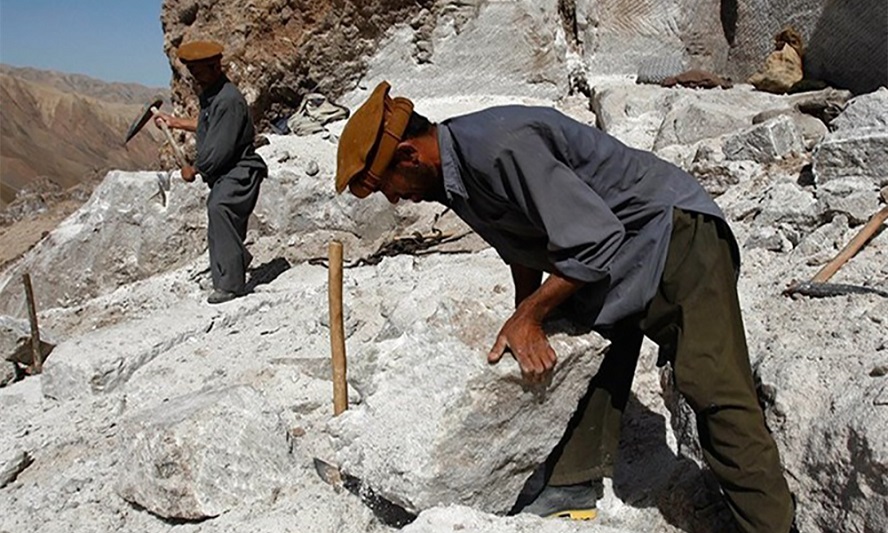
Amu TV reported on July 24 that in a bid to boost revenue, the Taliban has opted to relinquish control of Afghanistan’s lithium mines, which hold considerable value and are deemed one of the world’s most precious metals, to foreign entities.
Taliban’s acting minister of mines, Shahabuddin Delawar, reportedly announced on July 24 that its leadership will soon decide on the matter and that several countries, including China, are vying for the contracts.
He further stated that he has formulated a process for control of precious stone mines, such as rubies and emeralds, for Panjshir and other provinces.
The tender for Afghanistan’s lithium mines would be open to European, Arab, and Chinese companies, many of which have already arrived in Kabul to express their interest in acquiring the mines, he added.
In April, representatives from Gochin China Company engaged in discussions with Delawar in pursuit of securing the lithium contract in Afghanistan.
During this engagement, the Taliban’s Ministry of Mines revealed that the company had pledged a significant investment of US$10 billion in Afghanistan’s lithium mines to secure the contract.
Beyond the lithium mines, the Taliban has also outlined the procedures for transferring control of precious and semi-precious stone mines.
Delawar reportedly disclosed that the majority of deposits of these valuable stones, including rubies and emeralds, are located in provinces such as Panjshir, Badakhshan, Nuristan, Nangarhar, Laghman, Kapisa, and Logar.
“When managed efficiently, we anticipate exports of over US$1 billion,” he added.
Since taking over power, the Taliban has reportedly already transferred ownership of 100 small mines in sectors such as marble, gypsum, travertine, lead and zinc, fluoride, calcium, nephrite, and chromite to private companies.
Meanwhile, as far as lithium deposits in Tajikistan are concerned, an active exploration of lithium deposits is under way in the country.
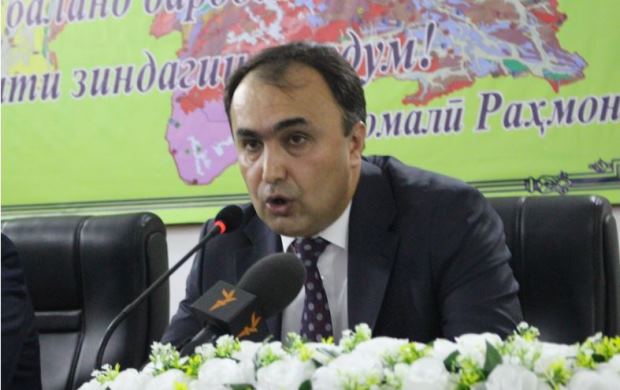
In a report released at a news conference in Dushanbe, Ilhomjon Oimuhammadzoda, the head of the Main Geology Directorate under the Government of Tajikistan, reveled on July 27 that Tajik geologists have carried out the preliminary exploration of lithium-bearing areas in the south part of the Gorno Badakhshan Autonomous Region (GBAO).
“We have significant category C2 reserves,” Tajik chief geologist noted.
Category C2 reserves are preliminary estimated reserves of a deposit calculated on the basis of geological and geophysical research of unexplored sections of deposits adjoining sections of a field containing reserves of higher categories and of untested deposits of explored fields. The shape, size, structure, level, reservoir types, content and characteristics of the hydrocarbon deposit are determined in general terms based on the results of the geological and geophysical exploration and information on the more fully explored portions of a deposit. Category C2 reserves are used to determine the development potential of a field and to plan geological, exploration and production activities.
Lithium is a chemical element with the symbol Li and atomic number 3. It is a soft, silvery-white alkali metal. Under standard conditions, it is the least dense metal and the least dense solid element. Like all alkali metals, lithium is highly reactive and flammable, and must be stored in vacuum, inert atmosphere, or inert liquid such as purified kerosene or mineral oil. It exhibits a metallic luster. It corrodes quickly in air to a dull silvery gray, then black tarnish. It does not occur freely in nature, but occurs mainly as pegmatitic minerals, which were once the main source of lithium. Due to its solubility as an ion, it is present in ocean water and is commonly obtained from brines. Lithium metal is isolated electrolytically from a mixture of lithium chloride and potassium chloride.
Lithium and its compounds have several industrial applications, including heat-resistant glass and ceramics, lithium grease lubricants, flux additives for iron, steel and aluminum production, lithium metal batteries, and lithium-ion batteries. These uses consume more than three-quarters of lithium production.
Lithium is present in biological systems in trace amounts. It has no established metabolic function. Lithium-based drugs are useful as a mood stabilizer and antidepressant in the treatment of mental illness such as bipolar disorder.