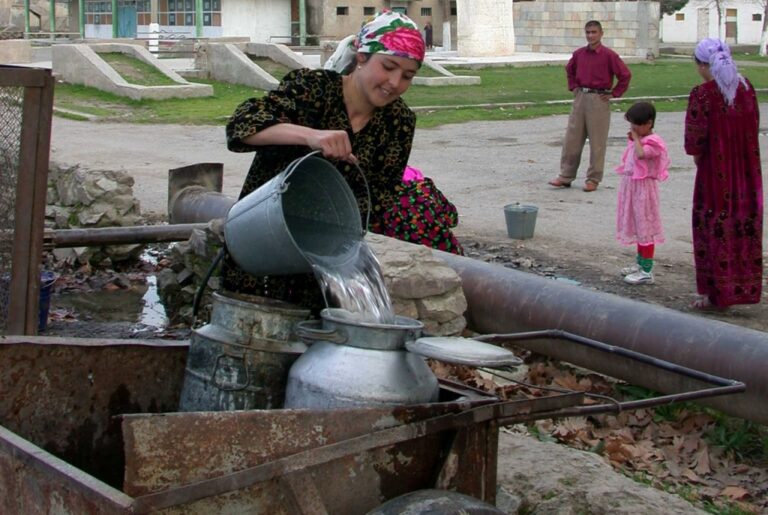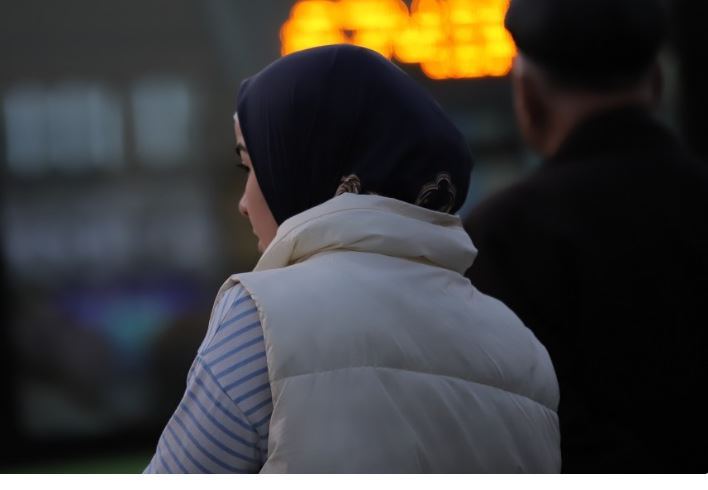
Citizens of Uzbekistan, with the exception of employees of religious organizations, are banned from wearing cult clothing in public places.
The Central Asia News Service reported on September 17 that the country’s authorities have resumed raids against hijab and hijab wearing.
The Central Asia News Service says Radio Liberty’s Uzbek Service, known locally as Ozodlik, has received video recordings showing hijab wearing female students of the Andijan Bank College demanded to replace hijabs by skullcaps and light-colored scarves tied backwards.
Female students who refuse to comply with such a requirement are not allowed into the educational institution.
Recall, the attitude towards religion and its attributes in Uzbekistan as a whole has significantly softened after President Shavkat Mirziyoyev came to power in 2016. The country, more than 90% of whose population is Muslim, has seen some relaxation in the wearing of religious attributes and observance of religious rites.
Gradually, mosques were allowed to recite azan (the call to prayer in Islam), and underage boys were allowed to perform collective namaz. In 2018, authorities increased the quota of pilgrims wishing to perform the hajj and reduced the cost.
In the summer of 2021, the Uzbek authorities legislated these relaxations by adopting a new version of the law “On Freedom of Conscience and Religious Organizations. It lifts the ban on hijabs and other religious clothing in public places. Registration of religious organizations was simplified, and now only courts can suspend their activities.
Until 2016, Islamic attributes were fiercely fought in Uzbekistan for fear of spreading radical views. For wearing the hijab in public places, women were taken to the prevention station for an instructive conversation. Men there also had their beards forcibly shaved off.
Although the ban on the wearing of the hijab in public places has now been officially lifted, in public institutions this point is regulated by internal regulations and acts.
Thus, according to the internal rules and regulations of general education schools approved by the Minister of Public Education, it is forbidden to wear the hijab to school.
Teachers in Uzbekistan's Tashkent region have been instructed to stand outside schools every morning to demand female students remove their head scarves before entering the building.
The new, unofficial government order is part of a large-scale crackdown on clothes or a physical appearance — particularly long or bushy beards — deemed by the authorities to be too Islamic.
Today, the topic of wearing a Muslim headscarf in schools is reportedly regulated by the administration of each institution independently.
Uzbekistan’s authorities reportedly began once again tightening measures against wearing hijab and beards in 2019. Reports from Uzbekistan said in October 2019 that the authorities have once again begun raiding bazaars and rounded up young men with long beards. The men were taken to police stations and their beards were shaven off.