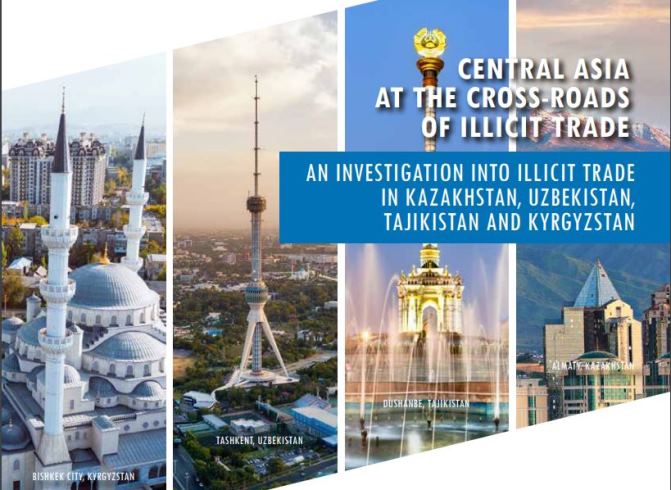
A report released by the Transnational Alliance to Combat Illicit Trade (TRACIT) notes that more recently, Central Asia has reemerged as a strategic hub of international trade, providing a critical transit point between east and west, but also increasingly becoming a destination for investment and economic growth.
In the immediate term, Russia's invasion of Ukraine threatens Central Asian trade and export objectives, leading them to uniquely seek alternative trade routes to Europe. For example, the Trans-Caspian International Transport Route (TITR) has the potential to reshape the role of Central Asian nations in international trade. The TITR stretches over 11,000 kilometers and bypasses Russia by connecting China to Europe via Kazakhstan, Azerbaijan, and Georgia.
At the same time, China has cultivated robust economic ties in the region through its Belt and Road Initiative (BRI) and numerous infrastructure projects to bolster connectivity, trade, and economic cooperation with Central Asia.
A more interconnected Central Asia brings new economic opportunities for the region. However, this also presents a risk of facilitating illicit trade. From smuggling, counterfeiting and tax evasion, to the illegal sale and possession of goods, services, humans and wildlife, Central Asian governments are already losing millions in tax revenues, natural resources are illegally leaving the country, informal markets are strengthening, and consumers are increasingly exposed to poorly made and unregulated products.
Tajikistan is the poorest nation in Central Asia and is among the world's 30 most impoverished countries. Its economy is heavily reliant on remittances from Tajik migrants working abroad.
Tajikistan faces a number of structural challenges that enable illicit trade. Tajikistan's extensive and porous borders, particularly the 1,400 km border with Afghanistan border presents a major challenge for controlling the movement of illicit goods and people.
Limited livelihood options, combined with a need for low-skilled labor in Russia and Kazakhstan, create ideal conditions for labor traffickers.
Tajikistan's criminal justice sector faces significant challenges stemming from outdated practices and systemic issues. The executive branch often interferes with judicial matters, undermining the system's independence and impartiality.
These challenges are further exacerbated by pervasive corruption, as Tajikistan is among the countries with the highest corruption levels globally, ranking 150th out of 180 countries in Transparency International's 2022 Corruption Perceptions Index.
Trade in counterfeit goods is prevalent in Tajikistan and is facilitated by high levels of corruption. Counterfeit consumer goods of well-known brands are commonly found in domestic markets, due to the weak protection of intellectual property rights. Estimates indicate over 90 percent of software and other media products sold in the country are unlicensed copies and many “brand name” consumer goods are counterfeit products manufactured in China.
The report notes that Tajikistan’s mining sector has been plagued by corruption. Notably, the principal actors involved in illicit activities within the natural-resource market often have strong ties to the state, allowing them to operate with minimal oversight and regulation.
Tajikistan is reportedly a destination country for smuggled fuel and lubricants. The main smuggling route goes from Kyrgyzstan’s Batken region to Tajikistan, and there are suggestions that high-level officials in Kyrgyzstan may be involved in the illegal export of gasoline into Tajikistan.
The report also notes that Tajikistan is mainly a source and, to a lesser extent, a destination country for human trafficking. Limited livelihood options, combined with a need for low-skilled labor in Russia and Kazakhstan, create ideal conditions for labor traffickers. Tajik men are usually trafficked inside the country for forced labor purposes, while Tajik women and children are usually victims of sex trafficking abroad.
The Transnational Alliance to Combat Illicit Trade (TRACIT) is an independent, private sector initiative to drive change to mitigate the economic and social damages of illicit trade by strengthening government enforcement mechanisms and mobilizing businesses across industry sectors most impacted by illicit trade.