The United States has imposed sanction on the Taliban representatives for their links to the repression of women and girls.
These reportedly include the minister for the so-called Ministry for the Propagation of Virtue and Prevention of Vice that the US Department of Treasury said has engaged in killings, abductions, whippings and beatings.
In a statement released on December 8, the Department of Treasury noted that over the past year, it has designated more than 150 individuals and entities across a dozen countries for issues relating to human rights abuse.
On December 8, the Department of the Treasury’s Office of Foreign Assets Control (OFAC) sanctioned 20 individuals for their connection to human rights abuse in nine countries, including Afghanistan.
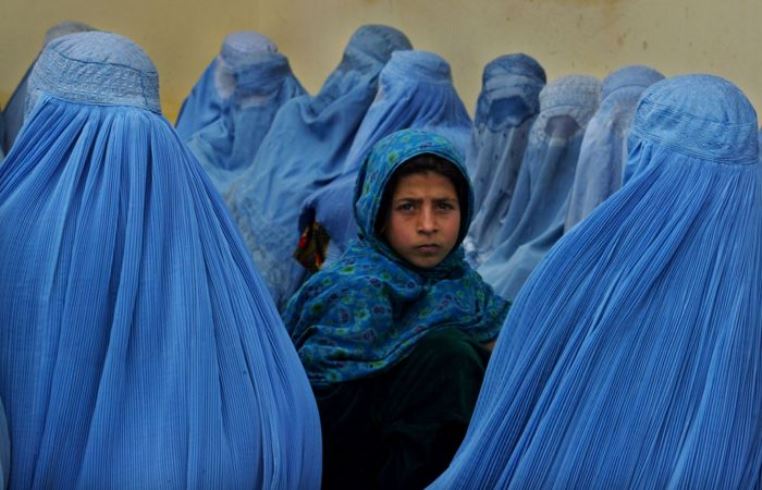
OFAC designated Fariduddin Mahmood (Mahmood) and Khalid Hanafi (Hanafi) for serious human rights abuse related to the repression of women and girls, including through the restriction of access to secondary education for women and girls in Afghanistan solely on the basis of gender. This gender-based restriction reflects severe and pervasive discrimination against women and girls and interferes with their enjoyment of equal protection.
The statement says that since August 2021, the Taliban has implemented expansive policies of targeted discrimination against women and girls that impede their enjoyment of a wide range of rights, including those related to education, employment, peaceful assembly, and movement, among others. Afghanistan is reportedly the only nation in the world where women and girls are prohibited from pursuing secondary education.
Mahmood is a member of the Taliban’s so-called “cabinet” that made decisions to close education centers and schools to women and girls after the sixth grade. He serves as the so-called “head of the Afghanistan Academy of Sciences” and supported the education-related bans on women and girls. He is being designated pursuant to Executive Order (E.O.) 13818, which builds upon and implements the Global Magnitsky Human Rights Accountability Act, and targets perpetrators of serious human rights abuse and corruption around the world, for being a foreign person who is responsible for or complicit in, or has directly or indirectly engaged in, serious human rights abuse involving the restriction of access to all secondary education for women and girls in Afghanistan solely on the basis of gender, which interferes with their enjoyment of equal protection.
Hanafi serves as the Taliban’s so-called “Minister” for the so-called “Ministry for the Propagation of Virtue and Prevention of Vice” (MPVPV). Since August 2021, members of the so-called MPVPV have engaged in serious human rights abuse, including killings, abductions, whippings, and beatings. Members of the so-called MPVPV have assaulted people protesting the restrictions on women’s activity, including access to education. Hanafi is being designated pursuant to E.O. 13818 for being a foreign person who is or has been a leader or official of an entity, including any government entity, that has engaged in, or whose members have engaged in, serious human rights abuse relating to the leader’s or official’s tenure.