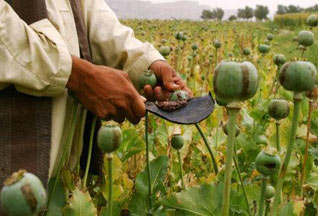
A report published by the United Nations Office on Drugs and Crime (UNODC) in November last year says the opium poppy cultivation in Afghanistan plunged by an estimated 95 percent following a drug ban imposed by the de facto authorities in April 2022.
Opium cultivation reportedly fell across all regions in Afghanistan, from 233,000 hectares to just 10,800 hectares in 2023. The decrease has led to a corresponding 95 percent drop in the supply of opium, from 6,200 tons in 2022 to just 333 tons in 2023.
The sharp reduction has had immediate humanitarian consequences for many vulnerable rural communities who relied on income from cultivating opium. Farmers’ income from selling the 2023 opium harvest to traders fell by more than 92 percent from an estimated US$1,360 million for the 2022 harvest to US$110 million in 2023.
Until 2023, the value of Afghanistan’s opiate exports alone has frequently exceeded the value of the country’s legally exported goods and services. The strong contraction of the opiate economy in 2023, which shrank by 90 percent overall, is expected to affect Afghanistan’s economy on a larger scale.
Many farmers turned to cultivating wheat instead, with an overall increase of 160,000 hectares in cereal cultivation across the Farah, Helmand, Kandahar, and Nangarhar provinces. Though wheat cultivation may alleviate food insecurity to some extent, the crop generates much less income than opium – farmers in the four provinces lost around US$1 billion in potential income in 2023 by switching to wheat.
Beyond Afghanistan, less heroin may lead to reduced trafficking and use – or it could spur the emergence of harmful alternatives, such as fentanyl and other synthetic opioids. Data on seizures in countries in and around Afghanistan indicate that traders are selling off their opium inventories from past record harvests to weather the shortfall in 2023, while heroin processing has decreased. Trafficking in other drugs, namely methamphetamine, has surged in the region.