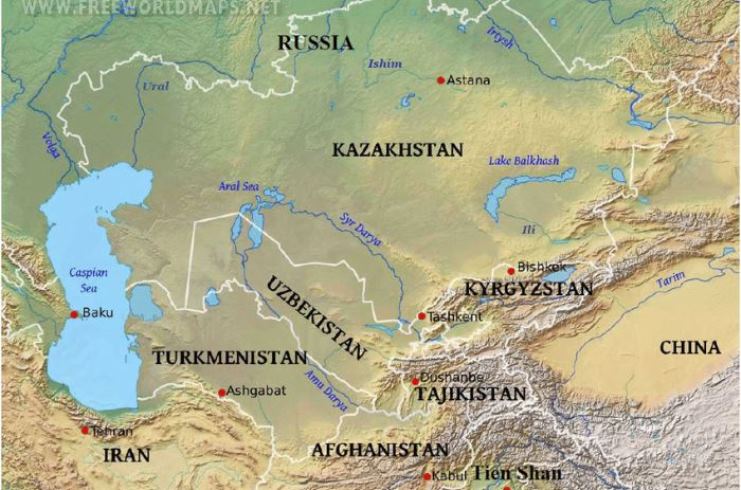
The Central Asian nations are united by common transboundary water resources of Amu Darya and Syr Darya rivers and their tributaries. Experts note that the management of transboundary water resources and river basins in the region turned into a challenging task immediately after their independence. The collapse of the Soviet Union in 1991 also resulted in the collapse of the pre-existing system of sharing water resources.
Since then, the issue of having stable access to transboundary water resources has become one of the important tasks for Central Asia’s nations. Moreover, these countries now often face the problem of limited water resources. Augmented demand for water due to the growing population and economy, as well as competition, increased risk of water linked conflicts. Water issues in the region are not only associated with the problem of water scarcity as such, but also with the complex political, geopolitical, economic, and social motives. These motives have become especially obvious since the end of the Soviet Union. Despite their theoretical compatibility, numerous disputes over the hydropower system of Central Asia became source of tension between the countries.
Agriculture in Central Asia was a national priority within a country during the Soviet, then hydro-related issues were of secondary importance. After the breakup of the Soviet Union, the previous priorities remained only in Kazakhstan, Turkmenistan, and Uzbekistan, while in Tajikistan and Kyrgyzstan hydropower took most important place in the economy which changed the situation around the region's transboundary waters. This situation then resulted in an uneven distribution of water system, because the breakdown of the Soviet Union had radically changed pre-existing centrally controlled water system in the region.
With the collapse of the Soviet Union, the centrally controlled decision-making system was abolished and the countries were left to regulate transboundary water sharing among themselves. However, this was not an easy task for the countries, as their national interests determined the outcome of their decisions. Thus, the divergence of views among these states on how a resource that is scarce and vital at the same time should be used, immediately leads us directly to the political level. The transboundary water issue which is seen as a national concern among Central Asia’s nations has become the subject of power broker between the countries. Any change in the volume and order of the flow of transboundary waters in Central Asia threatens irreparable destruction and weakening not only of the ecological balance, but also of the significant political problems that can affect the distribution of water and can turn it into a significant source of potential tension.
The key barriers hindering the espousal of effective measures aimed at integrated water management and energy compound in the region are political flaws in approaches among the countries to solve water problems. Conspicuously, the interstate trade-off and mutual common ground are needed to mitigate the existing tensions around transboundary waters. The interstate cooperation and collaboration is impeded by supremacy of national interests which lessen the potential for mutual understanding and actor’s perception of transboundary water-related issues as a zero-sum game while they might have opportunity and potential for playing win-win game. On the other hand, the lack of clear and binding legislation regulating the use of hydro resources of transboundary waters also complicates the quest for mutually beneficial solutions.