CABAR.asia says Uzbekistan is striving to introduce new technologies for irrigating farmland by providing subsidies and tax incentives to farmers. However, many farmers still use old irrigation methods of watering for fear of failure.
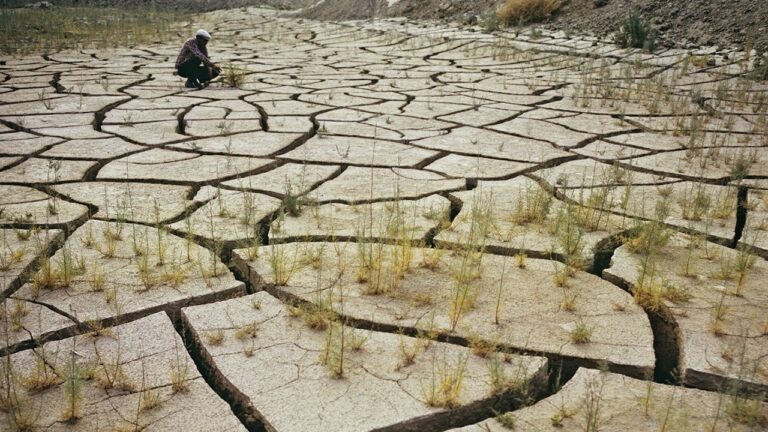
Fresh water scarcity is becoming one of the threatening challenges to humanity. This process is already so obvious, and the fact that it will only increase due to climate change is evidenced by scientists’ forecasts, forecasters’ observations, and the annual reduction of water flow in large and small rivers of Central Asian countries.
Residents of Central Asian countries have already seen this with their own eyes. Rising summer temperatures, abnormally cold or warm winters, more frequent droughts and their consequences in recent years make it necessary to take measures.
All countries will sooner or later have to switch to water-saving mode, because, as it turns out, this “inexhaustible” resource may sooner or later be exhausted.
According to the United Nations Food and Agriculture Organization (FAO), Central Asian countries are among those with high levels of “water stress” – a term that is used as an indicator of the level of pressure on water resources.
The FAO’s 2021 report states that “water use in Uzbekistan and Turkmenistan has reached critical levels.” Uzbekistan’s water use rates are higher than the global level at 169 percent, Turkmenistan’s at 144 percent, Tajikistan’s at 62 percent, and Kyrgyzstan and Kazakhstan’s at 50 percent and 33 percent, respectively.
The total irrigated area in Uzbekistan is 4.2 million hectares, and agriculture is the largest consumer of water resources – over 90% of water is used in this sector.
Realizing the full scale of the problem, the Uzbek authorities are actively engaged in supporting farmers who use water-saving technologies. Since 2019, the country has been working on a mechanism to allocate cash subsidies to support cluster organizations and farmers.
Davron Kdyrbayev, head of the Department of Water-Saving Scientific and Innovative Technologies of the Ministry of Water Resources of the country, reportedly told CABAR.asia in an interview that until 2018, the area of the country where water-saving technologies were introduced amounted to 28,000 hectares. Today, this indicator has already reached 1.26 million hectares or 30% of irrigated areas.
“Only in 2023, these technologies were introduced on the area of 389 thousand hectares, including 74.1 thousand hectares of drip, 17.7 thousand hectares of sprinkler, 9.4 thousand hectares of discrete, 74.7 thousand hectares of other types of water-saving technologies were introduced, 212.7 thousand hectares of sown land were leveled with the help of laser equipment,” he said.
He says the introduction of new water saving technologies is beneficial to both the state and farms.
“According to the analysis, the introduction of water-saving technologies increases yields up to 10-15 quintals in cotton cultivation, while water resources are saved by 20-60%, fuel and lubricants and mineral fertilizers – by 25-35%,” Kdyrbayev said.
The official cited as an example the activity of the farm “Rabotning Barakali Zamini” of Kyzyltepa district, which reportedly saved 150,000m3 of water during the season as a result of drip irrigation of 58 hectares of cotton fields last year and achieved a yield of 4.0-4.5 tons in the first harvest.
Farmers who use the new irrigation technologies and specialists reportedly also speak of their effectiveness and call for their widespread adoption.
Observers, however, note that the high cost of the equipment, as well as the lack of profit in the first year, is indeed an inhibiting factor in introducing new technologies for many farmers in Uzbekistan.