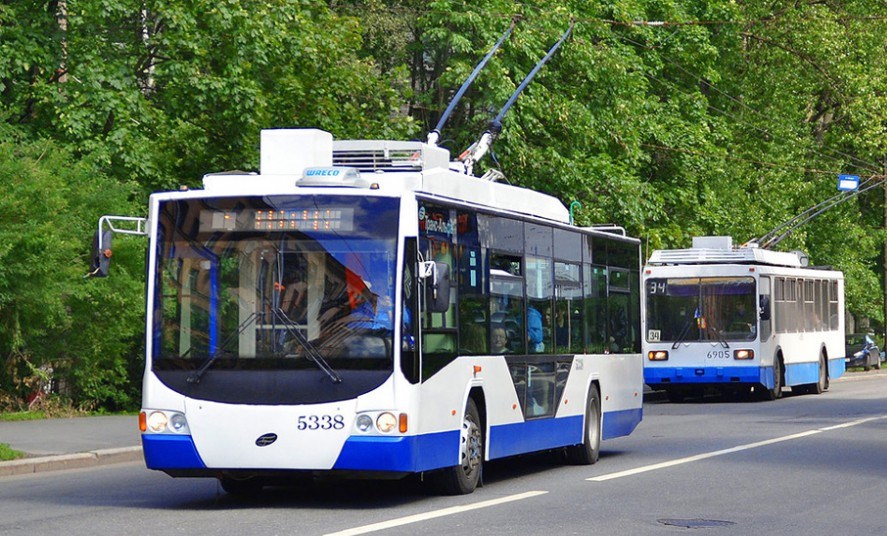
Kyrgyzstan’s capital, Bishkek, will completely eliminate trolleybuses, Bishkek Mayor Aibek Junushaliyev said in an interview with Kabar news agency.
Junushaliyev explained that the city aims to clean up trolleybus lines and introduce modern, mobile buses instead.
"We are doing everything to create comfortable conditions for the citizens. We are removing not only billboards but also trolleybus lines. All power lines and cables are being laid underground. Trolleybuses can only travel on one route, and we cannot temporarily redirect them to other streets. They can only travel on their lines, and during any road closures, it is impossible to change their route. Electric buses and other public transport are more mobile, and their routes can be changed to address traffic issues in the city, which is not possible with trolleybuses," said the mayor.
Junushaliyev noted that the number of passengers using trolleybuses decreases every year.
"If 8 million people rode trolleybuses in 2023, there were 3 million fewer in 2024. Additionally, maintaining trolleybuses is very costly. We subsidize more than 200 million soms ($2.3 million) for trolleybuses," the mayor emphasized.
The publication notes that due to road repairs, only two trolleybus routes, No. 11 and No. 14, are currently operational in Bishkek.
It is to be noted that in recent months, Bishkek city officials have been trying to improve public transportation in an effort to reduce traffic jams and ease commutes.
The city has staked its transportation future on buses, increasing the size of the municipal fleet from just over 100 to almost 800 units in 2023. These buses are meant to replace Bishkek’s marshrutka system, which has shriveled in recent years due to financial unfeasibility and the mayor’s office shutting down minibus lines in the city center.
A fleet of battery-electric buses to be purchased with $50 million in funding secured from the Asian Development Bank are meant to replace another form of transportation: trolleybuses.
Bishkek’s first trolleybus line began operating in 1951, and since then has expanded to 11 routes across the city. Earlier this spring, the mayor’s office explained it was considering dismantling the capital’s trolleybus system and transferring the vehicles to Osh, Kara-Balta, and Tokmok.