Mongolia explained its refusal to arrest Russian President Vladimir Putin by saying that it “has always adhered to a policy of neutrality”.
Mongolia will not arrest Russian President Vladimir Putin on the warrant of the International Criminal Court, as it is in a state of energy dependence and adheres to a policy of neutrality. This was stated by a representative of the country's government, reports Politico.
According to him, Mongolia imports 95% of its petroleum products and more than 20% of its electricity from neighboring countries.
“These supplies are crucial to ensure our existence and the existence of our people. Mongolia has always adhered to the policy of neutrality in all its diplomatic relations,” – the government representative said.
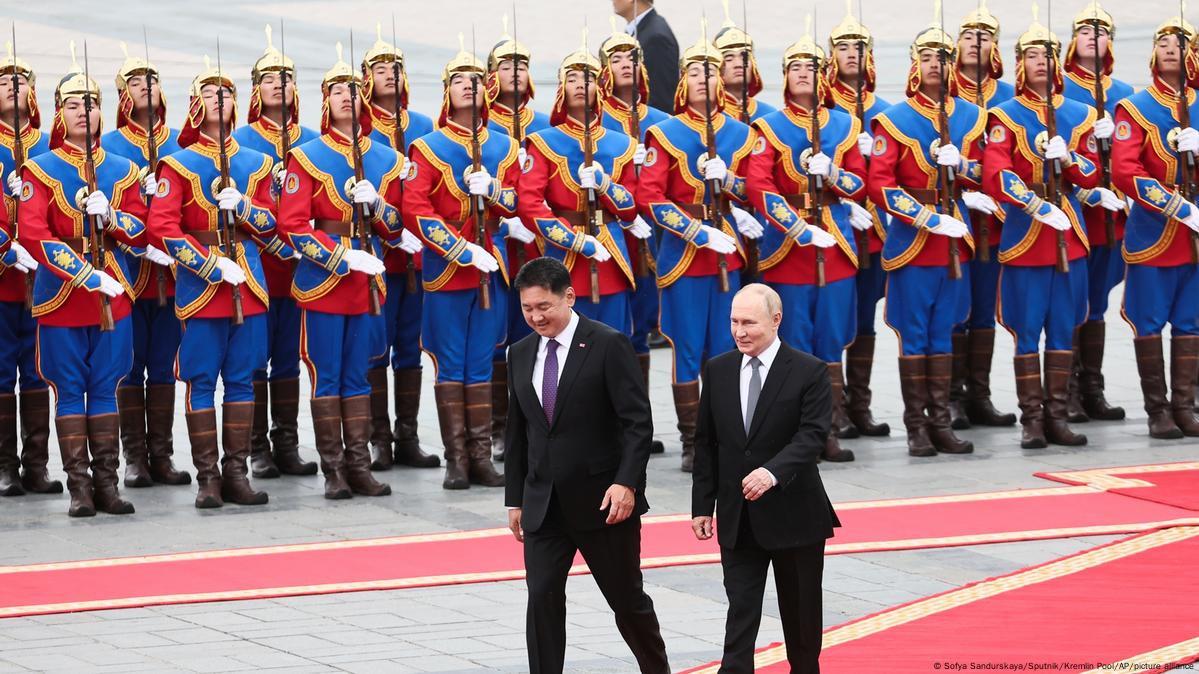
Vladimir Putin had an official visit to Mongolia on September 2 at the invitation of the country's President Ukhnaagiin Khurelsuh to participate in celebrations dedicated to the 85th anniversary of the joint victory of Soviet and Mongolian troops over the Japanese armed forces on the Khalkhin Gol River.
As a result of the negotiations, intergovernmental agreements were signed on the development of a project for the reconstruction of Thermal Power Plant-3 in Ulaanbaatar, on cooperation in the supply of petroleum products, on providing Mongolia with aviation fuel, on cooperation to ensure epidemiological well-being for the plague, on cooperation in the conservation of Lake Baikal and the Selenga River.
Mongolia is a member of the International Criminal Court (ICC): the country signed the Rome Statute in 2000 and ratified it in 2002. Formally, Mongolia was supposed to arrest the Russian president on a court order. Dmitry Peskov, the press secretary of the Russian president, said that the Kremlin was not concerned about Putin's trip to Mongolia. According to him, Moscow has “an excellent dialogue with our friends from Mongolia”.
This was Putin's first visit to a country that has signed the Rome Statute of the International Criminal Court (ICC) in The Hague since March 2023, when that court issued an arrest warrant for the Russian president.