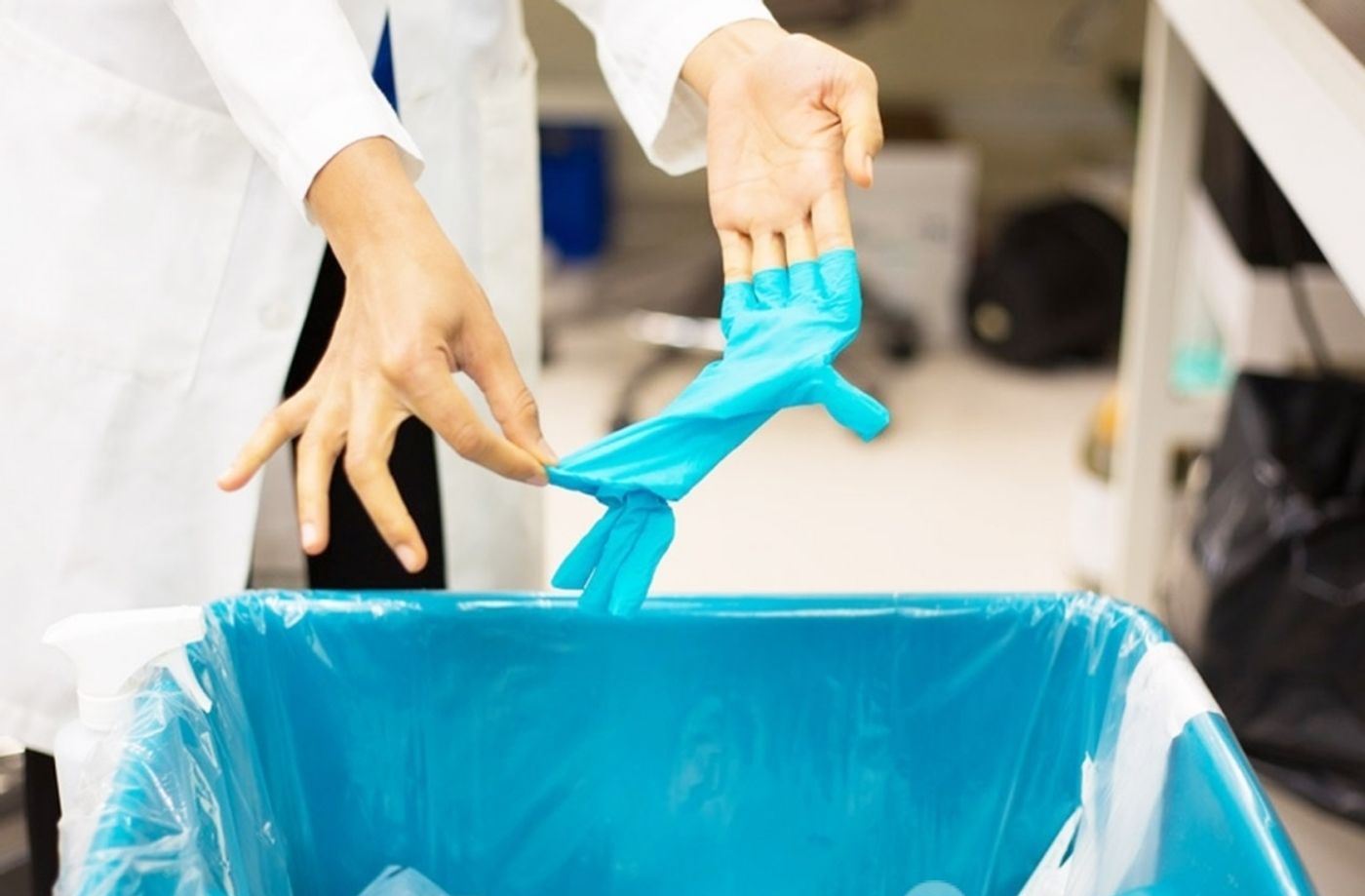
An article published by CABAR.asia on September 11 notes that all waste from healthcare facilities and laboratories, including needles, bandages, masks, gloves, and similar items, is classified as medical waste, which can potentially spread viruses and diseases. As a result, medical waste requires a specialized management and disposal system, which is not always properly implemented in Tajikistan.
Classification of medical waste
Medical waste is divided into four categories — A, B, C, and D.
Category A Waste includes items such as office supplies, masks, gloves, shoe covers, disposable gowns, napkins, papers and documents, food waste from non-infectious departments, and other personal protective equipment. These are considered the least hazardous.
Category B Waste includes tissues and organs from surgeries, infected or potentially infected waste, leftover food from infectious departments, medical laboratory waste, organic waste, and waste from pathological departments.
Category C Waste refers to highly hazardous materials that have come into contact with infectious diseases and could spread infections. This includes animals used in experiments, genetically modified organisms, live vaccines that are no longer usable, and certain laboratory and pharmaceutical waste.
Category D Waste includes expired medications and antiseptics, chemotherapy drugs, items and equipment containing mercury, pharmaceutical waste, and waste from lighting systems.
In Tajikistan, medical waste is primarily destroyed by incineration at high temperatures.
Official statements
"About 50 percent of the country's healthcare facilities are equipped with incinerators," said Jamoliddin Abdullozoda, the Minister of Health and Social Protection of Tajikistan, told reporters in Dushanbe on February 12, 2024.
According to him, in institutions with such equipment, medical waste is disposed of on-site. In facilities lacking the equipment, waste is contracted out to private companies for destruction.
According to official data, Tajikistan has 70 small enterprises dedicated to waste processing.
Over the first six months of 2024, the Sanitary and Epidemiological Service of the Ministry of Health and Social Protection of the Population (MoHSPP) has reportedly destroyed more than 82 tons of expired medications, medical supplies, cosmetics, hygiene products, and baby food.
In 2023, more than 152 tons of medical waste were collected and destroyed.
The reality is different
A CABAR.asia reporter visited the "Shifobakhsh" hospital in Dushanbe, also known as "Qariyai Bolo," three times in July 2024. This hospital is one of the largest in Tajikistan. The investigation revealed that medical waste in this hospital was being disposed of along with regular waste.
Rustam, the owner of a drugstore in Dushanbe who also administers injections, said that he discards medical waste from his practice in a general landfill. He claimed he was unaware of any designated place for medical waste disposal.
In many public landfills, medical waste is commonly found, much of it discarded by residents. Most waste collection points lack specialized containers for medical waste disposal.
CABAR.asia notes that in other countries in the region, the issue of medical waste remains as sensitive and pressing as it is in Tajikistan.