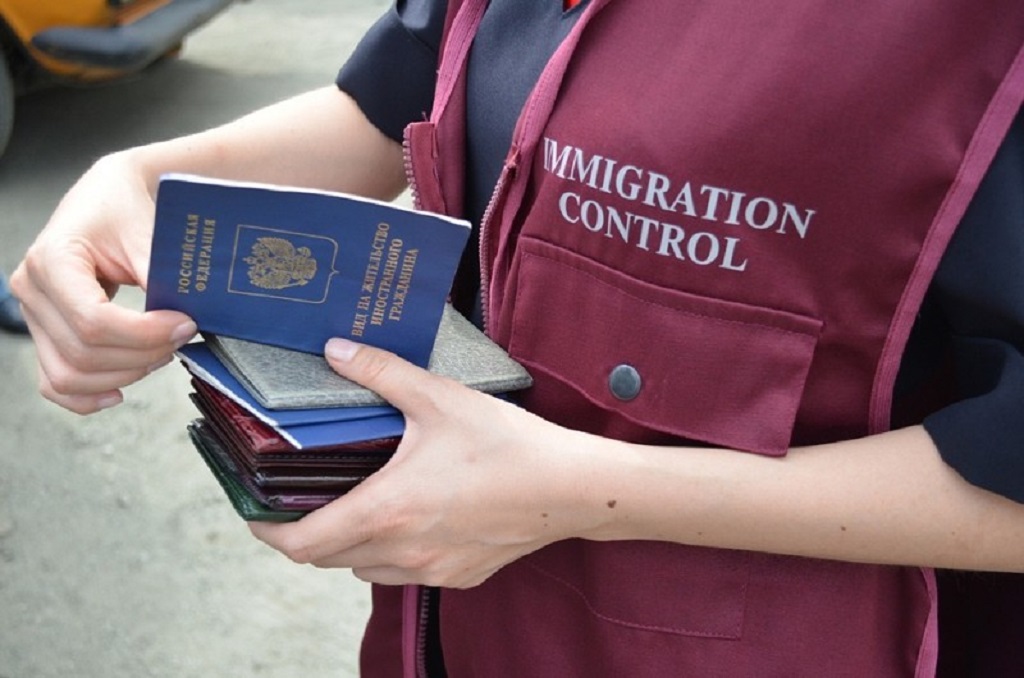
The State Duma (Russia’s lower chamber of parliament) has passed a bill criminalizing organization of Illegal migration as a serious crime
The State Duma has passed a bill in its first reading, which classifies the organization of illegal migration as a particularly serious crime, RIA Novosti reported on October 16.
The bill targets cases involving organized groups or where the objective is to commit serious or especially grave crimes. Convicted individuals could face imprisonment from 8 to 15 years, fines ranging from 3 to 5 million rubles, or the equivalent of three to five years’ salary or income, and a ban on holding certain positions for up to ten years.
The bill introduces new aggravating factors related to organizing illegal migration, such as:
- Committing the crime to conceal or facilitate another crime.
- Using forged documents or seizing, concealing, or destroying identity documents.
- Using the internet to carry out the crime.
In addition, the bill strengthens penalties for crimes involving the fictitious registration and residency of foreigners and stateless persons. For instance, forgery, production, or distribution of fake documents by a group of individuals or an organized group, or with the intent to conceal or facilitate another crime, would carry a prison sentence of two to six years.
The bill’s authors include Duma Speaker Vyacheslav Volodin, Deputy Speaker Irina Yarovaya, the heads of all parliamentary factions, and other deputies.
The Russian Government, the Supreme Court, the Prosecutor General's Office, and the Investigative Committee have expressed their support for the bill.
Another bill, passed in its first reading, introduces a provision making it an aggravating circumstance if a crime is committed by an illegal migrant. This amendment will be added to Article 63 (1) of Russia’s Penal Code — circumstances aggravating punishment.
During a plenary session, Volodin reportedly emphasized that the Duma is creating a legal environment within Russia that aims to deter illegal migration. He stated, "If an illegal migrant enters the country and commits any offense, they will be punished harshly, following the maximum penalties. Combined with the previously adopted measures, which impose severe penalties for organizing illegal migration, this should lead to a reduction in the phenomenon."
Volodin had earlier mentioned that in 2023, out of 879 individuals convicted of organizing illegal migration, only 166 received actual prison sentences. Furthermore, 8,307 people were convicted in 2023 for fictitious registration of foreigners, with 8,224 of them being Russian citizens who assisted illegal immigrants.