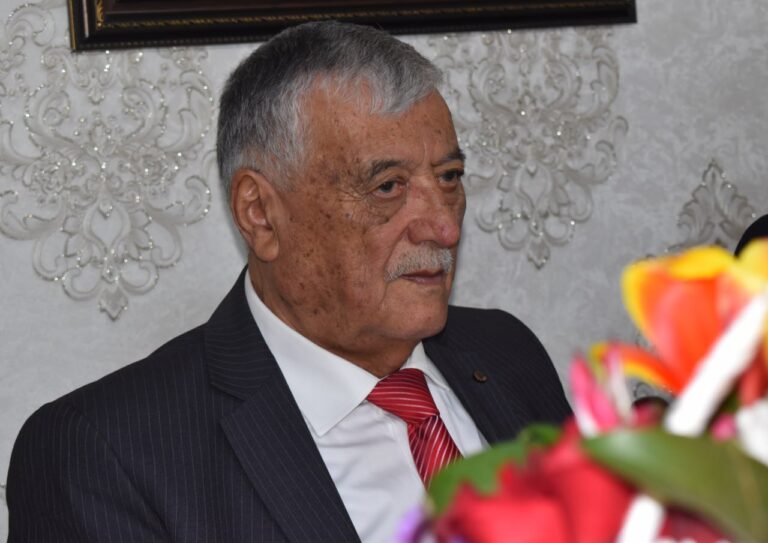
Human Rights Watch (HRW) reported on October 31 that an administrative court in Germany has ordered the deportation of Dilmurod Ergashev, an activist of the opposition movement Group 24. The ruling, issued on October 28, reportedly mandates that Ergashev be deported in early November.
HRW notes that international law, including multiple treaties to which Germany is bound, prohibits “refoulement,” returning a person to a country where they are at risk of torture or cruel or inhumane treatment.
Ergashev has reportedly taken part in several demonstrations in front of Tajikistan’s Embassy in Berlin, including the September 2023 protest during Tajik President Emomali Rahmon’s visit to Germany.
According to HRW, he has lived in Germany since February 2011 and first applied for asylum on political grounds that month. He has had several asylum requests rejected by German authorities since.
German authorities should immediately suspend Ergashev's deportation and conduct a thorough review of his protection needs, says a statement released by HRW.
Recall, the leader of Group 24, Suhrob Zafar, and his colleague Nasimjon Sharifov were sentenced for “extremism” to 30 years and 20 years in prison last month, respectively. The sentences were handed down a week earlier,
Radio Liberty’s Tajik Service reported on October 17 that during their final statements, both Zafar and Sharifov expressed no regret, with Zafar maintaining that he had neither harmed anyone nor betrayed his people.
Recall, human rights watchdogs reported on May 2, 2024 that Suhrob Zafar was forcibly disappeared on March 10 in Turkiye, and Nasimjon Sharifov was forcibly disappeared on February 23. Both had previously been detained by the Turkish police in March 2018 at the request of Tajik authorities and threatened with extradition, but were eventually released.
The founding leader of Group 24 Umarali Quvvatov once had close ties with President Emomali Rahmon’s relatives but became an opponent. He fled Tajikistan for Moscow in the summer of 2012. There he formed an organization called Group 24, which he claims is a new political movement opposed to incumbent President Rahmon. He was wanted by Dushanbe on fraud charges that he said were politically motivated.
Quvvatov stayed in Russia and the United Arab Emirates before moving to Turkey. On December 19, 2014, Umarali Quvvatov was arrested in Istanbul for visa violations, but he was released on February 3, 2015. Umarali Quvvatov was shot dead by unidentified assailant in Istanbul, Turkey on March 5, 2015.
Quvvatov’s cousin and business associate Sharofiddin Gadoyev was elected new leader of Group 24 on March 12, 2015.
Tajikistan’s Supreme Court banned Group 24 on October 9, 2014 following growing government pressure on the opposition group after it used the Internet to call for street protests in the capital, Dushanbe, on October 10, 2014.
Supreme Court ruled that Group 24 is an extremist organization, and therefore, it is banned in Tajikistan. Its website and printed materials were also banned.
In February 2019, former members of the opposition movement Group 24, who returned to Tajikistan, asked the Tajik authorities to remove the organization from the extremist organizations list. They said the organization does not pose threat to Tajikistan’s security anymore.
Dozens of opposition figures, independent journalists, and rights activists have been handed lengthy prison terms on extremism and other charges in Tajikistan in recent years.