Tajikistan is set to complete its "Roadmap" project for disaster-resilient housing construction by the end of the year, says Jamshed Kamolzoda, Head of the Main Directorate for Population and Territory Protection at the Emergencies Committee under the Government of Tajikistan. This initiative is part of the project, Tajikistan's Efforts in Disaster Risk Management, supported financially by the Asian Development Bank (ADB).
The roadmap outlines a comprehensive set of long-term measures covering the design, construction, human and technical capabilities, practical implementation, and monitoring of disaster-resilient housing, with a focus on rural areas. “One of the project's key outcomes will be the development of guidelines for retrofitting homes and public buildings in rural areas to improve earthquake resilience. A pilot program will test these guidelines by training locals to apply and implement them,” Kamolzoda noted.
He recalled recent strong earthquakes in Tajikistan, particularly in the Rasht region in 2021, which resulted in casualties and significant property damage.
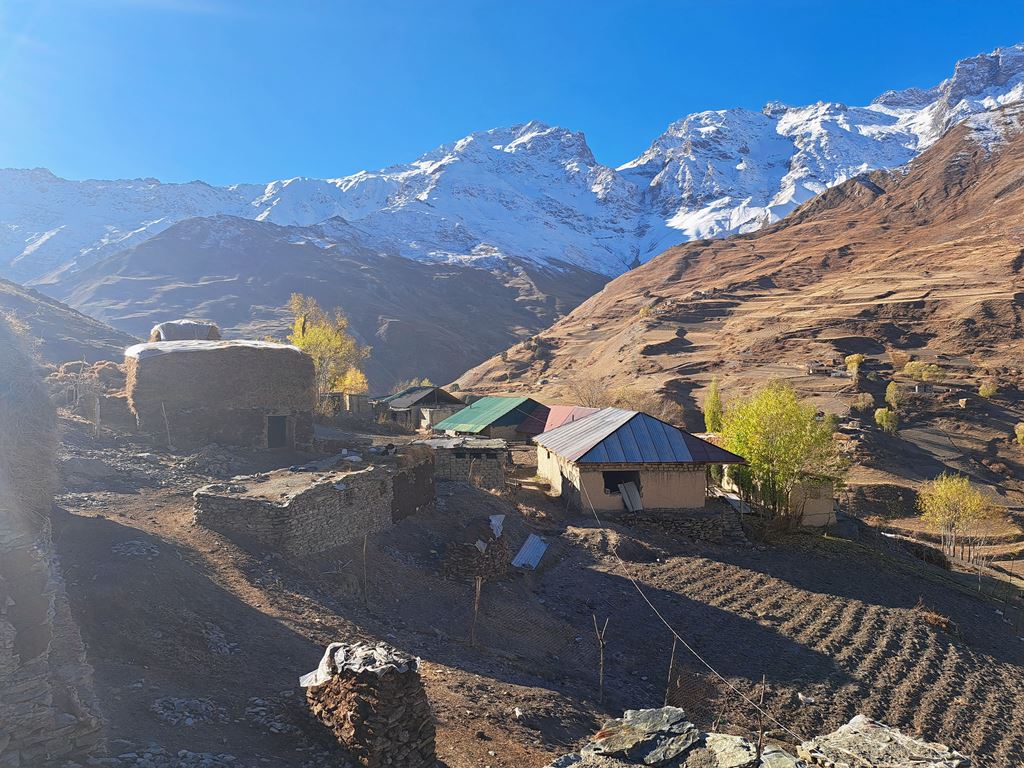
As a mountainous and earthquake-prone country, Tajikistan faces urgent needs for resilience measures to protect small residential and public structures.
According to seismologists, earthquakes measuring 5–6 on the Richter scale generally cause minor damage, such as superficial cracks in plaster. However, due to non-compliance with building standards, earthquakes of this magnitude often damage houses lacking foundations, seismic belts, and built with local materials.
“The Committee initiated the ADB-backed project to develop measures for building resilience and ensuring resident safety,” Kamolzoda said.
As part of this project, the company Miyamoto International, Inc. conducted research in collaboration with specialists from the Institute of Geology, Earthquake-Resistant Construction, and Seismology of Tajikistan's National Academy of Sciences.
Miyamoto International, Inc., a global consulting firm specializing in engineering and disaster risk management, operates in high-risk areas like Afghanistan, Lebanon, Mongolia, and Nepal. Miyamoto also runs educational programs to raise awareness of risks and encourage best practices in construction.
Research findings were discussed in a workshop held in Dushanbe two weeks ago, focusing on disaster risk awareness as part of the Tajikistan's Efforts in Disaster Risk Management Project. The workshop gathered representatives from various government agencies, including the Committee for Construction and Architecture, the State Committee on Land Management and Geodesy, and the National Academy of Sciences, along with international organizations such as Caritas Switzerland and the World Food Programme.
“A preliminary report was presented to stakeholders, including specialists from the Emergencies Committee, the Committee on Architecture and Construction, and development partners. The report, prepared by Miyamoto International, Inc., will be refined based on feedback and expert recommendations,” Kamolzoda stated.