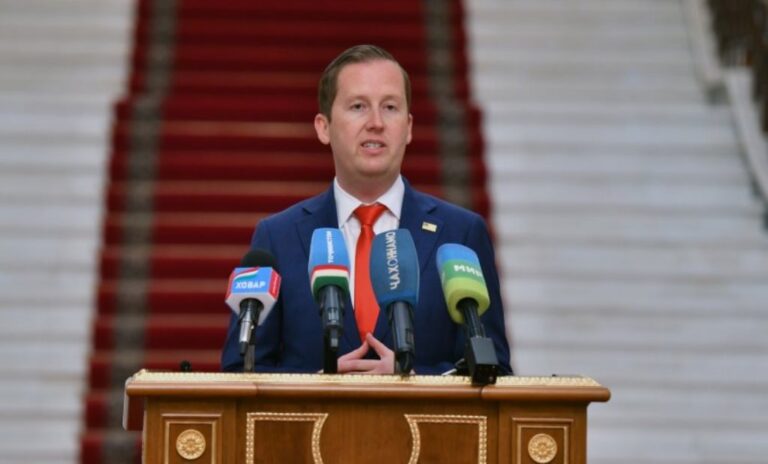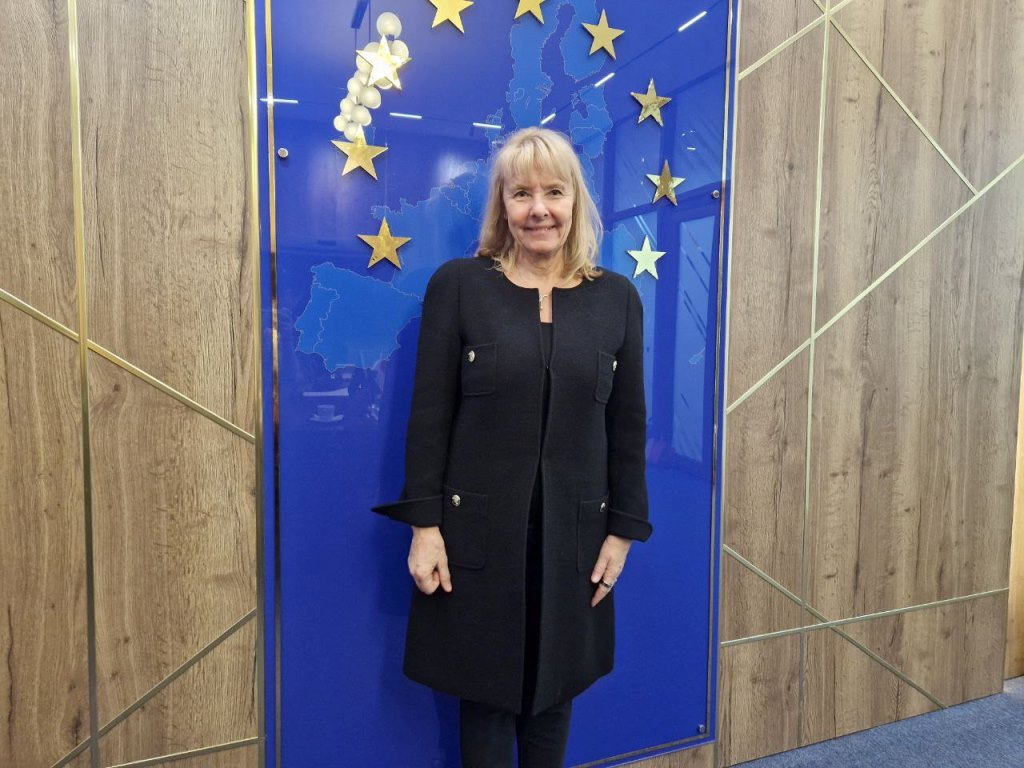
The EU Special Representative for Central Asia, Ambassador Terhi Hakala, has carried out farewell visits in the region. This series of visits has provided an opportunity to reflect on her mandate and to reinforce the EU’s commitment to enhance partnerships with Central Asian countries.
During her visits, Ambassador Terhi Hakala has met with partners, including government officials and civil society representatives, across Kazakhstan, Kyrgyzstan, Tajikistan, Turkmenistan, and Uzbekistan.
Since her appointment in July 2021, and in the course of two consecutive mandates supported by the EU member countries, Ambassador Terhi Hakala focused on expanding comprehensive regional cooperation with the countries, covering matters such as connectivity, security, energy, climate change, water, rule of law, education, and human rights with emphasis on women and girls, among others.
In an interview with Asia-Plus, she discussed the progress achieved by Tajikistan and the EU over the years.
Q. How do you evaluate the current state of relations between the EU and Central Asia?
A. I think we have achieved a great deal. We have elevated our relations to a high level, almost at the level of heads of state. We cooperate effectively with all Central Asian countries both collectively and individually.
Moreover, we have been able to focus on urgent issues, particularly strategic ones. We have developed a joint roadmap that we are currently implementing.
We hold regular meetings with the governments of Central Asian countries and civil society. In this area, we have seen positive results. Our partnership is based on equality and friendship.
Q. What role does the EU play in maintaining stability and sustainable development in Central Asia?
A. We place special emphasis on economic issues, economic development, connectivity, and sustainable development.
Sustainable development plays a key role, and the EU helps Central Asian states develop various sectors. We also have economic programs.
We strive to support economic development, socio-economic issues, healthcare, education, and trade relations.
Additionally, there are other important areas, such as social issues, where the EU cooperates with member states while adhering to the principles of sustainable development.
Q. In what areas does the EU see potential for expanding cooperation with Tajikistan and Central Asia?
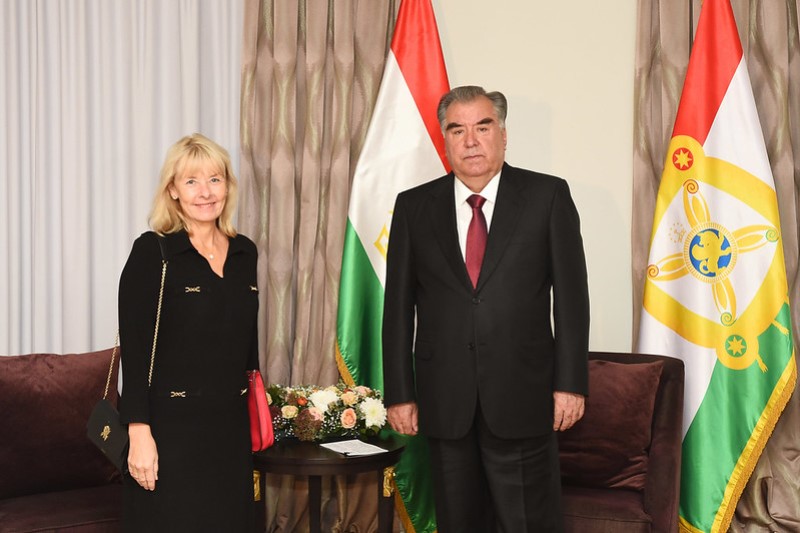
A. "There are still many important issues to address and a lot of work to be done. In Tajikistan, we have robust economic support.
This includes socio-economic development and education. Moreover, we have a significant portfolio focused on rural areas. The priorities of your government are the water sector and climate change.
Another critical area is security. We help Tajikistan strengthen its borders, particularly with Afghanistan. So, the scope of issues we address is very broad.
Still, I believe we could do even more. It would be beneficial to expand cooperation in education, research, and capacity building. All our research programs in education are excellent, and there is significant potential to apply them.
The fact is, the population in your region, including Tajikistan, is young and growing. What will they need in the end? They need education, jobs, and economic opportunities.
In this regard, I think there should be more educational programs, not just for universities. We have the ERASMUS+ program, Horizon Europe for researchers, and the regional DARYA program aimed at vocational training ("Dialogue and Action for Resourceful Youth in Central Asia")."
Q. What are the key topics on the agenda of meetings with representatives of the Tajik government?
A. I would like to thank the government for its excellent cooperation. We have already achieved a lot and can accomplish even more.
I am proud to have had the opportunity to work with Tajikistan, its people, government, journalists, and civil society.
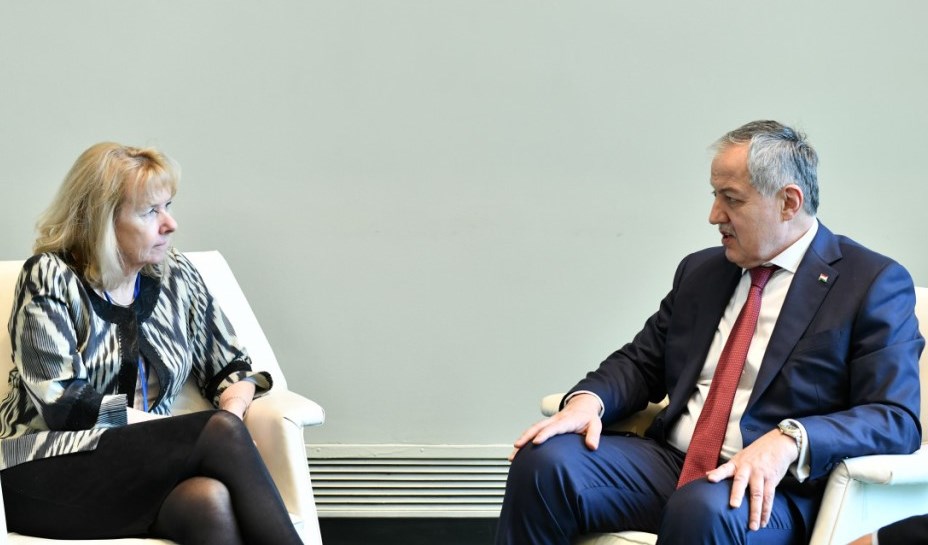
Next year, we will have numerous high-level meetings, including the EU-Central Asia Summit in Samarkand, and preparations must start now.
I’d like to highlight one successful cooperation project—the Trans-Caspian Transport Corridor.
We are building a transportation network in Central Asia. The entire transport corridor will connect with European networks via the Caspian Sea, the South Caucasus, Turkey, and European countries.
This network will facilitate the movement of goods between Europe and Central Asia and vice versa. It’s not just about trade but also about connecting people."
Q. What has inspired you most about the culture and nature of Central Asia, especially Tajikistan?
A. First of all, I must say that Central Asia is stunning in terms of its nature, history, and potential for a prosperous future. The diversity of its people is remarkable!
I have traveled extensively—from Khujand to Khorog—meeting people of all ages, backgrounds, and professions. Everywhere, I was met with warmth and hospitality.
I am fascinated by your culture and cuisine. And your mountains—they are breathtaking. Over 90% of your country consists of mountains. However, one of the current challenges is the melting glaciers due to climate change.
I hope our contributions will help address water issues, preserve biodiversity, and protect this incredible natural beauty.