On International Migrant Day, which is marked on December 18, Tajik political analyst Muhammad Shamsuddinov shared his perspective on whether friendly relations can exist amid discrimination against Tajik labor migrants in Russia.
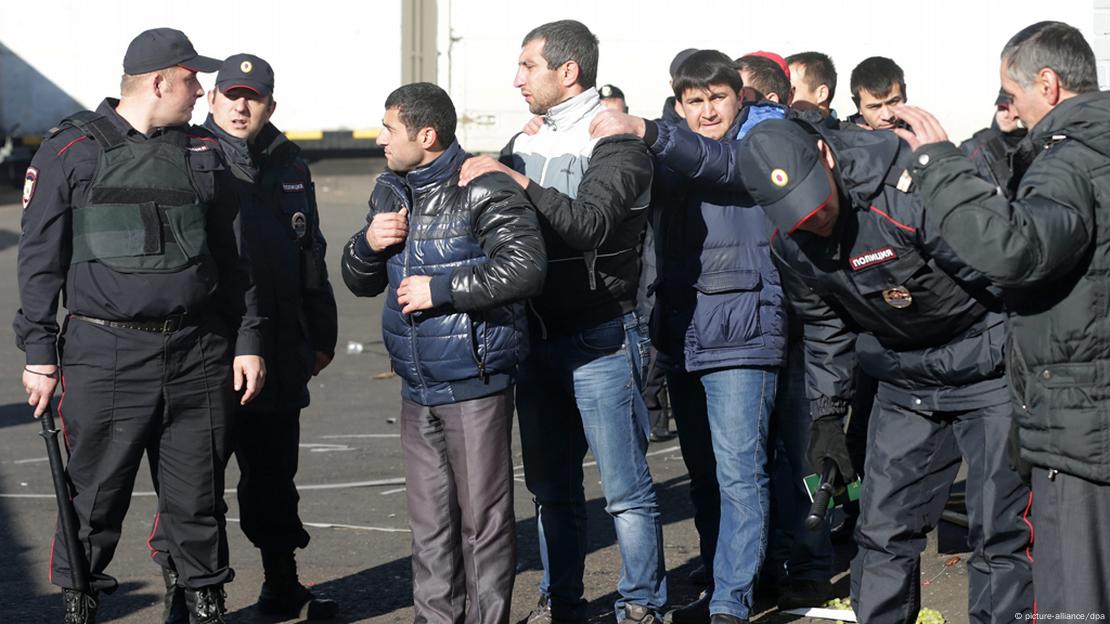
Labor migrants face lengthy airport delays, mass deportations, constant inspections and raids at workplaces, on the streets, and in their accommodations. Numerous discriminatory laws targeting migrants have also been enacted.
These conditions have eroded trust in the friendship between the two nations, with growing dissatisfaction on both sides.
This sentiment was reflected in a 16% decline in migration from Tajikistan to Russia during the first half of 2024 compared to the same period in 2023.
The contribution of migrants to Russia's development
As of September 1, 2024, 6.2 million people (4.2% of Russia's total population) were registered with the Russian Migration Directorate, compared to 8.5 million during the same period in 2023.
Migrants play a crucial role in Russia's economy, filling labor shortages amid the country’s demographic crisis and providing affordable labor. They also contribute to the Russian budget through labor market fees (patents), taxes, and their participation in the economy as consumers.
Statistics provide a clearer picture. In February 2024, President Putin stated that Russia’s labor market was short by 2.5 million workers, a gap to be filled largely through migrant labor. Rosstat data for the second quarter of 2024 revealed a shortage of 2.7 million workers.
According to Vladimir Volokh, a member of the Presidential Council for Interethnic Relations, the input of labor migrants into the Russian economy is estimated at 7.0-8.0 percent of Russia’s gross domestic product (GDP)—a significant contribution.
Over the first ten months of 2024, migrant taxes alone added 100 billion rubles to the Russian budget. Tajik migrants contribute an estimated 1.5% of Russia’s GDP, equivalent to US$30.3 million (based on 2023 GDP figures).
Given Russia’s demographic challenges, continued migrant outflows could severely impact the country’s development. The situation is exacerbated by the ongoing war in Ukraine.
Thus, migrants, including Tajiks, make a substantial contribution to Russia's development—a fact that Russia should consider when shaping its relations with Tajikistan.
A difficult year for Tajik migrants
Addressing Russian attitudes towards migrants, particularly Tajiks, the author notes a persistent bias, arrogance, and disregard for their dignity.
This year has been particularly tough for Tajik migrants, who have endured “collective punishment” following the terrorist attack at Crocus City Hall. There has been a sharp increase in discrimination, negativity, aggression, and overall disrespect towards the Tajik nation from Russia, the so-called “big brother.”
Since the terror attack on Moscow’s Crocus City Hall in March this year, the Kremlin has taken active steps to complicate the lives of migrant workers in Russia, further tightening legislation in what was already a hostile environment for outsiders.
In July, Moscow region police chief Viktor Paukov said publicly that his main task was to “lighten up the Moscow region so that it won’t be darkened — as it were — by foreigners.”