Tajikistan has the lowest per capita carbon dioxide emissions in Central Asia, remaining significantly below 1991 levels. Projections suggest that CO₂ emissions will stabilize at 0.6 tons per capita over the next six years. This finding comes from a report by Kursiv Research on CO₂ emission trends in the five Central Asian countries through 2030.
Challenges and regional contribution
The study highlights that Central Asian countries face significant challenges in transitioning to a green economy, reducing greenhouse gas emissions, and moving toward carbon neutrality. At the same time, the region varies in its potential and contribution to global CO₂ emissions.
Kazakhstan leads the region with 0.56% of global emissions, followed by Uzbekistan (0.33%) and Turkmenistan (0.22%).
Kyrgyzstan and Tajikistan each contribute only 0.03%.
The region’s combined share of global emissions is 1.17%.
Per capita emissions and carbon intensity of the economy differ significantly, reflecting resource management efficiency and efforts toward sustainable development.
Tajikistan’s low carbon footprint
Following the Soviet Union's collapse, Tajikistan underwent severe economic and social crises, including a devastating civil war that paralyzed industrial production. These events had a notable impact on the country's carbon dioxide emissions.
Between 1991 and 1994, per capita CO₂ emissions in Tajikistan dropped from 1.7 to 0.4 tons, remaining at that level until the mid-2010s.
By 2021, emissions began to rise slowly, reaching 1 ton per capita but still well below 1991 levels. Projections suggest stabilization at 0.6 tons in the coming six years.
Population growth significantly influences Tajikistan's low emissions. With an annual increase of over 200,000 people, Tajikistan has the highest birth rate among CIS countries.
Despite a rise in the carbon intensity of GDP since 2013, it remains low compared to neighboring countries. By 2030, this indicator is expected to grow to 1.7 kg CO₂ per $1 GDP.
Hydropower as a key advantage
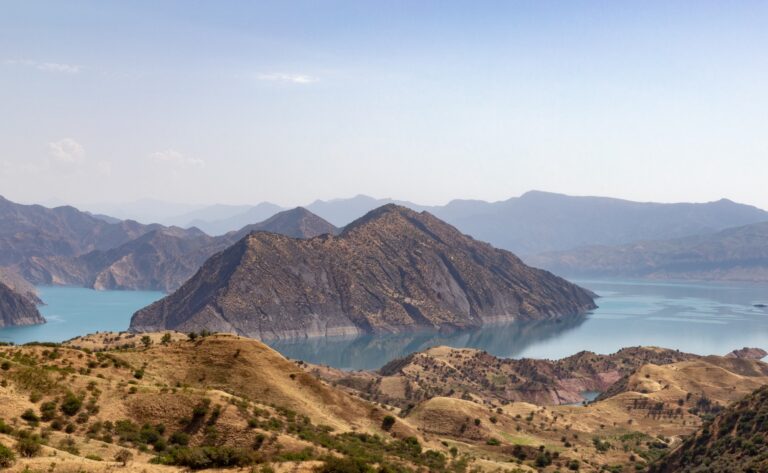
Tajikistan is a global leader in hydropower potential per unit area, holding 54.2% of Central Asia's hydropower resources. This is attributed to powerful rivers like the Vakhsh and Panj, which host numerous hydropower plants.
Nearly all of the country’s electricity is generated from hydropower, enabling Tajikistan to minimize carbon emissions and reduce reliance on fossil fuels.
The country’s hydropower capacity exceeds Central Asia's current electricity consumption by three times. This resource not only meets domestic needs but also offers export opportunities, serving as a critical factor in Tajikistan's sustainable development.
CO₂ emission trends in the region
Kazakhstan, with high carbon intensity, maintains per capita emissions at around 13.8 tons. The country is actively developing solar and wind energy, including large projects like the Zhanatas Wind Farm. However, achieving the goal of 25% renewable energy by 2030 remains uncertain due to its heavy dependence on traditional energy sources.
Uzbekistan since the early 2000s has seen a steady decline in per capita CO₂ emissions, facilitated by energy sector modernization, improved energy efficiency, and population growth. The population has grown by 75.6% since 1991, reducing per capita emissions. By 2030, emissions are projected to drop to 2.7 tons per capita, with renewables expected to account for 8.4% of energy production.
Turkmenistan has one of the highest per capita CO₂ emissions in the region—about 11–12 tons. The development of its energy and industrial sectors, along with hydrocarbon exports, hinders significant emission reductions. Projections indicate emissions will remain around 11.5 tons per capita by 2030.
Kyrgyzstan with per capita emissions of 1.4–2 tons, is projected to reduce this to 1 ton by 2030. Hydropower already accounts for over 80% of electricity production. Projects like Kambar-Ata-1 aim to increase renewable energy to 92.7% by 2030. However, political and economic instability and outdated infrastructure pose risks to investor confidence, potentially limiting renewable energy growth.