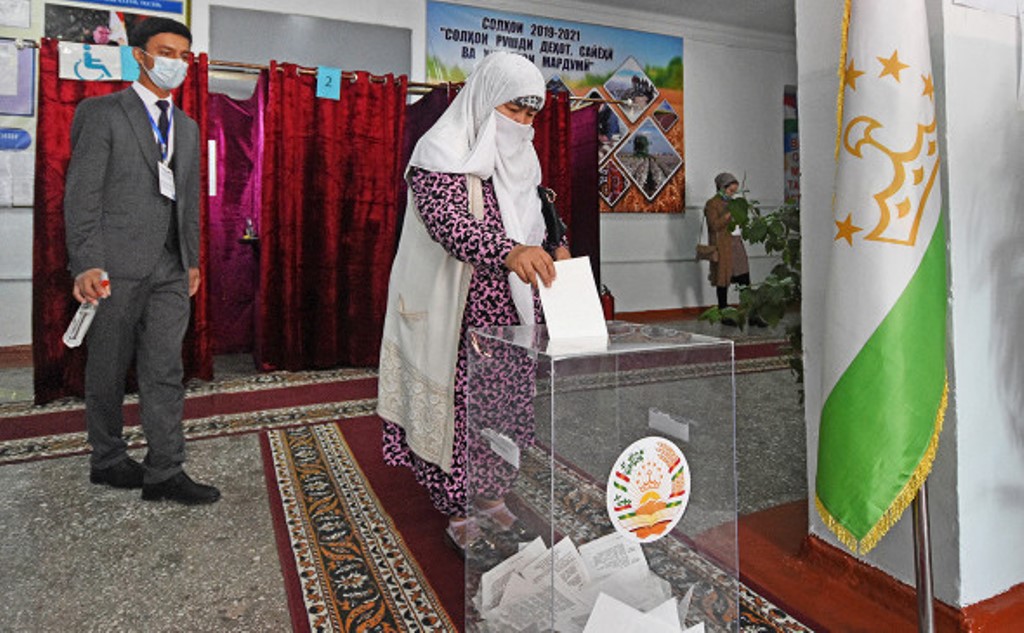
A total of 152 candidates are running for seats in Tajikistan’s lower chamber of parliament (Majlisi Namoyandagon) through the single-mandate constituencies, with 65 of them registering as self-propelled candidates. The remaining candidates were nominated by political parties, according to the Central Commission for Elections and Referenda of Tajikistan (CCER).
On February 13, Nosirjon Salimi, a member of the Central Election Commission, told Asia-Plus that six political parties have nominated candidates to compete for a set in the Majlisi Namoyandagon through the single-mandate constituencies:
- The People’s Democratic Party of Tajikistan (PDPT) – 52 candidates;
- The Agrarian Party of Tajikistan (APT) – 18 candidates;
- The Party of Economic Reforms of Tajikistan (PERT) – 7 candidates;
- The Communist Party of Tajikistan (CPT) – 4 candidates;
- The Socialist Party of Tajikistan (SPT) – 3 candidates;
- The Democratic Party of Tajikistan (DPT) – 3 candidates.
Additionally, 68 candidates from 6 political parties of the country have been registered with the CCER for 22 seats in the Majlisi Namoyandagon elected by a party-list system.
Structure of the Majlisi Namoyandagon and upcoming elections
The parliamentary elections are scheduled for March 2, 2025. All six political parties (except the Social -Democratic Party of Tajikistan, or SDPT) have nominated their candidates to run in the upcoming parliamentary elections. The registration process is complete, and the campaigning phase is now underway.
The 63 members of the Majlisi Namoyandagon are elected by two methods: 41 members are elected in single-member constituencies using the two-round system, whilst 22 seats are elected by proportional representation in a single nationwide constituency, with an electoral threshold of 5%.
Voters cast a single ballot for a candidate in their single-member constituency, with the total votes received across all constituencies used to determine the proportional seats. In each constituency, voter turnout is required to be at least 50% for the election to be declared valid.
In 2020, the parliamentary elections were held on March 1 and the voter turnout was reportedly more than 86 percent.
The ruling PDPT won parliamentary elections. 50.4 percent of the ballots cast supported the PDPT, securing 47 seats in the 63-seat Majlisi Namoyandagon.
The APT, the PERT, the CPT, the SPT and the DPT also won seats in the lower house of parliament.
The Agrarian Party secured 7 seats, the Party of Economic Reforms won five, and the Communist Party got two seats in the Majlisi Namoyandagon.
The Democratic Party and the Socialist Party got one seat each by the party lists.
All these parties generally support the government, and independent analysts note that they do not significantly influence the country’s political landscape.
The Social-Democratic Party (SDPT) was unable to pass the 5 percent minimum barrier to get a seat in the legislature. The party blamed it on Tajik authorities’ failure to hold free and fair elections.