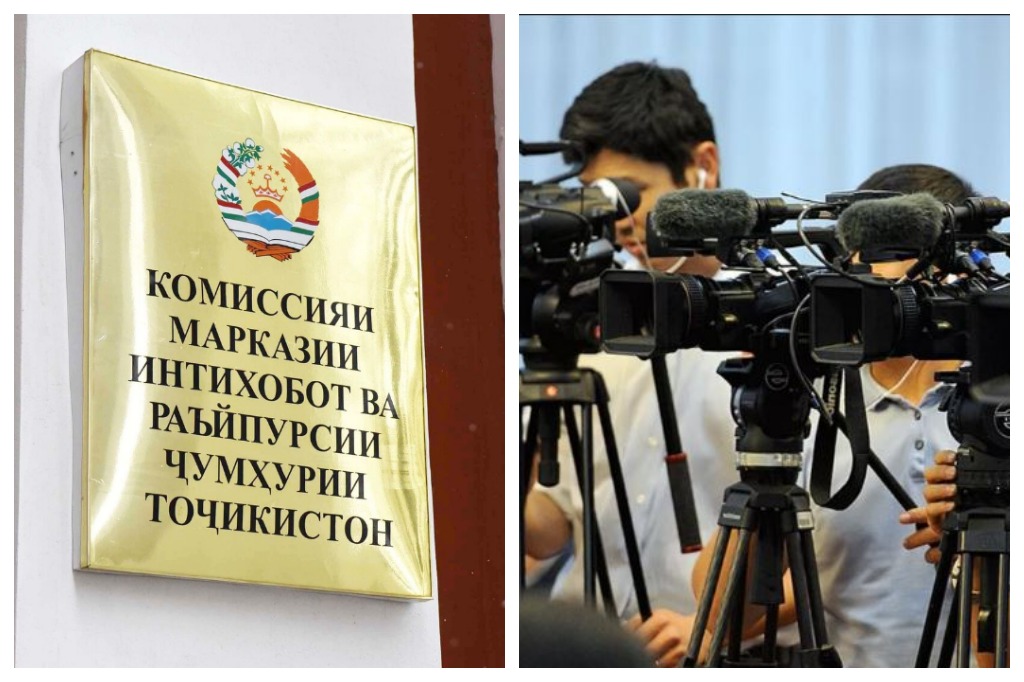
Asia-Plus news agency and some international media outlets will not be able to cover the parliamentary elections in Tajikistan, which are scheduled for March 2. According to representatives of the Central Commission for Elections and Referendums (CCER), a permit is required to cover the elections. However, the law and legal experts state that the activities of this body should be accessible to the media.
In mid-February 2025, Asia-Plus approached the CCER for information, but they said: "You will not be able to cover the elections, as you did not submit an application for permission." The CCER also mentioned that the final deadline for obtaining permits or licenses was set for February 10.
The CCER refuses to provide information to Asia-Plus and recommends contacting accredited media outlets for it.
However, according to the legislation, the procedure for obtaining a permit and the deadlines should have been announced in advance. Yet, this announcement was only posted on the internal page of CCER’s website, and media outlets were not officially notified.
Radio Ozodi (Radio Liberty’s Tajik Service) and the BBC have also been denied the right to cover the elections. They reported that they also did not receive this opportunity due to the fact that they did not have time to submit applications.
The CCER reportedly recommended to them: "The information you are interested in can be found on the CCER's website or obtained from accredited media."
According to available information, only a few state media outlets were registered to cover the parliamentary elections, and only they received accreditation.
What does the law say?
It should be noted that, according to the legislation, the CCER must carry out its activities transparently, and its meetings should be open to the public and the media (Article 4 of the Law "On the Central Commission for Elections and Referenda of the Republic of Tajikistan"). To obtain information from the CCER press center regarding the commission's activities or the election process, media outlets are not required to have accreditation or any other permission under the law.
Under the new licensing law of June 30, 2023, the CCER is required to provide media outlets with a certificate to cover the electoral processes, which is valid indefinitely. This certificate remains valid until the media outlet ceases its operations. According to the law and the obtained certificate, the media can participate in all political campaigns with simple notification in the future.
This year, not only media outlets but also some international observers were denied the right to monitor the elections. In particular, the OSCE Office for Democratic Institutions and Human Rights (ODIHR), which had previously monitored elections in Tajikistan, stated that it would not send its observers to the parliamentary elections in Tajikistan. ODIHR stated on February 4 that the lack of assurance by the authorities of Tajikistan that international observers will be accredited “has regrettably made it necessary to cancel the observation of the country’s forthcoming parliamentary elections.”
Meanwhile, Tajikistan’s Minister of Foreign Affairs, Sirojiddin Muhriddin, noted at a news conference in Dushanbe on February 11 that the ODIHR had proposed deadlines for registering observers, initially by January 31, and then by February 3, expecting that Tajikistan would register their mission by those dates
"The Central Commission for Elections and Referenda has its own procedures and rules. During the dates they requested for observer registration, the leadership of our commission was engaged in elections in Belarus and other countries. Therefore, we couldn't register them by January 31 or February 3," the minister said.
Muhriddin emphasized that after this, ODIHR representatives brought the issue to the attention of all OSCE Permanent Council members in Vienna in a "negative light."
"In this issue, Tajikistan is not at fault. It was they who violated the procedure and left. Despite this, the doors for all OSCE structures remain open, and we are ready for cooperation. We didn't close the door on them," the foreign minister stressed.