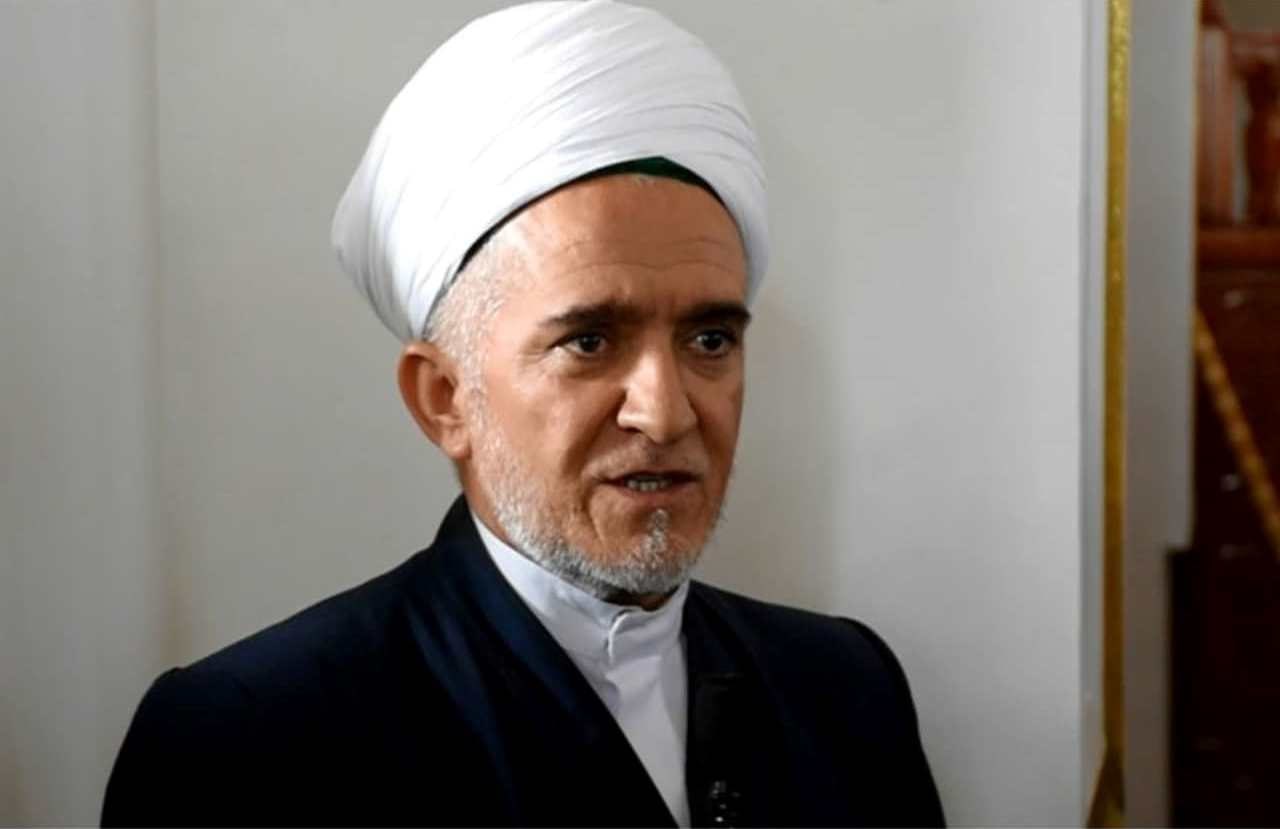
On the eve of the holy month of Ramadan, the Chairman of the Council of Ulema of Tajikistan (the only fatwa-issuing body in the country), Saidmukarram Abdulqodirzoda, issued a fatwa stating that workers of the Roghun hydropower plant (HPP) are allowed to break their fast on workdays. He also urged traders not to artificially inflate prices, warning that doing so could lead them to Hell. Abdulqodirzoda shared this information with the country’s state-run news agency Khovar.
Fatwa for Roghun workers
The Grand Mufti stated that most Sunni and public scholars agree that individuals engaged in physically demanding labor—such as construction workers, harvesters, bakers, blacksmiths, and miners—are permitted to break their fast if hunger or thirst poses a risk to their health. He emphasized that once the obstacles are removed, these individuals must make up for the missed fasts at a suitable time.
"For those performing particularly strenuous work, especially the workers of the Roghun HPP, who are currently engaged in tunnel construction, as well as surface and underground structures, and bear great responsibility for completing the construction tasks, fasting may be waived on workdays if extreme hunger or thirst threatens their health. They should make up for these missed days later at a convenient time," said Saidmukarram Abdulqodirzoda.
He previously issued a similar fatwa several years ago.
Who else is exempt from fasting?
Abdulqodirzoda noted that fasting is one of the most challenging acts of worship, requiring patience, and acknowledged that "some people in society may not be able to endure it." He listed the categories of individuals who, according to Islamic Sharia law, are permitted to forgo fasting:
Patients: Those whose medical conditions could worsen or relapse due to fasting. Islamic law considers a qualified doctor's prescription and recommendations valid in such cases. If a medical professional determines that fasting is harmful to the patient’s health, the person is allowed to break the fast.
Travelers: According to the Council of Ulema, fasting may be skipped if the journey exceeds 120 kilometers. For example, if a bus driver transporting passengers from the city center to a remote district covers more than 120 kilometers, he may break his fast, given the responsibility, road challenges, and concern for passengers’ safety.
Pregnant women: If fasting poses a threat to the mother’s or child's health, a woman may abstain from fasting. A breastfeeding mother whose child is solely dependent on breast milk also has this exemption.
Risk of death or severe illness: Another situation where Sharia allows breaking the fast is extreme hunger or thirst that could lead to death or a severe medical condition.
Elderly people: If fasting causes excessive hardship and weakness, they are exempt from fasting and must pay compensation (fidya), which, according to the Council of Ulema, is set at 16 somonis per missed fasting day. This compensation applies only to elderly individuals. In all other cases mentioned above, once the reasons for exemption are no longer applicable, the missed fasting days must be made up.
Fidya is a religious donation to help those in need. It is only paid when someone is unable to fast during Ramadan due to medical conditions or any other valid reasons such as a prolonged illness, and will not be able to make up the fast.
Saidmukarram Abdulqodirzoda emphasized that all the aforementioned exemptions allowing fasting to be broken are documented in authoritative books of fatwas from the Hanafi school of thought.
"God will surely cast him into hellfire" – Tajikistan’s mufti on ethics during Ramadan
The grand mufti of Tajikistan stated that "Ramadan is not only a test of physical endurance and abstinence from food but also a test of one's emotional and spiritual state, purity of intentions, and actions."
Warning against price gouging: “This principle especially applies to those responsible for serving society. Artificially inflating prices to gain extra profit during this sacred month is one of the worst acts, condemned by the pure religion of Islam,” declared the Mufti of Tajikistan, Saidmukarram Abdulqodirzoda.
He referenced a hadith of Prophet Muhammad (peace and blessings be upon him): "If someone manipulates the pricing of food for Muslims, forcing them to rise, Allah will surely cast him into the Hellfire on the Day of Judgment."
During this holy month, Abdulqodirzoda urged his fellow citizens to uphold good conduct and moral principles, such as showing kindness to neighbors, compassion and care for the sick, respect and support for the elderly, maintaining good relations with family members and relatives, and being generous and considerate towards friends and colleagues.
The true spirit of Ramadan: sincerity and charity: The head of the Council of Ulema emphasized that any act of kindness and generosity during Ramadan should be performed solely for the sake of God's pleasure and not for personal gain, prestige, or social recognition.
"A person who performs a single good deed for the sake of God during the blessed month of Ramadan is like one who has completed 70 obligatory acts in other months," said Abdulqodirzoda.
The mufti highlighted that one of the most significant good deeds during Ramadan is charity for orphans, people with disabilities, impoverished families, and those in need. To reinforce this, he cited another hadith of the Prophet (peace be upon him): "The best and most valuable charity is that which is given during Ramadan."