Some Tajik labor migrants, following Russia’s occupation of Ukrainian territories, have been traveling to these regions in hopes of earning more money. Russia supports this process and even offers incentives to attract more labor migrants.
However, experts warn that such trips may result in imprisonment for Tajik citizens.
As of April 2025, Russia occupies five Ukrainian regions: the Crimean Peninsula, and the Luhansk, Donetsk, Zaporizhzhia, and Kherson regions. It held referendums there — not recognized by the international community — and declared the annexation of these territories. Four of the mentioned regions were severely damaged by the war, and most local residents have fled.
Russia is currently in need of labor in these areas. Therefore, certain benefits were introduced for migrants, including the ability to work without needing a labor patent.
Some labor migrants from Central Asian countries, including Tajikistan, have traveled to the occupied territories both before and after these benefits were introduced. Most go for the high salaries promised by Russian authorities — which are not always paid. Others are trying to avoid the costs of work permits or escape pressure and harassment in big cities.
However, many are unaware of the legal risks of such travel, which could land them behind bars.
"The war will end, but the cheaply bought house will remain"
Salim Saidov (name changed for safety reasons) has traveled twice to work in occupied areas since the war began.
He says that until 2023, when the Russian army took the Ukrainian city of Mariupol, he worked at a street food stand in Moscow.
“At the time, Moscow’s streets and social media were full of job ads in Mariupol offering high salaries. Checks and pressure on migrants increased in Moscow. Some friends went to Mariupol. When I asked them about the work, they said they were earning more than before. So I decided to go too,” says Salim.
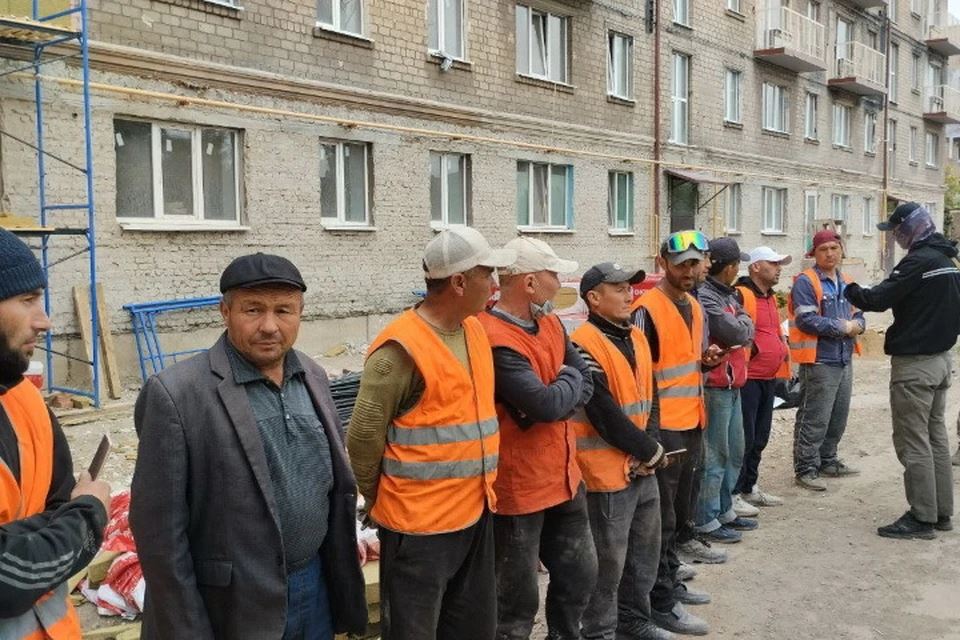
In Mariupol, he and his acquaintances mainly worked on repairing destroyed houses. For the first three to four months, they were indeed paid the promised wages — over 200,000 rubles per month — but later, payment issues began.
After six months, he returned to Moscow and worked there for another six months.
“One day, an acquaintance from Uzbekistan told me he had moved to Donetsk region and was earning well. He also said he was free from government pressure and didn’t have to pay for a patent. About a week later, I went there too and worked for around six months,” Salim continues.
He says that in Donetsk, as in Mariupol, most buildings are destroyed, and Tajik and Uzbek migrants mainly come to help with reconstruction.
“Maybe it’s an exaggeration to say they go in large numbers, but there were a lot of Tajiks and Uzbeks in Mariupol. There are fewer in Donetsk, but the number of Central Asian migrants is growing,” he says.
According to him, many Tajik and Uzbek citizens are now buying property in these regions because it’s very cheap. “The war will end, and the cheap house will remain,” he adds.
Salim admits he is aware of the possible consequences of traveling to occupied Ukrainian territories but takes the risk anyway.
“Work in these regions is dangerous. You hear explosions every day. It’s the law of the jungle. But your passport doesn’t show that you entered these areas, so I hope there won’t be problems in the future,” he concludes.
Warnings about war participation and silence on borders
The governments of Central Asian countries, including Tajikistan, have repeatedly warned their citizens not to participate in military actions abroad since the war in Ukraine began, without naming specific countries. They cautioned that this could be seen as mercenary activity and result in criminal prosecution.
Tajikistan’s Foreign Ministry also urged citizens not to travel to border areas of Russia and Ukraine, citing danger. However, no country in the region has clearly warned that traveling to territories occupied by Russia could be considered illegal crossing of Ukraine’s state border and lead to criminal penalties.