After the tragedy on the Dushanbe – Khujand highway, as a result of which Marina Ipatiy, a well-known swimming coach, died on May 15, a question arose in society: why aren't protective concrete bumpers installed on all dangerous sections of the road?
With this question, "Asia-Plus" editorial board contacted the press center of the branch of "Innovative Road Solutions LTD" (IRS), which operates this highway.
The accident occurred on the 92nd kilometer of the Dushanbe – Khujand road, in the Aini area.
"According to the information we have, the car first slid down a bit and then fell into the river. Unfortunately, there are no concrete fences on this site," the company explained.
The preliminary cause of the accident, according to experts, is either that the driver fell asleep, or that the car drove into the oncoming lane.
"The exact cause of the accident will be revealed in the traffic police, I do not have more details about this accident," said the source in the company.
The IRS also reported that this section (82 km long Aini area) of the road is among the most emergency, and it is for this reason that the installation of concrete parapets is being considered a priority here.
"According to our experts, installation of at least 10 kilometers of protective barriers is required on this section of the highway. The branch aims to solve this problem step by step, giving priority to such accident-prone areas," the IRS said.
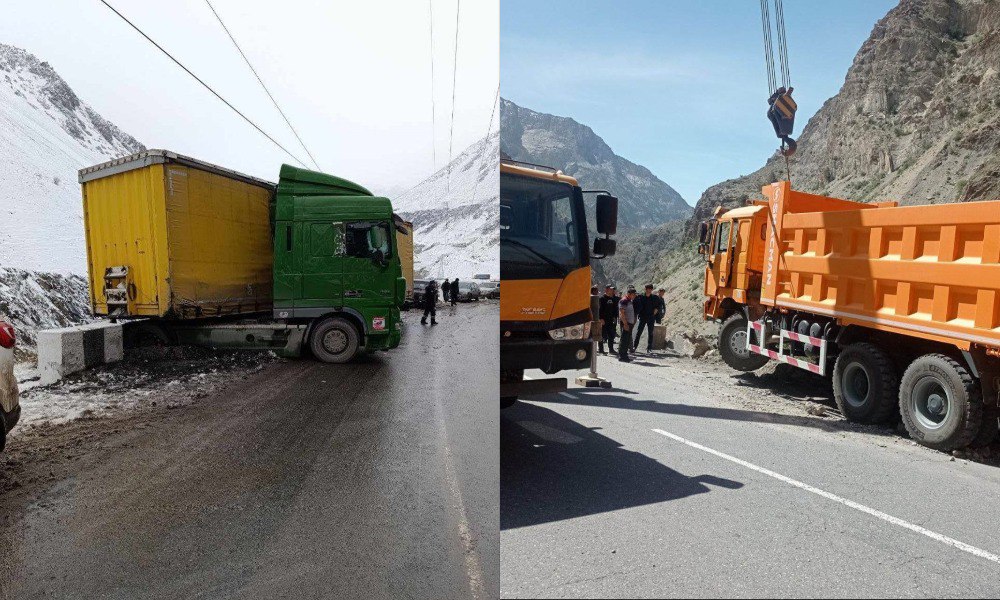
The source also noted that according to the traffic police, the main causes of accidents in this area are driving into the oncoming lane and drivers falling asleep at the wheel.
"For prevention purposes, we are installing information banners in emergency areas based on traffic police data," he added.
Why aren't barriers installed everywhere?
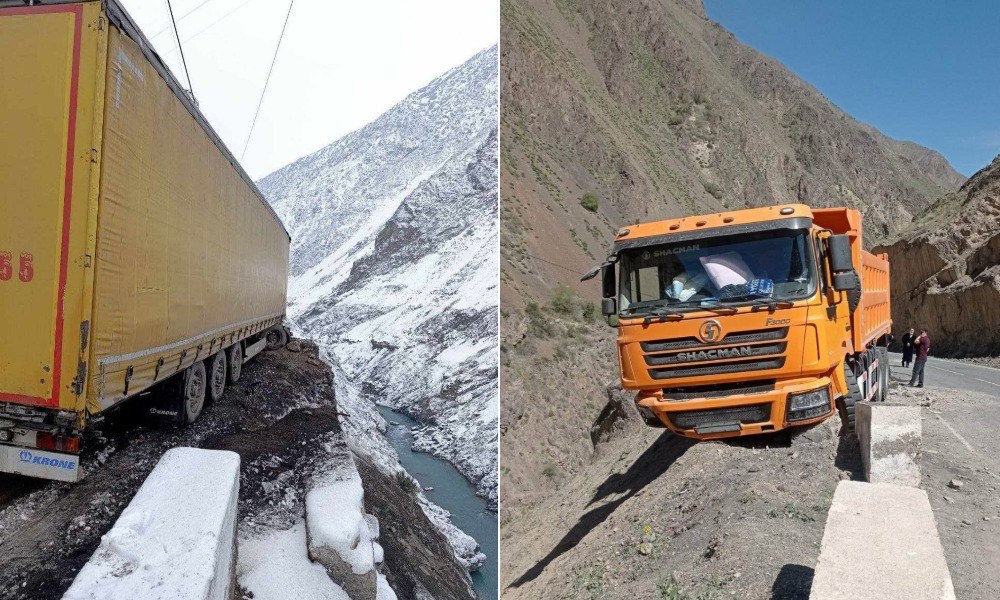
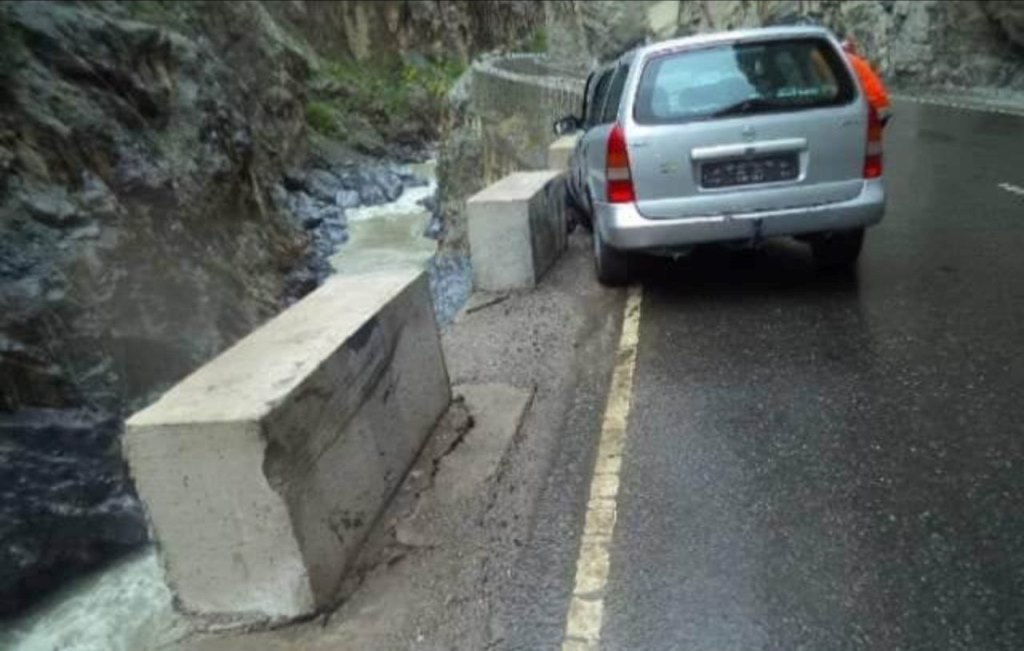
On mountainous sections of roads, especially near rivers and ravines, concrete parapets perform a vital function. If they lose control, they can prevent the car from falling into a cliff, which means they can save the lives of passengers.
According to the IRS representative, the installation of concrete parapets along the entire length of the highway is impossible for several reasons.
In some places, the terrain and design constraints make this technically impossible. In addition, according to the expert, it may contradict building regulations and safety requirements.
Since 2012, the company has installed over 16,000 linear meters of protective parapets, of which more than 70% are in the Aini area, where the largest number of serious accidents have been recorded.
It is planned to add at least 1,500 more meters in 2025.
The number of accidents is growing
According to the Ministry of Internal Affairs of Tajikistan, 174 cases of traffic violations with serious consequences were registered in the first four months of 2025, which is 24 more than in the same period last year.
Most of the serious accidents occur on mountain and high–speed roads, including the Dushanbe-Canak (Khujand) road.
According to drivers and experts, the lack of safety engineering solutions, such as barriers and fences, exacerbates the consequences of accidents.
Last year, 1,233 road accidents were registered in Tajikistan, 122 more than in 2023 (1,111). As a result of these accidents, 552 people died, and another 1,353 were injured. These data were announced at the final press conference of the Ministry of Internal Affairs of the Republic of Tajikistan in January 2025.