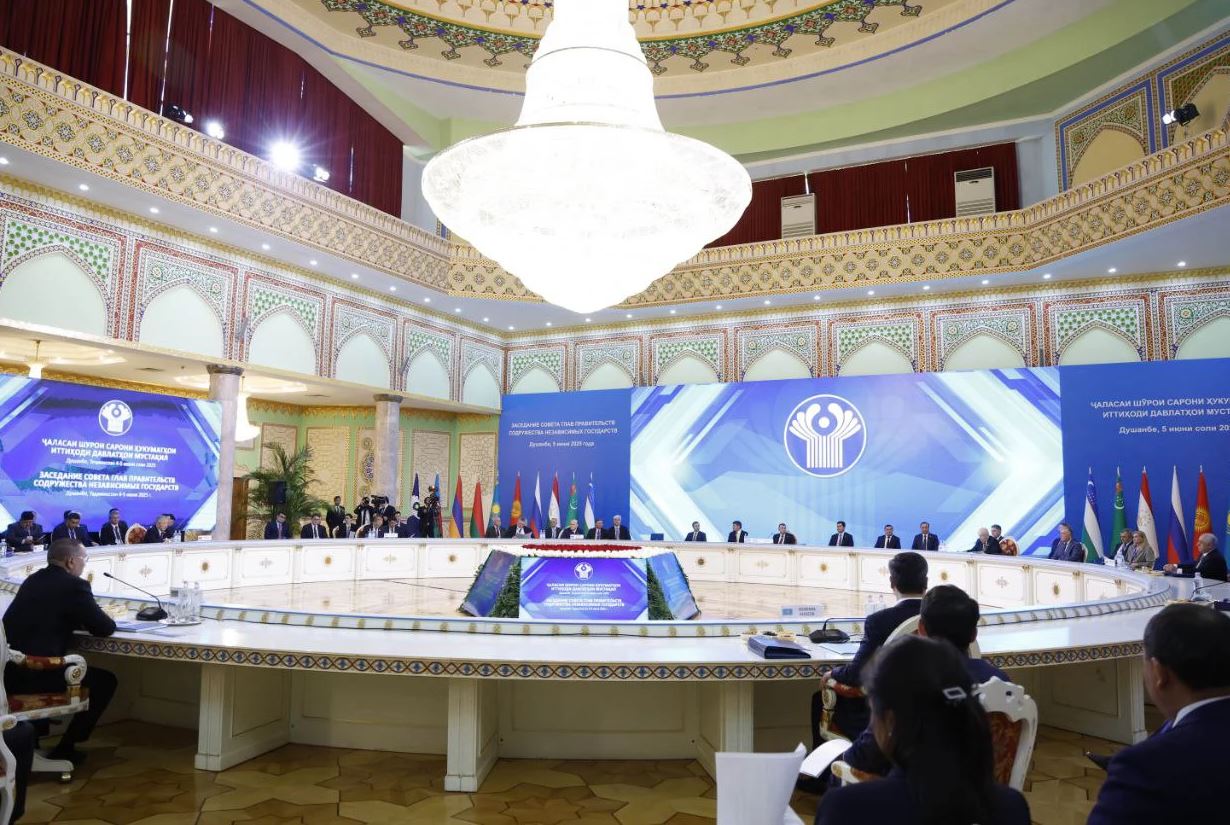
On June 5, the Council of Heads of Government of the CIS member states approved an agreement aimed at fostering cooperation in the development of heavy machine engineering. The meeting took place in Tajikistan’s capital, Dushanbe.
The CIS Executive Committee’s press service says the document outlines plans to enhance the exchange of information and best practices in the industrial sector, train highly skilled professionals in key economic sectors, and promote collaboration in new technological fields. Additionally, it emphasizes the modernization of production technologies.
The agreement highlights several key areas of joint activity, including the innovative development and modernization of heavy machine engineering technologies and equipment. It also focuses on the development of machine engineering sectors in the CIS countries, specifically those involved in creating machinery, equipment, and systems for metallurgy, mining, energy, oil and gas, and chemical industries, as well as large-scale metal structures and products.
In addition to this agreement, the Council of Heads of Government approved the Concept for Cooperation in the Light Industry sector and an Action Plan for its implementation. This document aims to foster cooperation in the processing of raw materials of both animal and plant origin, as well as collaboration with the chemical and petrochemical industries. The plan includes developing technologies, modernizing equipment, and improving both existing and new light industry and waste processing production lines.
The Concept also proposes harmonizing safety and product quality standards, setting up knowledge exchange centers, and enhancing collaboration with related sectors of the economy.
Furthermore, the Council discussed a new Concept for the harmonization of national air traffic management systems. The previous Concept, adopted 21 years ago, is considered outdated due to significant changes in the aviation industry. The new Concept seeks to align national air traffic systems by standardizing regulatory rules, procedures, and operational characteristics, simplifying the interaction of national air navigation systems.
The Council also recommended several updates to the Concept for Cooperation in Health Protection. Notably, it clarifies the concept of "health protection" and introduces new principles of collaboration, including promoting social and economic development, and being open to partnerships with international organizations, patient communities, and business entities.
The updated Concept includes new objectives focused on maintaining and improving public health, as well as promoting a healthy lifestyle. Planned initiatives involve joint applied and fundamental research, as well as scientific and innovative developments in the fields of medicine and pharmaceuticals.
Tajikistan formally took over the rotating chair of the Commonwealth of Independent States in 2025.
The CIS Council of Heads of Government is a working body within the Commonwealth of Independent States. It is composed of the heads of government of the CIS member states and serves as a forum for discussion and coordination on various matters of mutual interest, including economic, social, and political cooperation.
The CIS covers much of the former Soviet Union, including as full members Russia, Kazakhstan, Kyrgyzstan, Tajikistan, Uzbekistan, Armenia, Azerbaijan, Belarus, and Moldova, as well as Turkmenistan as an “associate.”
Georgia quitted the Moscow-dominated Commonwealth of Independent States in 2009. Georgia's CIS membership officially ended on August 17, 2009.
Ukraine, which participated in the CIS since its inception, never actually ratified its charter – disagreeing with the document’s positioning of Russia as the only legal successor state to the Soviet Union. Kyiv ceased its participation in the statutory bodies of the CIS in 2018. Although Ukraine stopped its participation after the Russian annexation of parts of Ukraine in 2014, it formally withdrew from the CIS Inter-parliamentary Assembly as an official termination of its membership on May 3, 2023.
It is to be noted that Moldova is also distancing itself from the CIS, but leaving is might not be so easy.