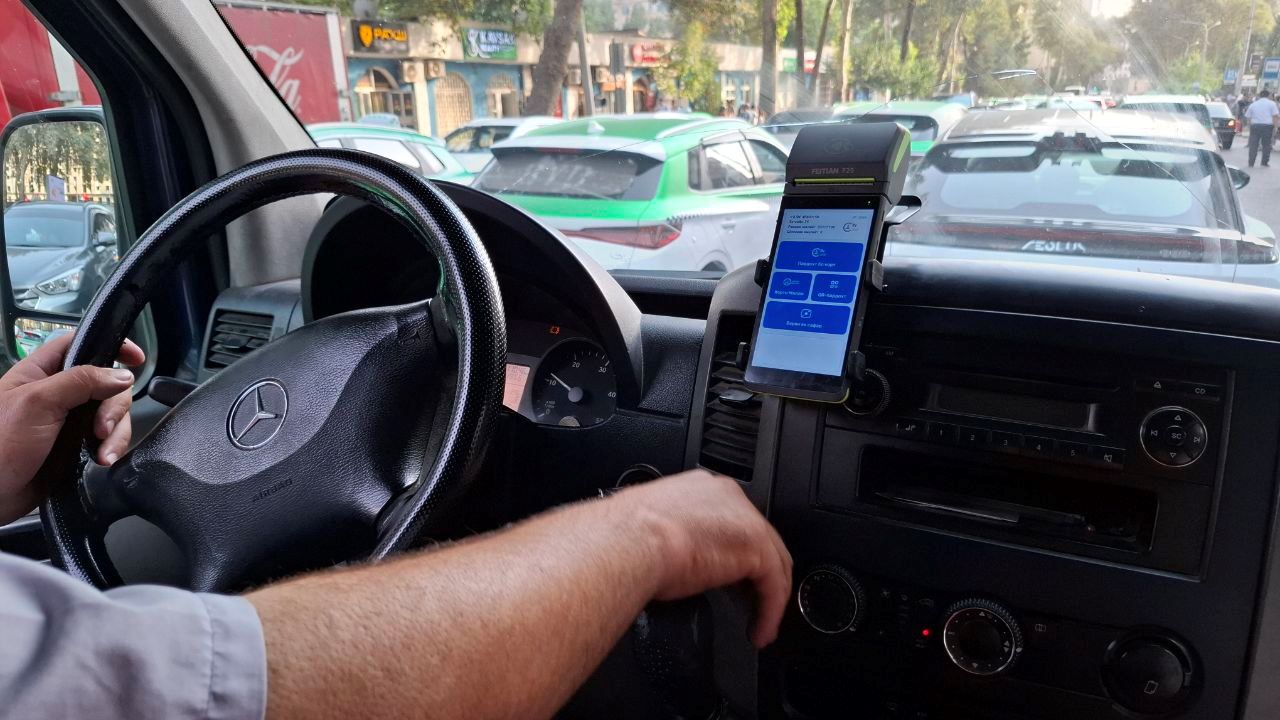
By mid-September of this year, drivers of public transport (minibuses) in Dushanbe must install cashless payment devices (POS terminals or validators) in their cars. The devices are provided under a six-month loan agreement at a price of 2800 somoni.
Installation is carried out by "Citycard" company. In addition, starting from September 11, drivers are required to pay this company 30 somoni daily for maintenance.
Several public transport drivers complained to "Asia-Plus" that passenger cooperatives and responsible persons were forcing them to purchase and install POS terminals.
According to the drivers, otherwise they have to leave the cooperative.
The head of one of the passenger cooperatives confirmed this situation, stating that passenger transportation is prohibited without installing a validator. The relevant authorities also commented that, according to the decision of the Mayor of Dushanbe, POS terminals should be installed in all minibuses in the capital by mid-September.
Switching from cash to non-cash payment
Firuz Gafurzoda, head of the State Unitary Enterprise "Dushanbenakliyetkhadamotrason", in an interview with "Asia-Plus" stated that from the beginning of the school year, urban minibuses should completely switch to a cashless payment system.
"For this reason, it was decided to install POS terminals in minibuses, as it is done in buses and trolleybuses. The installation of these devices in minibuses is carried out by "Citycard" company, which is implementing this project," – said Gafurzoda.
He added that the device issues a receipt to those who pay in cash.
However, according to the order of the Mayor's Office, payment on all public transport must still be made by non-cash payment.
"In this system, the fare may vary depending on the type of travel card, which will be convenient for passengers," – he said.
"We can't force people"
Shamsiddin Nasrulloev (first and last name changed), who has been working on route No. 25 for many years, noted in an interview with Asia-Plus that "most drivers do not agree with this innovation."
"To continue working, I had to borrow money and buy a validator for 2800 somoni. A week has passed since the installation, but only a few passengers use it, most still pay in cash. I can't force them to pay by card either," – he says.
Now he is worried that if, as the responsible persons claim, mandatory cashless payment is introduced on September 11, he will incur losses, since the fare varies depending on the type of card. For example, the price is lower for schoolchildren, students, or holders of monthly or annual cards.
It should be noted that the cost of public transport in the capital is 2 somoni 50 dirams. Drivers receive this amount in cash from passengers. However, cashless payments provide discounts that most citizens do not use, either because they do not know it or because they do not have a card.
Now, with mandatory cashless payments, passengers will also have to use cards, and they will be able to pay 1 somoni less, depending on the card's tariffs. This is what causes concern for drivers.
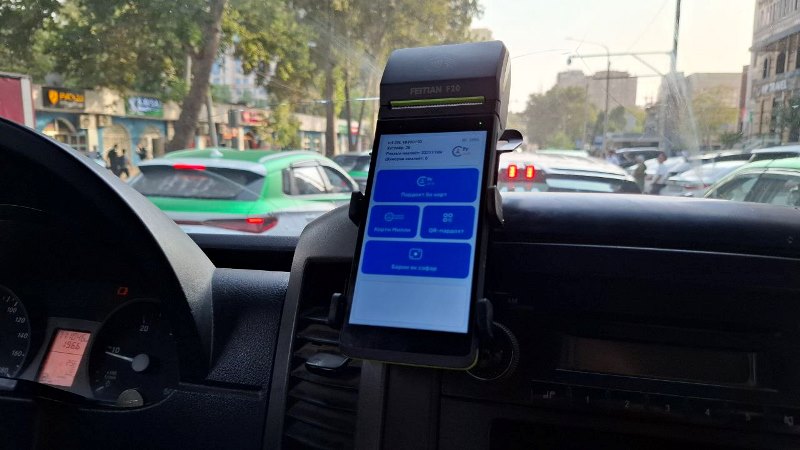
Another driver working on the same route expressed concern about having to pay 30 somoni per day to "Citycard".
"We spend up to 4,000 somoni a month, not counting fuel. In addition, we pay 2,000 somoni to the cooperative every month. And now we have to pay another 30 somoni daily for validator maintenance," – the driver complained.
Dismissal of the dissatisfied
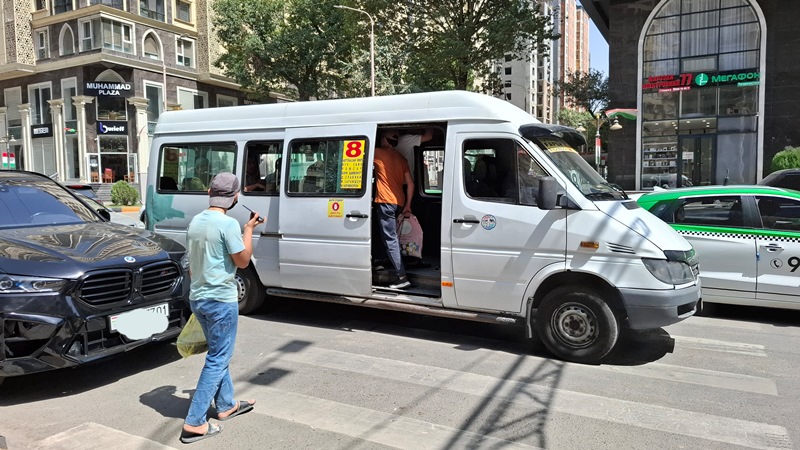
Isfandiyar Karimov, director of "Behruz-15" LLC, which operates route No. 25, confirmed in an interview with "Asia-Plus" that POS terminals should be installed in all vehicles carrying out passenger transportation. "Otherwise they can't work," – he says.
"There are 47 vehicles operating on route No. 25. To date, 37 drivers have installed validators. Seven drivers refused to install, they were given until August 25 to withdraw their cars from our cooperative," – Isfandiyar Karimov said.
"Citycard": 30 somoni is operating expenses and investments
"Citycard" has confirmed to "Asia-Plus" that 30 somoni is charged daily for validator maintenance.
"30 somoni are used for operating expenses and related investments. If the vehicle does not enter the route, no maintenance fee will be charged," – the company explained.
They also reported that the cost of the validator is negotiable.
The representative of the company noted that in accordance with the decree of the Dushanbe City Hall dated July 31, 2017, the installation of validators in minibuses operating on the routes of the capital began in July 2025.
"To date, almost 900 devices (validators) have been installed in minibuses, and until mid-September 2025, together with transport cooperatives, the installation will continue in stages," – the company said.
Previously, in buses and trolleybuses of the capital, travel was paid both in cash and non-cash (using a special card). Later, the mayor's office decided that if the drivers are payed in cash, they must give the passenger a receipt. However, this requirement was not always met, and passengers often paid in cash without receiving a receipt.