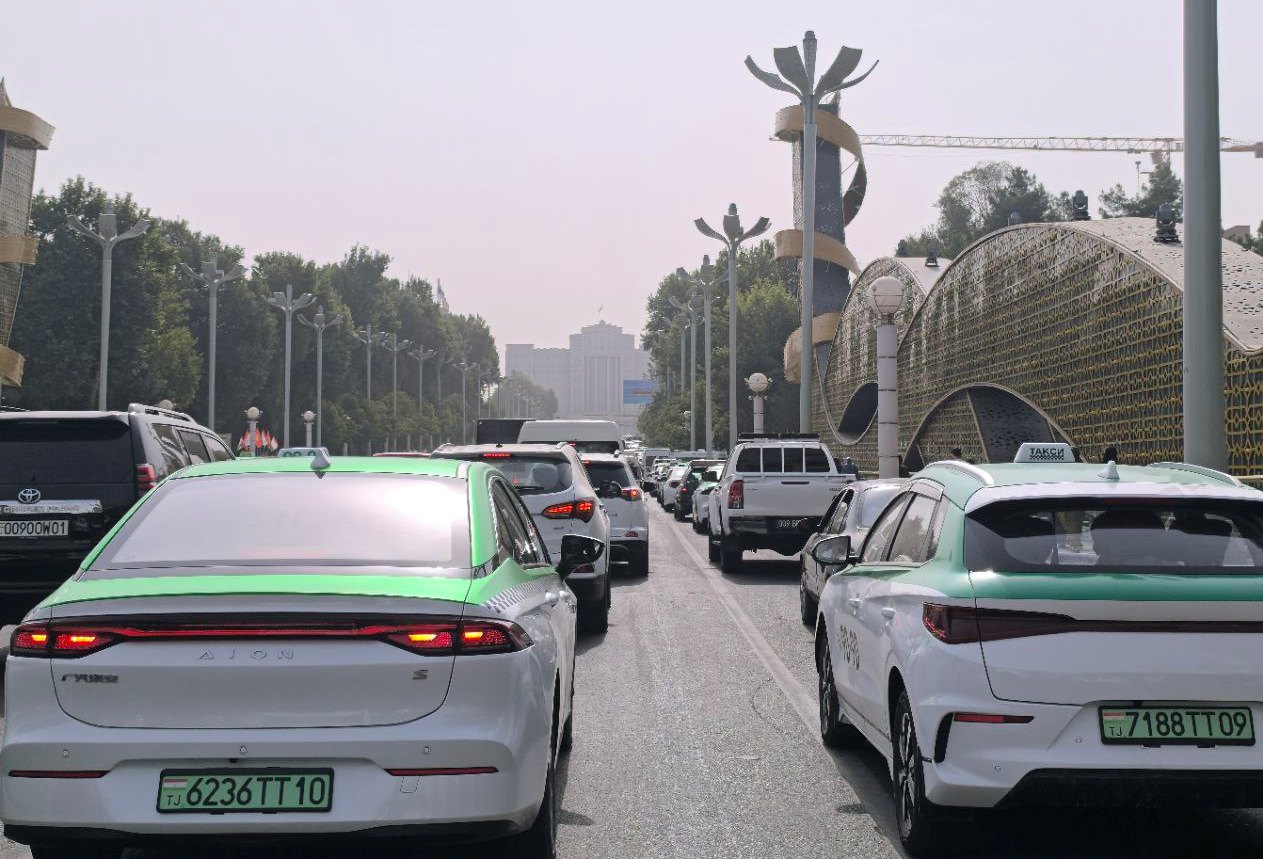
With the start of the new school year, traffic in the Tajik capital has reached unbearable levels, residents say. Long delays, packed buses, and an acute shortage of public transport have made daily commutes in Dushanbe a struggle, prompting frustration across social media.
Locals report that what used to be short trips now take hours. Many complain of the toll on their health as they stand for long periods in dust and exhaust fumes while waiting for buses or taxis.
To better understand how residents are coping, Asia-Plus conducted a social media survey, collecting dozens of testimonies from city commuters.
For some, a one-way journey can stretch up to three hours. “My classes start at 1 p.m., but I have to leave home at 9:30 a.m. It takes three hours just to get to the university,” wrote one user under the nickname another_leook. Gulnora Hasanova noted: “From the Pivzavod area to Giprozem area takes me an hour and 40 minutes. I leave at 6:30 a.m., sometimes even earlier.”
Others echoed similar frustrations. “On September 1, it took me three hours to get from School No. 8 to Sadbarg and back. Total collapse!” wrote Ghairat Mirzo.
Many said the problem has worsened since September. “During summer holidays, I could reach work in 30 minutes. Now it takes an hour or more,” complained aysha.07.0. Another resident, kanun65, added: “Driving my child to school used to take 10 minutes. Now it’s 40–45 minutes. We walk instead of driving — it’s faster and less stressful.”
Some residents have opted to walk to save time and nerves. “I leave home at 5:30 and walk. By 7:40, I’m at work,” wrote Iroda Davlatova.
Despite promises by the Dushanbe transport authority to increase the number of buses and trolleybuses by 20% from September, residents say there is still a severe shortage during rush hours. “I stand by the roadside for an hour with three kids, waiting for a taxi. Eco-taxis act like private cabs,” wrote dilya_n9595. Another commuter, madin__gafurova, said: “We wait 40 minutes for a bus, and taxis are too expensive.”
Public opinion is divided: some say taxis are too few, while others argue that too many cars are clogging the streets. “Do we even have public transport anymore? It feels like it’s vanished,” complained mary_170591.
Others point to rapid urban development as the root of the problem. “Instead of building endless high-rises, the city should have expanded the roads,” wrote khojaev_d95. Another user added: “The Soviet Union built wide roads when there were only a few cars in the city. Now, they’ve put high-rises right next to the streets, leaving no room for expansion.”
Some tried to inject humor into the debate. “I commute by private helicopter,” joked user *jammikk_. Another quipped in response: “Soon there will be traffic jams in the sky too.”
But for most residents, the situation is no laughing matter. “We’re not just losing time — we’re losing our health in these traffic jams, with exhaust fumes and daily dust storms. I’m exhausted before I even reach work,” wrote Elena.
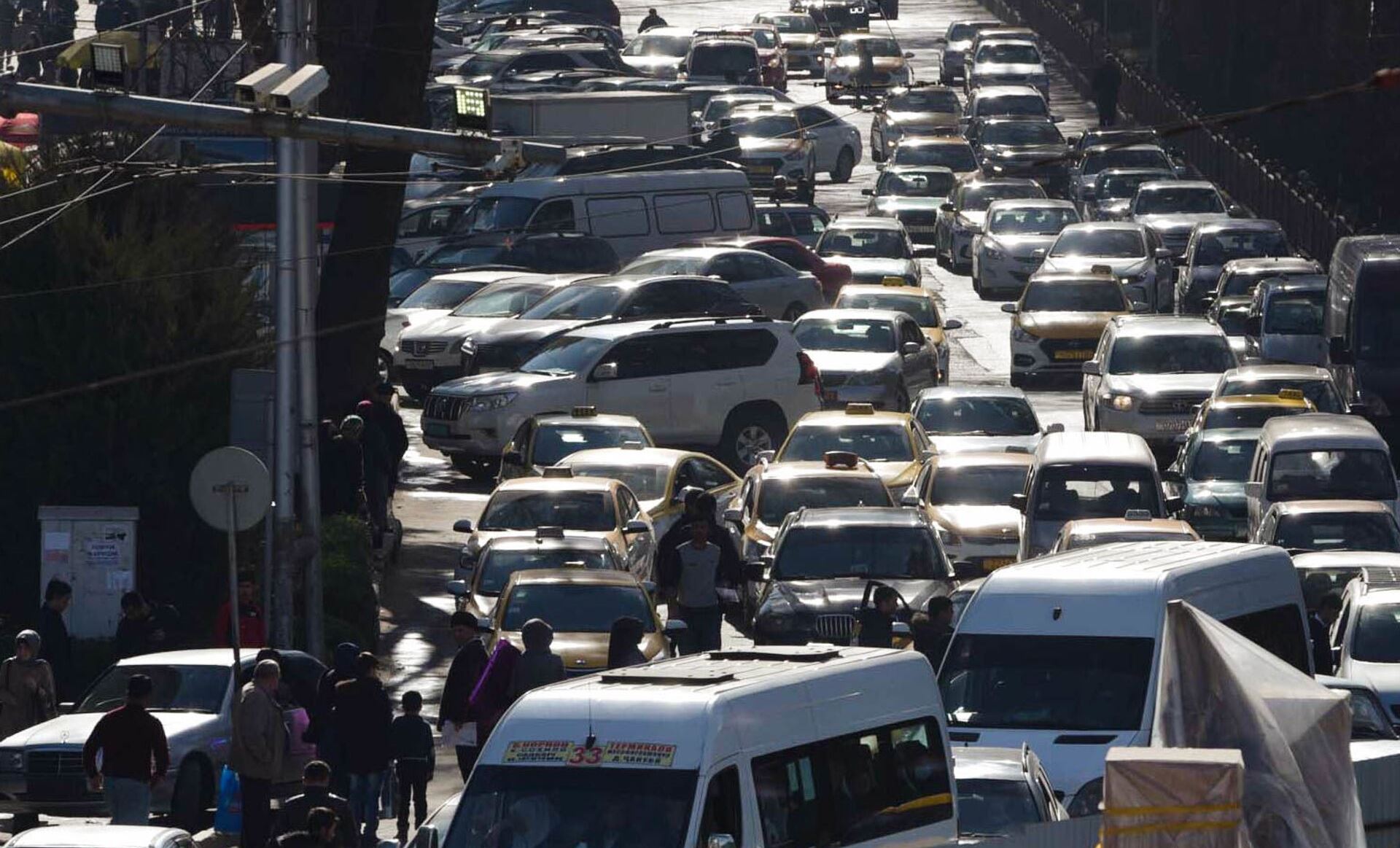
Traffic jams have become a daily reality in Dushanbe, and residents say conditions only worsen each year. Experts argue that only a comprehensive solution will ease congestion: expanding public transport, introducing dedicated bus lanes, and improving routes. They also stress the need to ease pressure on the city center by removing chaotic parking, restricting private car access, and developing bypass roads.
Such measures, specialists believe, could significantly reduce gridlock and improve the quality of life for Dushanbe residents.